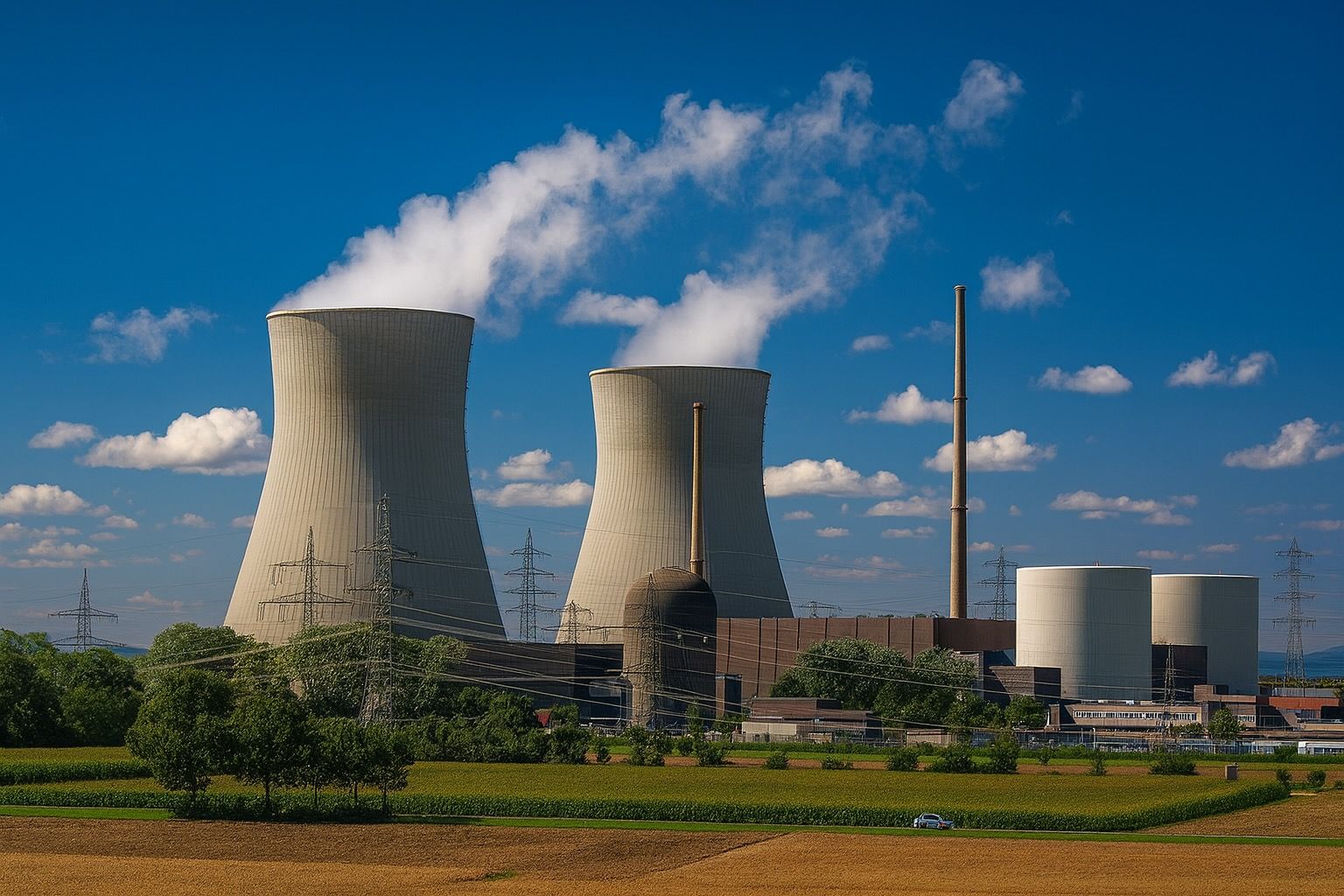

Key Facts: On Oct 25, 2025 at 12:00, Germany will detonate the two 160 m cooling towers of the former Gundremmingen nuclear plant in Bavariasueddeutsche.de. In a matter of seconds the 56,000 tons of reinforced concrete will collapse and be recycled as aggregatesueddeutsche.de. A large exclusion zone surrounds the site (violators face up to €3,000 fines)sueddeutsche.de. About 10,000 spectators are expected (no official festival will be held)merkur.demerkur.de. Engineers have cut structural slots and will trigger water-jet fountains to force the towers to collapse inward and bind dustmerkur.de. Gundremmingen was one of Germany’s first atomic power sites, so the implosion is seen as a symbolic end to the nuclear age in Bavaria (after this, only the single Isar-2 cooling tower remains until at least 2038)merkur.de. RWE – the plant’s former operator – will immediately begin converting the site to renewables: four days post-blast it will break ground on what it calls “Germany’s largest” battery storage project to save solar energyfocus.de.
In-depth: The scheduled controlled demolition has captured public attention. Authorities have issued a full safety cordon, with road closures and parking bans in nearby Gundremmingen. District officials warn of “massive traffic congestion” and urge the public to arrive early or watch from remote vantage pointsgundremmingen.degundremmingen.de. Mayor Tobias Bühler (45) notes that “with the towers’ demolition we lose a piece of our home – even for me personally”gundremmingen.de, reflecting local nostalgia for the village landmark. (Some vendors had wanted to sell snacks at the event, but the town refused to turn it into a festivalmerkur.de.)
Technicians from a Thuringian demolition firm have been drilling over 1,000 explosive charges into the towers for weeksfocus.de. On detonation, each tower will tip and collapse into itself, rather than falling outwards, a method designed by expert sprengmeister Ulrike Matthesfocus.de. Water cannons stand by: pools of water around the towers will be blown upward first, sending plumes tens of meters high to bind dust and scare away wildlifefocus.de. Police estimate up to 400–600 officers will be on duty, and even firefighters have staged in advance to spray the debris cloud if needed.
Historic Context: Gundremmingen has a storied nuclear past. Its Block A reactor (1966–1977) was Germany’s earliest commercial plant, but was shut after a fatal accident in 1975focus.de. Blocks B and C (1976–84) – whose towers now come down – ran for decades (the last unit closed in 2021)focus.de. The entire plant is under a multi‑billion‑euro dismantling program slated to run into the 2030sfocus.de. In fact, RWE still employs 400 staff here overseeing decommissioning. The company already plans to repurpose Gundremmingen: as RWE explains, just four days after the blast it will break ground on “Germany’s largest” battery facility, storing solar power by day and feeding it out at nightfocus.de. On site also remains the waste pool of old fuel rods – a reminder that while the cooling towers fall, some nuclear material won’t be removed until a national long‑term repository is ready.
Market Impact: Investors in utilities are watching Gundremmingen as a milestone of Germany’s post-nuclear transition. RWE – which owned Gundremmingen – has pivoted toward renewables and storage; analysts generally view its stock positively given strong wind/solar project pipelines. For example, RWE emphasizes this site’s new battery “to store solar power … and then supply it at night”focus.de, illustrating the shift from nuclear baseload to clean energy. While the cooling-tower implosion itself is a one-time event with no power impact (the plant has been offline), financial commentators note that RWE’s (and peer E.ON’s) share prices remain buoyed by Germany’s clean-energy drive. TS2.tech and other financial outlets point out that legacy nuclear costs are largely provisioned for, so markets focus on future growth; at press time, analysts had “buy” ratings on RWE, expecting mid‑term gains from its renewables investments.
Bottom line: The Gundremmingen blast will be a historic spectacle – engines of Germany’s atomic past obliterated in secondssueddeutsche.de. It serves as a concrete (literally) reminder of the energy transition underway. As regulators and operators celebrate the clean execution of this demolition (and the new projects already queued), the wider public and investors alike are pondering what’s next: namely, how former nuclear sites become part of Germany’s green future.
Sources: Official reports and expert interviewsfocus.degundremmingen.desueddeutsche.demerkur.de. Ties to energy finance drawn from RWE/market commentaryfocus.de. Data via Bayerischer Rundfunk, MDR, SWR, Merkur, Focus and RWE press releases. (Further reading: Gundremmingen town info on implosion.)
Related articles: Energy Markets