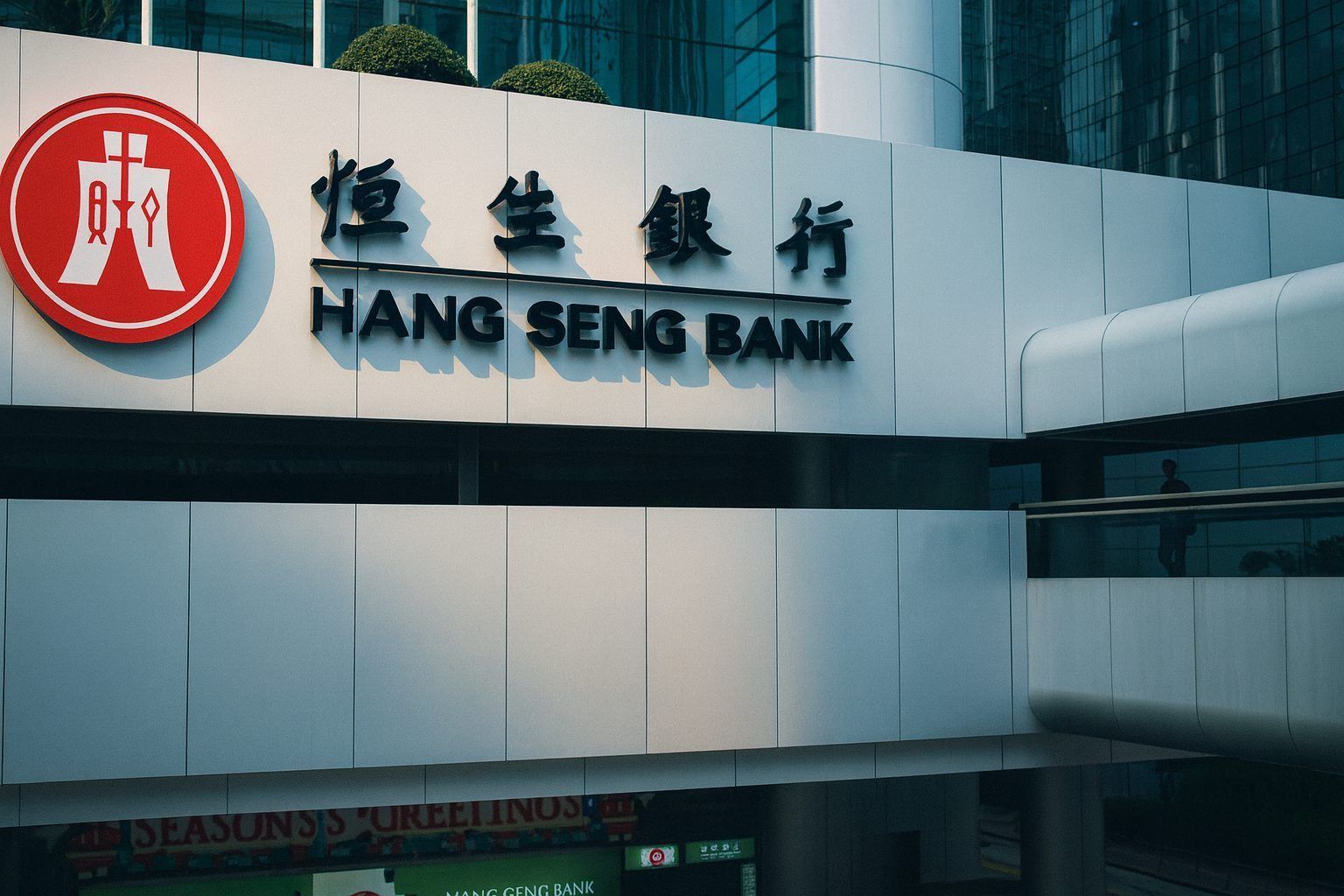
HONG KONG — The Hang Seng Index ended the first week of December parked just below the 26,000 level, cooling after a powerful year-to-date surge, while major world indices from New York to Europe stayed within reach of record highs as investors bet on interest-rate cuts in 2026.
Hang Seng Index This Week: Choppy Path, Flat Finish
The key trading session for Hong Kong this weekend window was Friday, 5 December, with markets closed on Saturday and Sunday.
- Close: 26,085.08
- Daily move: +0.58%
- Sub‑indices:
- Hang Seng China Enterprises Index (HSCEI): +1.01%
- Hang Seng Tech Index (HSTECH): +0.84%
A weekly wrap from Business Today describes a “choppy week” that ultimately left the Hang Seng little changed overall, as traders dialled back risk ahead of key economic releases from both China and the United States. BusinessToday
Earlier in the week, the index had slumped around 1.3% in a single session on renewed concerns about China’s property downturn and softer services growth, underlining how quickly sentiment can flip in this market.
Despite the short-term wobble, the broader backdrop remains striking:
- The Hang Seng is up roughly 30% year to date, on track for its strongest annual advance since 2017.
- Valuations remain modest versus global peers, with Hong Kong’s benchmark trading at about 12 times earnings, roughly in line with the Shanghai Composite and well below many developed-market indices.
In other words, the rally has been strong, but the index is still priced like a value play in a world of expensive equities.
What’s Driving Hong Kong: Property Pains, Policy Hopes and Sector Rotation
1. Property and macro drag
Fresh data and survey results this week reinforced a challenging picture for China’s property market:
- A Reuters poll expects Chinese home prices to fall about 3.7% in 2025 and to keep sliding another 2.8% in 2026 before stabilising in 2027.
- Investment in the sector is forecast to shrink by about 15% this year, with sales also falling, raising the risk of more pressure on developers’ balance sheets and on banks’ asset quality.
Those headwinds matter for Hong Kong because major property developers, mainland financials and construction-related plays carry significant index weight. They help explain why, even in a strong global risk-on environment, the Hang Seng’s week saw big intraday swings and a flat overall finish.
2. “Slow-motion” China bull market
Offsetting the gloom, fund managers continue to talk about a “slow-motion stock rally” in China and Hong Kong:
- The CSI 300 blue-chip index has gained around 16% so far in 2025.
- The Hang Seng’s roughly 30% rise has been powered by cyclicals such as industrials, materials and select tech names, helped by lower valuations versus the U.S. and Europe.
Portfolio managers interviewed by Reuters say they see the bull run extending into 2026, helped by potential foreign inflows and local savers shifting from deposits into equities.
3. Regulatory and crypto headlines
Regulation also shaped sentiment going into the week:
- On 1 December, China’s central bank (PBOC) vowed a tougher crackdown on cryptocurrencies and singled out stablecoins for lacking robust compliance controls.
- In response, Hong Kong‑listed crypto-related stocks fell sharply, with some names dropping more than 10%.
While these are niche plays within the wider market, the episode served as a reminder that policy risk from Beijing remains a key factor for Hong Kong’s risk assets.
Hang Seng in the Global League Table of World Indices
Even with this week’s sideways move, the Hang Seng sits near the top of global performance charts in 2025.
A world‑markets scoreboard compiled by Advisor Perspectives shows:
- Hang Seng: ~31–32% YTD, best performer in the tracked basket
- TSX (Canada): ~25% YTD
- Nikkei 225 (Japan): ~23–24% YTD
- MSCI World: ~21% YTD
- Sensex (India): ~7% YTD
At the same time, valuation data point to stretched levels in global developed markets:
- The MSCI World Index is trading on a price-to-earnings ratio around 24–24.5 as of 5 December 2025.
- One valuation monitor estimates the MSCI World’s P/E at 24.22, above its five‑year average band of roughly 18.6–22.6 and labels the index “overvalued”. World PE Ratio
In contrast, China and Hong Kong benchmark indices sit around 12x earnings, giving them a rare combination of strong recent returns and still‑moderate valuations.
World Indices 5–7 December 2025: Near Records, But Cautious
United States: S&P 500 edges toward all‑time high
On Friday, 5 December:
- The S&P 500 added about 0.3%, staying just shy of its record level.
- The Dow Jones Industrial Average and Nasdaq Composite also posted modest gains, keeping Wall Street near historic highs.
The moves came against the backdrop of:
- Growing confidence that the Federal Reserve will cut rates by 25 basis points at its upcoming meeting.
- Upcoming data on the Fed’s preferred inflation gauge, the core PCE index, expected to show annual inflation around 2.9%.
Finimize and other market commentators note that expectations for easier policy are helping global stocks creep back toward record territory, even as investors rotate away from some of the frothiest AI and crypto names.
Europe: STOXX 600 outlook improves
European equities are participating in the global grind higher:
- The STOXX 600 is up about 14% in 2025 so far, lagging U.S. benchmarks but still logging solid gains.
- Citigroup this week set a year‑end 2026 target of 640 for the index, implying about 10.5% upside from recent levels and pointing to expected earnings growth above 8% next year.
Strategists at Citi favour cyclical sectors such as banks, travel and leisure, basic resources and industrials, while downgrading European tech to “neutral” on valuation concerns. Reuters
Asia ex‑Hong Kong: Mixed signals
The rest of Asia delivered a more uneven picture on 5 December:
- Japan’s Nikkei 225 fell about 1.3%, wiping out its weekly gains as weak household spending and the possibility of a Bank of Japan rate hike spooked investors.
- The MSCI Asia-Pacific ex-Japan index still managed a gain of around 0.4%, helped by strength in South Korea, where the Kospi rallied roughly 1.4%.
Across the Gulf, UAE markets rose on the same day on the back of Fed‑cut hopes, mirroring the bullish tone in global equities.
Fresh Forecasts for the Hang Seng and Global Markets
1. Investment banks on the Hang Seng’s 2026 path
Two recent pieces of sell‑side research frame expectations for Hong Kong equities:
- Morgan Stanley forecasts only “mild gains” of about 3.4–4.6% from current levels for major China equity gauges, including the Hang Seng, in 2026 as this year’s “blistering rally” cools. South China Morning Post
- A more detailed note reported by Macao News pegs a Hang Seng Index target of 27,500 for 2026, based on consensus expectations for roughly 10% earnings growth and a forward P/E multiple near 12.3x.
In other words, the bank sees 2026 more as a consolidation year than a repeat of 2025’s surge.
2. Algorithmic models see larger upside – with big caveats
On the quantitative side, an algorithm‑driven service referenced by Capital.com projects much wider swings:
- For December 2025, the Hang Seng is projected to trade in a broad 27,431–31,561 range, with further upside into 2026 and beyond.
Such long‑range outputs are highly speculative, but they underscore how model‑based forecasts currently lean bullish on Hong Kong, reflecting the combination of low valuations and strong momentum.
3. Global valuation and return expectations
For the broader world‑index complex:
- The MSCI World Index is trading on a P/E near 24–24.5, above its recent historical average and generally considered rich by valuation watchers.
- Despite those lofty multiples, Citi’s 640 target for the STOXX 600 by end‑2026 implies further equity gains in Europe, powered by fiscal support and ongoing central‑bank easing.
For investors benchmarking to “world indices”, the message from these forecasts is that future returns may be more modest, and more dependent on earnings delivery rather than multiple expansion.
Macro Backdrop: China Growth and Property, U.S. Rates, and Capital Markets
China growth outlook brightens modestly
Standard Chartered this week nudged up its China 2026 GDP growth forecast from 4.3% to 4.6%, citing resilient exports and gains in productivity, helped by an easing of trade tensions with the United States.
This more optimistic growth track, together with evidence that foreign investors are slowly returning to Chinese equities, supports the argument that the recent Hong Kong and mainland rally could extend into 2026—even if at a slower pace.
Property and housing remain the biggest domestic risk
The brighter GDP picture is being offset by the property overhang:
- The Reuters poll projecting multi‑year declines in home prices points to continued pressure on developers’ balance sheets.
- Markets are watching for any sign of larger‑scale policy support from Beijing beyond targeted measures and localised easing.
Until there is clearer evidence of stabilisation, property headlines are likely to keep injecting bouts of volatility into the Hang Seng and related world indices with China exposure.
Hong Kong’s capital‑raising engine revs up
On the capital‑markets side, Asia is gearing up for a busy 2026:
- Equity deals in Asia reached around $267 billion in 2025, up 15% year-on-year, with Hong Kong leading the region at about $75 billion in deals, according to a Reuters review.
- A pipeline of IPOs in tech, AI and industrials—such as Baidu chip arm Kunlunxin eyeing a Hong Kong listing later in the decade—underlines the city’s ongoing role as a gateway for China equity risk.
More issuance implies both opportunity and dilution for index investors, and it strengthens Hong Kong’s integration into global indices such as the MSCI World and regional benchmarks.
What Markets Are Watching After 7 December
Looking beyond this weekend, several catalysts are front of mind for traders in Hang Seng and world indices:
- Upcoming Fed decision
- Markets largely expect a 25 bps rate cut, but any hawkish surprise on inflation or the policy path could knock global indices off their near‑record perch.
- China data releases and high‑level policy meetings
- Investors are waiting on inflation, trade and producer‑price data, as well as signals from key economic meetings in Beijing that could shape policy into 2026.
- Ongoing property and credit developments
- News around big developers and local‑government financing vehicles will remain closely watched as a gauge of systemic risk—both for the Hang Seng and for global indices exposed to China.
- Index rebalancings and sector rotation
- Recent and upcoming changes in the Hang Seng family of indices—such as high‑growth consumer names being added to the benchmark—are encouraging flows into specific stocks and sectors.
Key Takeaways for Readers Following Hang Seng and World Indices
- The Hang Seng finished the week of 5–7 December essentially flat, closing Friday at 26,085 but preserving a roughly 30% year‑to‑date gain that makes it one of 2025’s standout global performers.
- Global indices are hovering near record highs, powered by expectations of interest‑rate cuts in 2026, even as valuations—especially in developed markets—look stretched versus recent history.
- Analysts see more measured upside into 2026 for both the Hang Seng and world indices, with a greater emphasis on earnings growth rather than multiple expansion.
- The big swing factor remains China’s domestic story: how policymakers balance support for growth with efforts to deflate property and speculative bubbles, and how that feeds into corporate earnings and capital flows.
As always, these developments are informational rather than predictive. Markets can move quickly and unexpectedly, and anyone considering investments linked to the Hang Seng or world indices should assess their own risk tolerance and, where appropriate, seek professional financial advice.