
HOUSTON, May 28, 2026, 17:03 CDT
- HPE reports fiscal second-quarter results after the market close on June 1, with its analyst call set for 4 p.m. CT.
- Wall Street expects roughly $9.8 billion in revenue and adjusted earnings in the low-to-mid 50-cent range.
- The stock’s rally has raised the bar. Investors want proof that Juniper, AI infrastructure and networking demand are turning into durable profit.
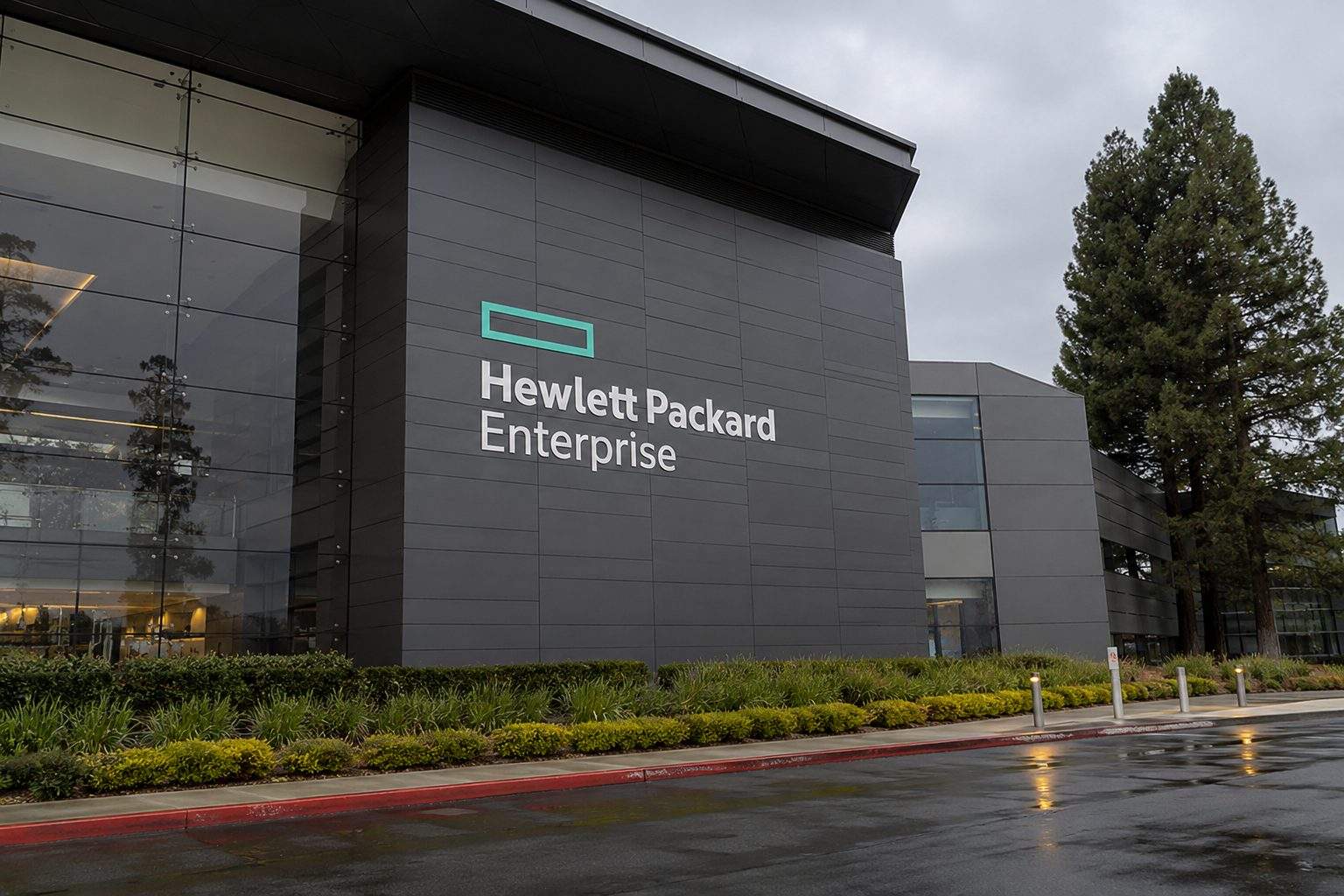
Hewlett Packard Enterprise is heading into its June 1 earnings report with investors focused on one issue: whether the company’s networking and AI-infrastructure push can keep driving growth without giving up too much margin. HPE said it will review fiscal second-quarter results, for the period ended April 30, after the close, with a webcast scheduled for 4 p.m. CT, or 5 p.m. ET.
This matters now because the stock has already moved. HPE shares recently traded at $38.21, up $1.01 from the prior close, and Simply Wall St said the shares had returned 117.5% over the past year, leaving valuation checks “front and center” before the print. Simply Wall St
Analyst estimates cluster near the company’s own outlook. AlphaStreet said consensus among 18 analysts was for adjusted earnings of 53 cents a share on revenue of $9.77 billion, while Futu’s Moomoo-linked preview put expected revenue at $9.77 billion and GAAP earnings per share at 14.9 cents. GAAP is the standard accounting measure; adjusted, or non-GAAP, earnings strip out selected costs such as acquisition charges and stock compensation.
HPE’s March guidance called for fiscal second-quarter revenue of $9.6 billion to $10.0 billion and adjusted earnings of 51 cents to 55 cents a share. The company also raised its fiscal 2026 adjusted earnings outlook to $2.30 to $2.50 a share and lifted its networking revenue-growth target to 68% to 73%.
The last quarter set the story line. HPE reported first-quarter revenue of $9.3 billion, up 18% from a year earlier, with networking revenue up 151.5% after the Juniper Networks acquisition. Chief Executive Antonio Neri said demand was strong, with orders “increasing double digits” across all segments; Chief Financial Officer Marie Myers cited “faster-than-planned Juniper and Catalyst synergies.” Hewlett Packard Enterprise
Zacks, in the Yahoo-linked preview republished by TradingView, said HPE’s networking and AI-focused portfolio was gaining momentum from Juniper integration, enterprise modernization and “Networks for AI” orders, which HPE expects to reach $1.7 billion to $1.9 billion by the end of fiscal 2026. But the same preview flagged DRAM and NAND cost inflation — memory chips used in servers and storage — along with geopolitical risk and uneven AI systems revenue. TradingView
Margins may matter as much as sales. AlphaStreet said consensus revenue of $9.77 billion would be up 28% from the year-earlier quarter, when HPE generated $545 million of adjusted net income on $7.63 billion in revenue, a 7.1% margin. That gives investors a clean comparison for judging whether the growth is profitable or just larger.
There are fresh operating signs, though not a direct earnings read. HPE said Thursday it expanded a partnership with Rowan University covering networking, compute, storage and high-performance computing, a term for systems used to run large scientific and data-heavy workloads. Patrick Osborne, HPE’s senior vice president of technology acceleration for hybrid cloud, said the deployment would help Rowan move “from ideas to results” faster. Business Wire
The competitive field is not standing still. HPE competes with Dell Technologies and Super Micro Computer in AI servers, and Reuters reported in March that HPE was prioritizing higher-margin networking products while managing supply challenges and AI systems revenue volatility.
The risk is that expectations have run ahead of execution. Zacks said its model did not conclusively predict an earnings beat for HPE, assigning the stock an Earnings ESP of 0.00% and a Zacks Rank of #3, or Hold. That leaves the guidance and margin commentary to do more of the work.
For HPE, an in-line quarter may not be enough. Investors will look for signs that networking growth is sticking, AI orders are converting, and higher component costs are under control. A miss on those points would make the stock’s sharp run harder to defend.



![US Stock Market Today 08/28/2026 [UPDATE: 03:04 EDT] [Marvell Stays Near Overnight Low as Premarket Handoff Nears]](https://ts2.tech/wp-content/uploads/2026/08/US-market-dashboard-2026-08-28-0300-480x384.jpg "US Stock Market Today 08/28/2026 [UPDATE: 03:04 EDT] [Marvell Stays Near Overnight Low as Premarket Handoff Nears]")