
TORONTO, May 28, 2026, 19:04 EDT
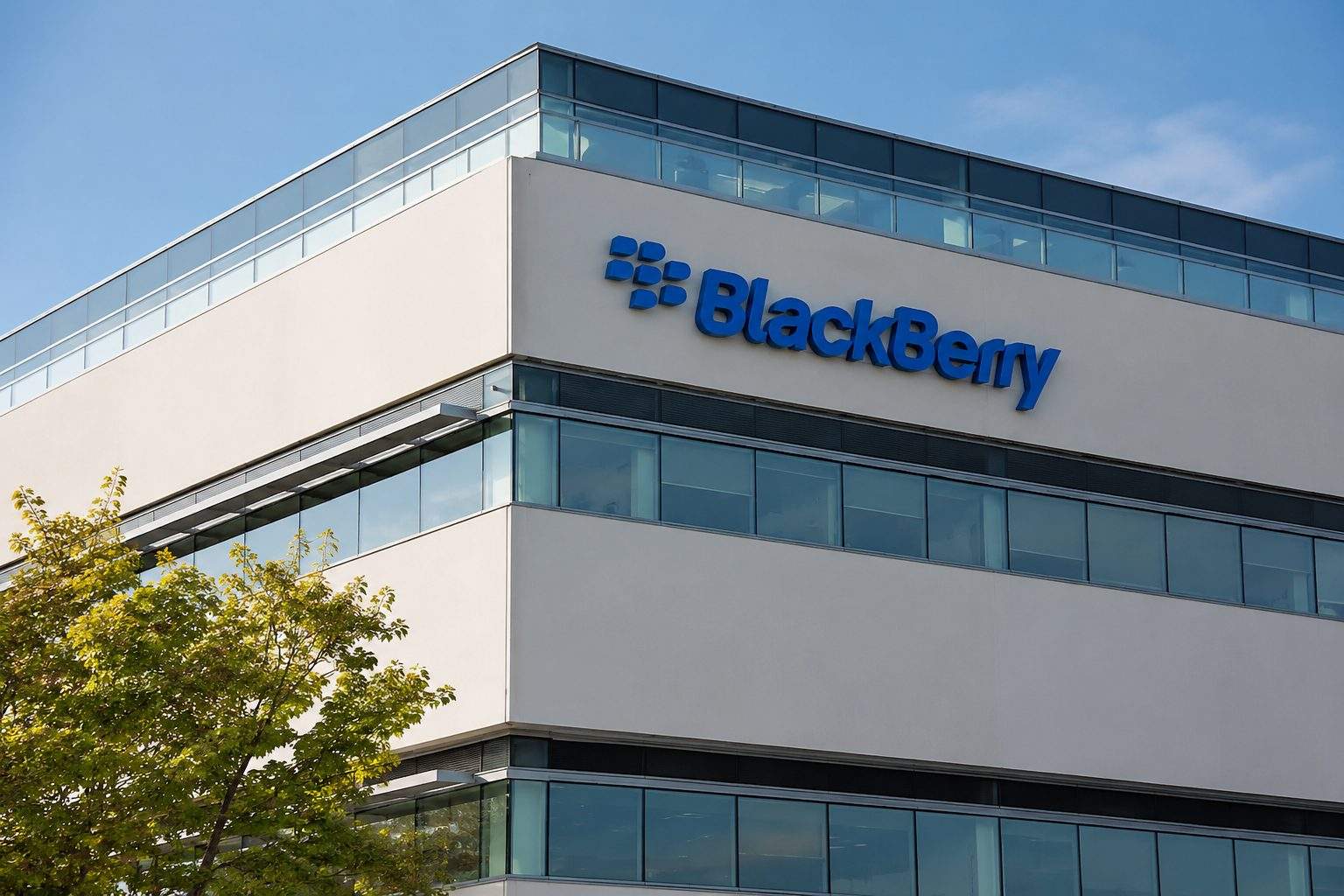
BlackBerry Ltd shares gained in U.S. trading Thursday, trading near $8.78 after reaching $9.03 earlier in the day. The move came as traders kept piling in on bets around a rally tied to the QNX software unit. Trading volume was about 32.1 million shares and market cap hovered around $5.2 billion.
BlackBerry’s shares are in a new phase as its story flips from slashing costs to betting on software that runs inside vehicles, industrial gear, robots, and medical equipment. QNX said Wednesday that a survey of 1,000 robotics developers showed software architecture and integration now pose a bigger hurdle than hardware. In the same poll, 95% called deterministic real-time behavior — where software responds on a fixed clock — a must-have in their systems.
Jim Hirsch, global vice president of sales at QNX for general embedded markets, said robotics teams are hitting the “very real limits” of old architectures as they go after more advanced, autonomous systems. QNX said 89% of developers see physical AI — artificial intelligence in machines that sense and act in the real world — as critical to their plans for the next three to five years. ACCESS Newswire
Stocks had a tailwind from the wider market. Reuters said both the S&P 500 and Nasdaq set new highs Thursday. Canada’s S&P/TSX Composite added 0.3% as tech and mining stocks moved higher.
The story now is less about BlackBerry’s old phone business and more about where QNX fits alongside Nvidia and other edge-computing players in safety-critical AI. Back in April, QNX and Nvidia said QNX OS for Safety 8.0 would work with Nvidia IGX Thor and the Nvidia Halos Safety Stack, aiming at regulated uses in robotics, medical and industrial systems. “Safety and determinism cannot be afterthoughts,” QNX president John Wall said. ACCESS Newswire
Derivatives have picked up the rally in BlackBerry as well. According to Cboe figures cited by The Fly, BlackBerry options volume almost tripled its daily average two days ago, at about 52,000 contracts. Most of that was call buying outpacing put buying. Calls generally move up with the stock. The data points to traders paying for more upside risk instead of just stock.
BlackBerry said in April that fiscal fourth-quarter 2026 revenue was up 10% to $156 million. QNX revenue jumped 20%, hitting a record $78.7 million. The company also put QNX royalty backlog at about $950 million, which is booked business that should turn into revenue later.
Chief Executive John Giamatteo told Reuters in April that QNX products are used in “highly regulated, complex, mission-critical solutions,” saying that helped protect the unit. Chief Financial Officer Tim Foote said the company would boost QNX sales and marketing spending as it moves into physical AI, robotics and medical markets. Reuters
BlackBerry is putting cash into its own stock. In a May filing, the company said the Toronto Stock Exchange had signed off on a normal course issuer bid to buy back up to 26.8 million shares, about 4.58% of its public float. The buyback window runs from May 12, 2026, to no later than May 11, 2027.
BlackBerry’s next investor event is coming up. Foote and Wall are set to speak at Baird’s Global Consumer, Technology & Services Conference in New York on June 2. The company plans to stream the event live and post a replay.
Still, it’s not a simple one-way trade. BlackBerry’s annual filing points to risks from slower customer growth, new tech hurdles, or soft demand if the economy cools. The company also lists possible share swings tied to news, analyst calls, options moves, and speculative trading.
BlackBerry is getting some market support ahead of seeing much robotics and physical-AI revenue come in. The stock is still tied to how QNX performs, not the company’s smartphone past.
Related articles: Robotics





![Asia Stock Market Today 23/08/2026 [UPDATE: 08:08 SGT] [Yield Shock Splits Asia: Weekly Recap and Week Ahead]](https://ts2.tech/wp-content/uploads/2026/08/Asia-market-dashboard-2026-08-23-0808-480x384.jpg "Asia Stock Market Today 23/08/2026 [UPDATE: 08:08 SGT] [Yield Shock Splits Asia: Weekly Recap and Week Ahead]")