
LONDON, July 16, 2026, 10:11 (BST)
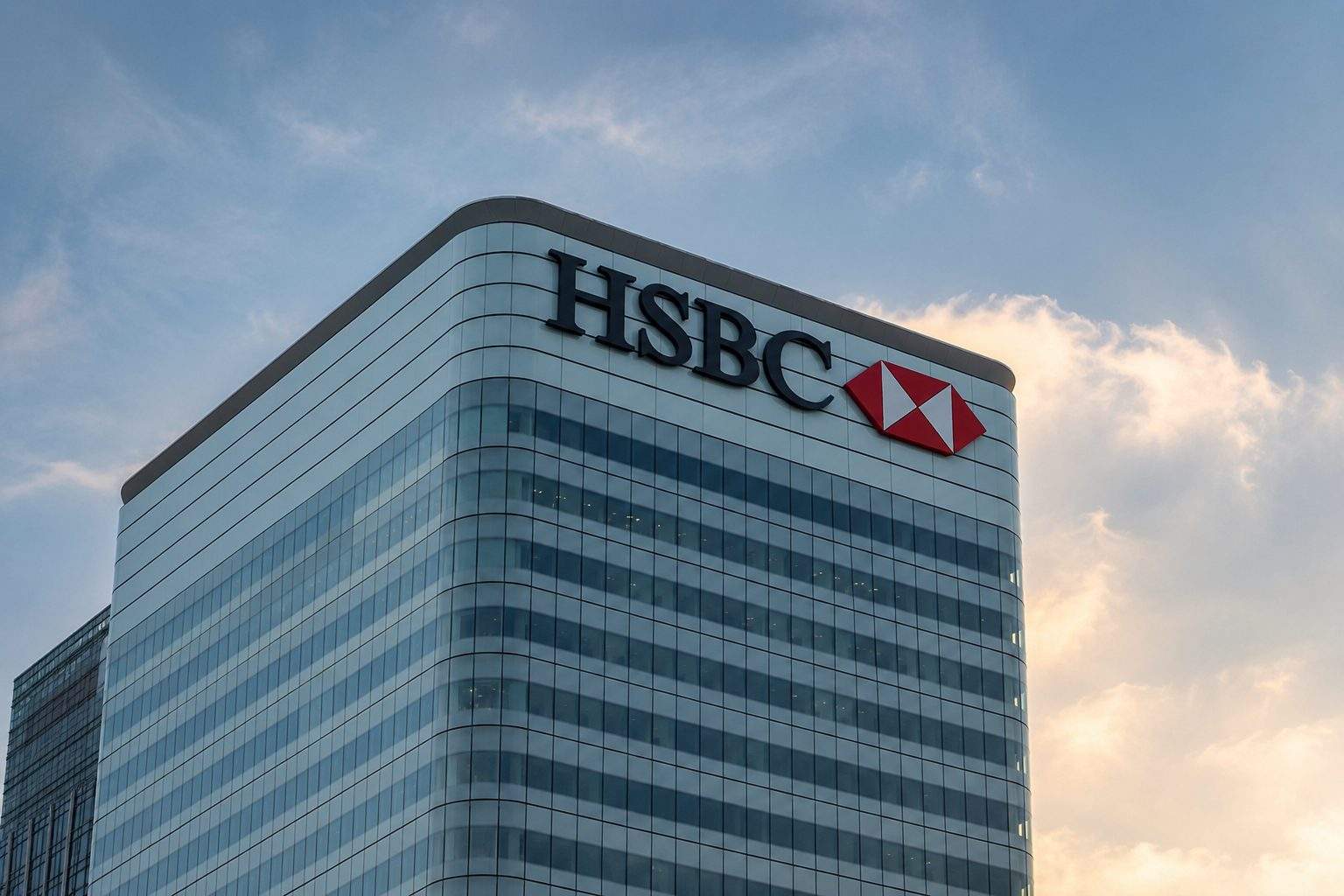
HSBC Holdings Plc LON:HSBA has gained a modest Hong Kong rate cushion ahead of its Aug. 4 interim results. One-month HIBOR fixed at 2.82821% on Thursday, 32.8 basis points above the level its finance chief described in May as the bank’s preferred range. A basis point is one-hundredth of a percentage point.
That matters because HSBC’s Hong Kong segment generated $2.905 billion of banking net interest income in the first quarter, equal to 25.8% of the group total. Banking net interest income is the lending-and-deposit revenue most directly affected by rate moves.
On the raw first-quarter group figure of $11.253 billion, a 365-day annualisation produces about $45.6 billion, just below HSBC’s 2026 guidance of around $46 billion. Chief Financial Officer Pam Kaur said adjustments for one-offs and day count took the run-rate above that level. The company raised its forecast from at least $45 billion in May and will report half-year results on Aug. 4.
China’s latest data sharpen the trade-off. Second-quarter economic growth slowed to 4.3%, its weakest pace in more than three years, while property investment contracted 18% in the first half. Reuters Breakingviews columnists Aimee Donnellan and Una Galani said Thursday that tighter mainland controls on cross-border flows could make it harder for Hong Kong to sustain its position as a leading offshore wealth centre. Rate income may need to do more of the work if fee growth loses pace.
Published fixes show that the rate move has been concentrated at the short end over the past four business days. One-month HIBOR rose by 16.7 basis points, while the six-month fixing was almost unchanged.
| HIBOR tenor | July 10 | July 16 | Change | Gap versus Kaur’s ~2.5% reference |
|---|---|---|---|---|
| 1 month | 2.66113% | 2.82821% | +16.7 bp | +32.8 bp |
| 3 months | 2.93720% | 3.00000% | +6.3 bp | +50.0 bp |
| 6 months | 3.17893% | 3.18506% | +0.6 bp | +68.5 bp |
Kaur said in May that HIBOR had returned to “the range that we are most pleased with, which is around 2.5%.” She added that higher yield curves would be a “tailwind for revenue in future years,” all else equal. HSBC has not published a simple HIBOR sensitivity, so the rate change cannot be read straight across to profit. HSBC
The Hong Kong revenue mix shows why the reset can help without deciding the quarter. Banking NII accounted for 72.2% of the segment’s $4.024 billion first-quarter revenue. Fee and other income reached $1.119 billion, up 17% from a year earlier; wealth fees rose 24% to $673 million and supplied 60.1% of that non-interest pool.
The valuation already assumes more delivery than at peers. In morning London trade, HSBC changed hands at 1,484.8 pence, up 0.34%, with a displayed price-to-earnings ratio of 16.41. That was about 18% above Standard Chartered Plc LON:STAN and 35% above Barclays Plc LON:BARC.
| Bank | Price | Day move | P/E | Dividend yield | Below 52-week high |
|---|---|---|---|---|---|
| HSBC | 1,484.8p | +0.34% | 16.41 | 3.75% | 6.6% |
| Standard Chartered | 2,142.5p | +0.35% | 13.96 | 2.13% | 5.9% |
| Barclays | 525.6p | +0.21% | 12.16 | 1.63% | 5.1% |
Wealth concentration raises the cost of any policy squeeze. The Hongkong and Shanghai Banking Corporation, the Asian legal entity containing HSBC’s core Hong Kong franchise, held $1.068 trillion, or 68% of group wealth balances, and attracted $34 billion, or 87% of first-quarter net new money. Those disclosures include operations outside Hong Kong, but they show how much of HSBC’s wealth momentum sits in Asia.
But higher HIBOR also raises borrowers’ debt-service costs. At March 31, $18.72 billion, or 63.5%, of HSBC’s $29.48 billion Hong Kong commercial-property portfolio was in stages 2 or 3, meaning credit risk had risen or the loan was impaired. Stage-3 balances fell 4.3% from year-end, yet loss allowances increased 7.5%. That is the main offset to the rate benefit.
The Aug. 4 readout will put the focus on Hong Kong’s banking-NII run-rate, deposit balances, net new money and any change in commercial-property allowances. The current rate cushion supports the $46 billion target; sustaining HSBC’s valuation premium will depend on keeping the wealth engine moving without a fresh climb in credit costs.




![Australia Stock Market Today 26/08/2026 [UPDATE: 11:43 AEST] [Headline CPI Cools as Sticky Core Tests ASX Gains]](https://ts2.tech/wp-content/uploads/2026/08/AU-market-dashboard-2026-08-26-1143-480x384.jpg "Australia Stock Market Today 26/08/2026 [UPDATE: 11:43 AEST] [Headline CPI Cools as Sticky Core Tests ASX Gains]")