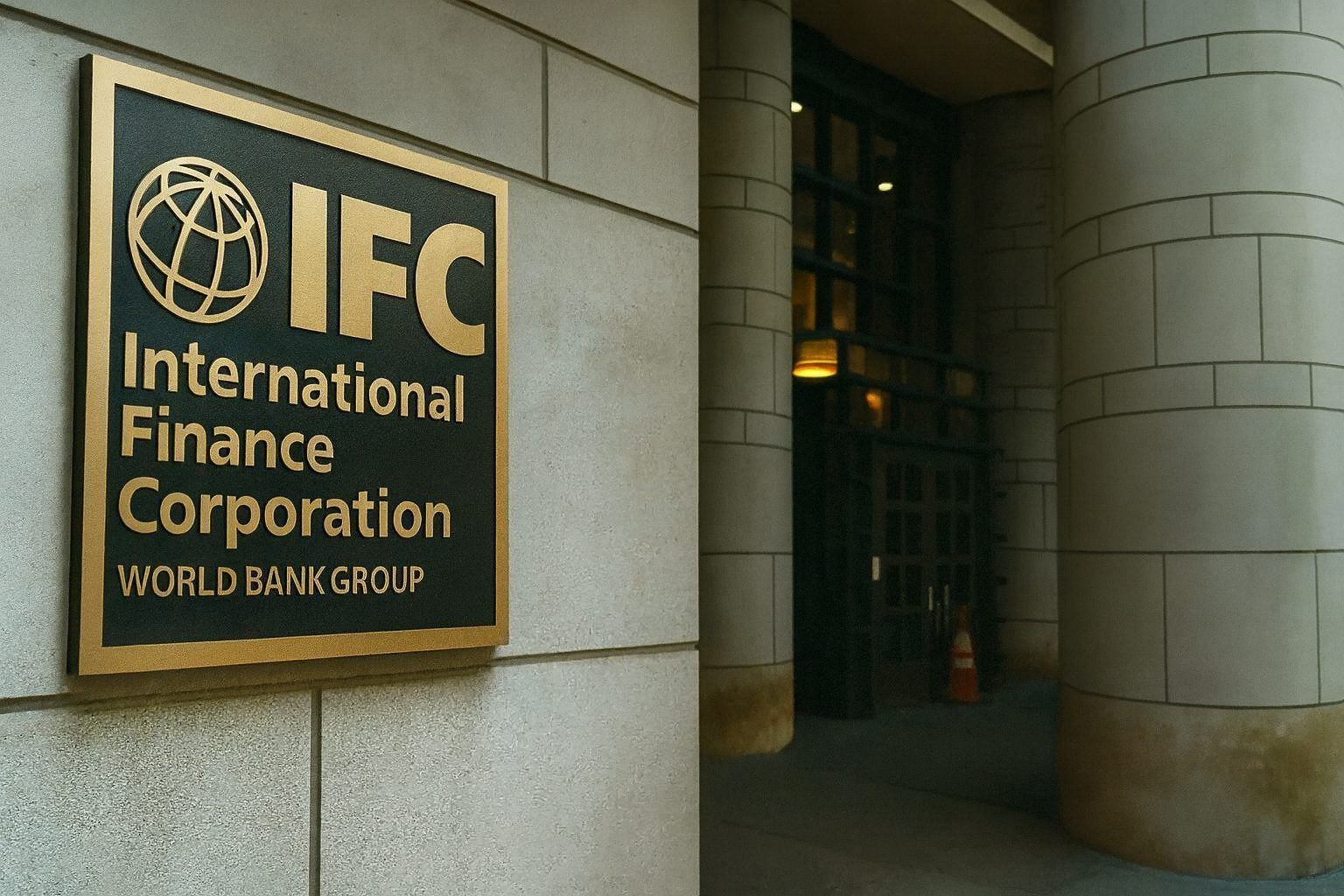

New Delhi / Gujarat, December 7, 2025 — The International Finance Corporation (IFC), the private-sector arm of the World Bank Group, has committed around US$50 million to GFCL EV Products Ltd, a subsidiary of Gujarat Fluorochemicals Ltd (GFL) of the INOXGFL Group, to build India’s first fully integrated battery materials manufacturing facility at Jolva, near Bharuch in Gujarat.
The greenfield project is designed to localise a large share of the lithium‑ion battery value chain within India, strengthen domestic supply chains for electric vehicles (EVs) and energy storage systems (ESS), and cut reliance on imported battery materials that currently come largely from other Asian markets.
Deal snapshot: IFC backs GFCL EV’s greenfield expansion
Under the agreement, IFC will invest about US$50 million in GFCL EV through compulsorily convertible instruments, providing growth capital without immediate equity dilution while giving IFC a future ownership stake.
According to company disclosures and stock‑exchange filings, the funding will be used to build and scale an integrated battery materials facility in Jolva. The project is positioned as India’s first integrated battery‑materials plant, bringing multiple stages of the value chain — from critical battery chemicals to cathode materials and binders — under one roof.
The investment follows a press release dated December 5, 2025, in which GFL formally announced its partnership with IFC and highlighted the project as a key pillar in India’s clean‑energy manufacturing push.
What the new battery materials facility will produce
GFCL EV is not a single‑product play; it is being built as an integrated platform for advanced battery materials. The facility and existing operations will focus on a portfolio that already covers more than 50% of the bill of materials of an LFP (lithium iron phosphate) battery cell, including:SSBCrack News+1
- Battery chemicals
- Lithium hexafluorophosphate (LiPF₆) — a critical electrolyte salt in lithium‑ion batteries
- Electrolyte formulations and performance‑enhancing additives
- Cathode active materials
- LFP cathode materials, widely used in EVs and stationary storage because of their safety and cost advantages
- Binders
- PVDF and PTFE binders used in battery electrodes and other high‑performance applications
GFL and GFCL EV emphasise that the facility is being designed with backward integration into key raw materials, allowing tighter quality control, cost competitiveness, and reduced vulnerability to global supply disruptions.
Timelines: LFP ramp‑up, LiPF₆ sales, and binder qualification
GFCL EV has already made meaningful progress on the ground:
- The company has commissioned its LFP cathode active materials facility and is in the process of qualifying customers for these products.
- Commercial sales of LiPF₆ are expected to start soon, marking a crucial step in reducing India’s import dependence for this strategic electrolyte salt.
- Binder products (PVDF/PTFE) are undergoing customer qualification, with commercial volumes targeted by the first half of calendar year 2026.
These developments indicate that IFC’s capital is arriving at a scale‑up phase rather than a purely greenfield concept stage, potentially shortening the time between investment and market impact.
A cornerstone in India’s EV and energy‑storage strategy
India’s EV ecosystem has grown rapidly, but the country still relies heavily on imports for battery cells and key upstream materials, leaving manufacturers exposed to price swings, supply bottlenecks, and geopolitics.
IFC and GFL frame this investment as a strategic response to that vulnerability. Official statements highlight several objectives:Indian Chemical News+1
- Energy security – building domestic capability in advanced battery materials to reduce dependence on imports
- High‑value manufacturing – moving from simple assembly to complex chemical and materials manufacturing
- Integration into global value chains – positioning India as a competitive supplier of battery materials, not just a consumer market
- Support for EV & ESS deployment – ensuring reliable access to critical inputs as EV adoption and grid‑scale storage accelerate
IFC notes that the transaction is part of its programmatic efforts to strengthen India’s e‑mobility value chain, complementing broader initiatives under the “Make in India” agenda by localising high‑value components rather than merely assembling imported parts.NSE India+1
IFC’s first investment in an Indian battery materials company
Company executives describe the deal as a milestone for both sides.
- Dr. Bir Kapoor, DMD and CEO of Gujarat Fluorochemicals, has underlined that this is IFC’s first investment in a battery materials company in India, signaling growing global confidence in India’s ability to host complex, high‑technology manufacturing in this domain.
- Vivek Jain, Chairman of the INOXGFL Group, has framed IFC’s involvement as an endorsement of GFCL EV’s “differentiated model”, integrated strategy, and long‑term growth trajectory in the global battery materials space.Indian Chemical News+1
From IFC’s side, regional leadership stresses that the partnership will help:
- Build an “integrated one‑stop platform” for battery materials in India
- Mobilise additional private capital by de‑risking a pioneering project
- Create high‑skilled jobs and deepen India’s participation in global e‑mobility marketsNSE India+1
GFCL EV’s funding history and capex roadmap
The IFC transaction is part of a larger, multi‑year capital plan for GFCL EV:
- Prior to the IFC deal, GFCL EV raised around ₹1,000 crore in equity from INOXGFL Group promoters and other investors, at an implied valuation of about ₹25,000 crore.
- The company now plans to invest roughly ₹6,000 crore over the next four to five years to ramp up capacity, diversify its product basket, and strengthen its integrated manufacturing platform.
This combination of domestic promoter capital and global development finance positions GFCL EV as one of the few large‑scale integrated battery materials manufacturers worldwide, with the potential to emerge as a regional hub serving both Indian and international customers.
Global investment bank Barclays acted as the exclusive financial advisor to GFCL EV on the IFC transaction, signalling strong institutional interest in the asset class and in India’s battery‑materials opportunity more broadly.
Why LFP and integrated materials matter for India
The project is heavily centred on LFP chemistry and associated materials — a strategic choice for India’s mobility and grid needs.
- LFP batteries are known for their thermal stability, safety, and lower cost compared with high‑nickel chemistries, making them attractive for two‑wheelers, buses, entry‑level passenger EVs, and stationary energy storage.
- By manufacturing LFP cathode materials, LiPF₆, electrolytes, and binders domestically, GFCL EV aims to give Indian cell makers and OEMs a local alternative to imported material streams.
An integrated LFP‑oriented supply chain also gives India a better chance to control input costs, build technology know‑how, and capture more value per EV sold or battery deployed, rather than exporting value through imported chemistries and components.
Strategic implications for India’s clean‑energy ecosystem
The timing of IFC’s US$50 million commitment is significant. India is simultaneously:
- Scaling up EV adoption across two‑wheelers, three‑wheelers, buses and fleet vehicles
- Pushing for large‑scale renewable integration, which depends on affordable and reliable energy storage
- Seeking to localise key clean‑technology supply chains amid geopolitical and trade tensions
By enabling “first‑of‑its‑kind greenfield battery manufacturing” in advanced materials, the GFL–IFC partnership could serve as a template for future investments that blend development finance, domestic capital, and global technology to build industries India has historically imported from.NSE India+1
If GFCL EV executes its expansion plan as outlined — ramping LFP materials, launching LiPF₆ sales, and qualifying binders by 2026 — the Jolva facility could become a flagship example of India’s shift from buyer to builder in the global battery economy.
Related articles: Renewable Energy
![Australia Stock Market Today 24/08/2026 [UPDATE: 10:38 AEST] [Miners Lift ASX as Banks Blunt Opening Gain]](https://ts2.tech/wp-content/uploads/2026/08/AU-market-dashboard-2026-08-24-1038-480x384.jpg "Australia Stock Market Today 24/08/2026 [UPDATE: 10:38 AEST] [Miners Lift ASX as Banks Blunt Opening Gain]")
![Asia Stock Market Today 24/08/2026 [UPDATE: 09:01 SGT] [Samsung Slides as SK hynix Splits Seoul Chip Trade]](https://ts2.tech/wp-content/uploads/2026/08/Asia-market-dashboard-2026-08-24-0859-480x384.jpg "Asia Stock Market Today 24/08/2026 [UPDATE: 09:01 SGT] [Samsung Slides as SK hynix Splits Seoul Chip Trade]")