
New Delhi — December 15, 2025
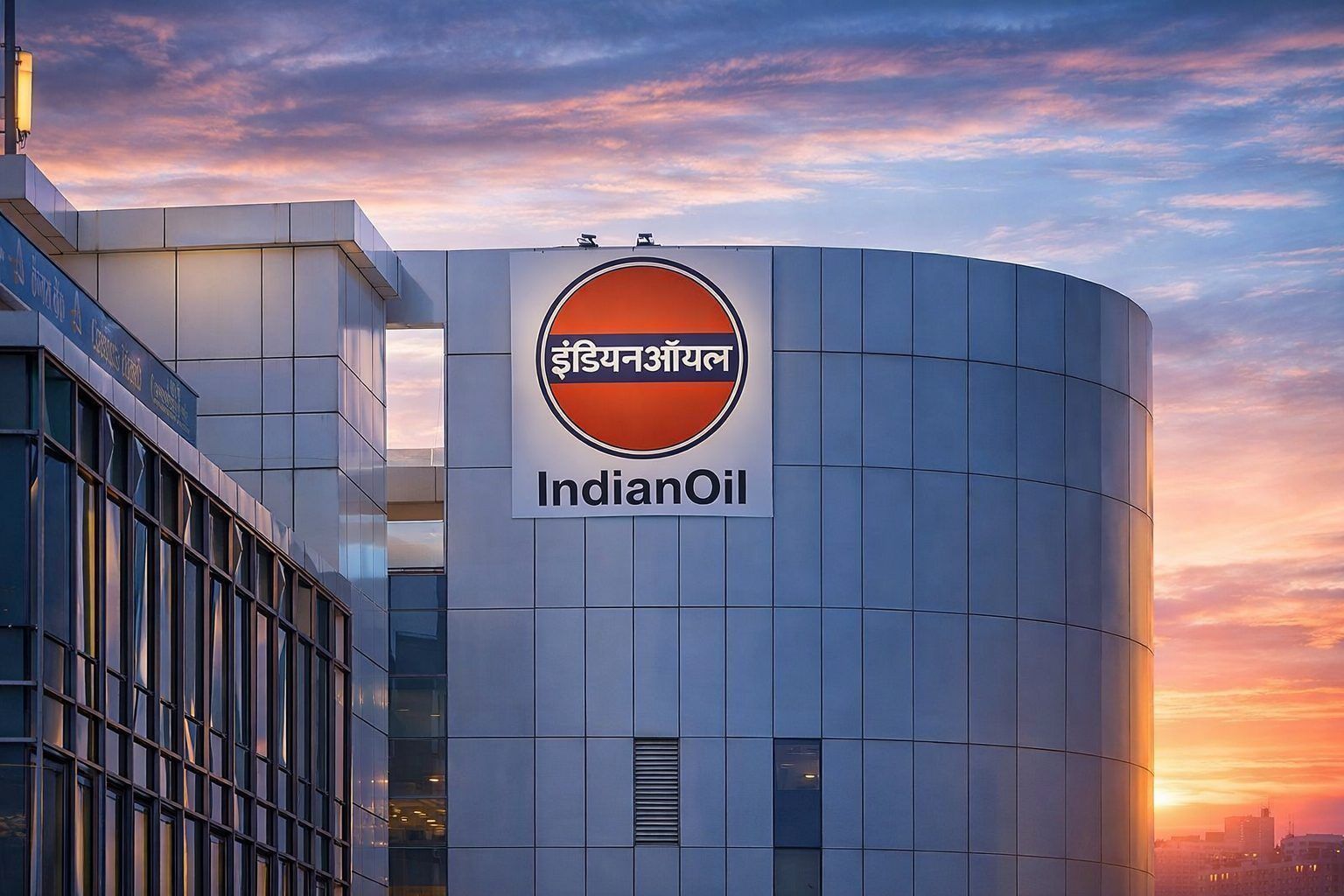
Indian Oil Corporation Ltd. (IOCL) stock (NSE: IOC; BSE: 530965) is back in the spotlight heading into the second half of December, with traders and long-term investors weighing a fresh interim dividend, a stronger recent earnings backdrop, and a geopolitics-heavy crude procurement environment.
By early afternoon on Monday, Indian Oil shares were trading around ₹166.60, up about 1.8% on the day, even as broader Indian equities slipped amid foreign outflows and trade-deal uncertainty.
Indian Oil share price today: IOC stock outperforms as the market turns cautious
The broader tone in Indian markets on December 15 has been defensive: the Nifty 50 and Sensex were both lower in trade, and the rupee weakened to a record low level versus the U.S. dollar, according to Reuters.
In that “risk-off” tape, IOC’s relative strength is notable. Part of it is mechanical—dividend headlines tend to pull incremental demand into large, liquid PSU names. Part of it is narrative: investors are trying to decide whether Indian Oil’s improved margin cycle and government compensation visibility can offset the usual state-run oil company anxieties (policy risk, currency swings, crude shocks).
Interim dividend: ₹5 per share, record date December 18
The immediate catalyst is Indian Oil’s interim dividend announcement: ₹5 per equity share (face value ₹10), with December 18, 2025 set as the record date, and the payout expected to be completed by January 11, 2026, as reported by The Economic Times.
At around ₹166–₹167 per share, that interim dividend alone works out to roughly a 3% yield (before taxes)—enough to matter in a market where “cash return” has become a feature, not a footnote. The Economic Times+1
Dividend-driven moves don’t always last (prices typically adjust after the record date), but they can amplify near-term momentum—especially for heavily owned, high-float names like IOC.
Fundamentals recap: Q2 FY26 profit jump and refining margin rebound
Dividend excitement lands on top of a quarter that reminded investors what “good times” look like for refiners when margins cooperate.
For the quarter ended September 30, 2025 (Q2 FY26), Reuters reported that Indian Oil’s standalone net profit rose to ₹76.10 billion (₹7,610 crore), versus ₹1.80 billion a year earlier, helped by stronger refining margins alongside lower crude input costs. Revenue from operations rose 4% year-on-year to ₹2.03 trillion, while total expenses fell as input costs dropped.
A key metric for downstream oil companies is the gross refining margin (GRM)—the profit from turning crude into finished products. Reuters pegged IOC’s September-quarter GRM at about $10.6 per barrel.
In Indian Oil’s own Q2 results conference call transcript, the company put the reported GRM at $10.66 per barrel and the “normalized” GRM at $8.91 per barrel, with refinery throughput of 17.6 million metric tonnes (MMT) and capacity utilization of 99.5% for the quarter. IOCL
Operationally, management also flagged that above-normal monsoon rainfall weighed on quarterly marketing volumes, but said it expected a significant performance improvement in Q3 and Q4 amid strong demand across the country.
The LPG compensation factor: government support that shows up in cash flows
One of the most market-relevant “underappreciated” lines in IOC’s recent disclosures is the LPG under-recovery compensation.
In the Q2 FY26 call transcript, Indian Oil noted that the Union Cabinet approved ₹30,000 crore of compensation to the three public-sector oil marketing companies (OMCs) for under-recoveries on domestic LPG. Indian Oil said its share of that compensation is ₹14,486 crore, to be disbursed in 12 monthly installments of ₹1,207 crore starting November 2025, with revenue recognized on a monthly basis.
That matters for two reasons:
First, it reduces “earnings mystery.” LPG under-recoveries are one of the classic sources of volatility and political overhang for PSU OMCs.
Second, it supports free cash flow during heavy investment cycles—exactly when large downstream companies want financial flexibility (and when equity markets become allergic to leverage surprises).
Demand tailwinds: India’s fuel consumption is still growing
Macro demand also supports the story. Reuters reported that India’s fuel demand rose to a six-month high in November 2025, with total demand at 21.27 million metric tons, up 5.5% from October and 3% year-on-year, citing data from the Petroleum Planning and Analysis Cell (PPAC). Diesel demand was a standout on a month-on-month basis.
For Indian Oil—whose fortunes depend not only on refining spreads but also on domestic marketing volumes—stronger demand typically helps absorb fixed costs and improves operating leverage, especially when supply chains are stable.
Crude sourcing, sanctions and discounts: the Russia question won’t go away
Where Indian Oil gets its crude (and on what terms) is no longer a back-office procurement topic. It’s a front-page risk factor—part compliance, part margin opportunity.
“Sanctions-compliant” Russian barrels and widening discounts
On December 5, Reuters reported that Indian Oil and Bharat Petroleum placed January-loading orders for Russian oil from non-sanctioned suppliers as discounts widened, with Urals crude reportedly sold at a discount of $6–$7 per barrel to dated Brent in those trades.
Discounted crude can be a material margin lever. But it comes with a compliance premium: extra scrutiny from banks, insurers, shippers, and counterparties—plus the ever-present risk that sanctions tighten again or enforcement becomes more aggressive.
Real-world friction: cargo delays and insurance verification
That compliance friction is not theoretical. Reuters reported in late November that discharge of a cargo of Russian oil destined for Indian Oil was delayed at an eastern Indian port due to a hold-up in online verification of insurance cover provided by a Russian insurer, according to industry sources.
Even short delays can create operational knock-ons: demurrage costs, scheduling issues, and inventory optimization problems—especially for large, integrated operators running tight supply chains.
The bigger backdrop: Russia flows into India are still large
Adding to the complexity, Reuters commentary published December 11 suggested India’s Russian crude imports were on track to climb to a six-month high in December, based on Kpler data, even as the “mix of buyers” shifted. Reuters
For IOC shareholders, the takeaway is not “Russia up” or “Russia down.” It’s that the crude slate—and the political and financial plumbing around it—remains a moving target. That uncertainty is part of the risk premium investors assign to PSU refiners.
LNG procurement: IOC seeks cargo for January delivery
Indian Oil’s activity isn’t limited to crude. On December 9, Reuters reported that IOC issued a tender seeking a liquefied natural gas (LNG) cargo for January delivery (January 20) to the Dahej terminal.
Gas matters increasingly for Indian Oil’s longer-term positioning, because it links to city gas distribution (CGD), industrial customers, and the broader push to expand cleaner fuels alongside liquid hydrocarbons.
Capex and transformation: petrochemicals, green hydrogen, and “SPRINT”
Beyond near-term margins, the strategic question around Indian Oil is whether it can engineer a business mix that is less hostage to pure refining cycles.
A Mint analysis earlier this year described Indian Oil’s push to diversify into petrochemicals and green energy, noting management commentary about expanding refining capacity, raising petrochemical intensity, and pursuing green hydrogen—aimed at cushioning volatility and preparing for structural shifts like EV adoption.
In the Q2 conference call transcript, Indian Oil outlined several transition-related operational points, including:
- Ethanol blending performance (April–September 2025) of 19.85% on an all-India basis, slightly above the industry figure cited in the transcript.
- A target to develop 31 GW of renewable energy by 2030 through its green subsidiary and a JV structure.
- Capex of ₹15,890 crore incurred during April–September 2025, with a full-year FY25–26 capex target budgeted at ₹33,494 crore.
Capex of that scale can be a double-edged sword. Execute well and you expand earnings power; execute poorly and you expand your problems. The market will keep score.
Analyst forecasts: price targets cluster around the mid-to-high ₹160s, but dispersion is wide
So what do forecasts look like as of December 15?
Consensus estimates vary depending on the data source, coverage universe, and update frequency:
- Investing.com’s analyst consensus shows an average 12‑month price target of about ₹168.90, with a high estimate of ₹207 and a low estimate of ₹100, and a consensus rating categorized as “Buy.” Investing.com
- Trendlyne’s consensus snapshot lists an average target around ₹164.67 (based on the analyst reports it tracks).
- LiveMint’s market data page shows a “Buy” average broker rating, but with a mixed distribution across buy/hold/sell buckets, highlighting that conviction is not uniform. mint
With IOC trading around ₹166–₹167 today, that collection of targets implies the “average” view is close to fair value—neither screaming cheap nor obviously overextended—while the spread between optimistic and pessimistic targets remains large. The Economic Times+2Investing.com+2
For investors, wide dispersion is usually a sign that outcomes depend heavily on variables outside management’s control: refining cracks, crude differentials (including Russian discounts), currency, and policy decisions.
Where IOC stock could surprise investors in 2026
A few variables have disproportionate power over Indian Oil’s next 6–12 months:
Refining and marketing margins: GRMs can swing sharply; marketing margins can be influenced by competitive dynamics and domestic pricing behavior. Recent results show how powerful a GRM rebound can be for profits.
Currency risk: A weaker rupee raises the local cost of imported crude and can pressure working capital, even if product prices adjust over time. Reuters flagged the rupee’s slide to record lows in the same session the broader market turned cautious.
Sanctions and compliance: The benefit of discounted barrels can erode quickly if financing or shipping constraints tighten. Cargo delays tied to insurance verification are a reminder that operational risk can pop up abruptly.
Policy interventions: Government actions—whether through compensation mechanisms (supportive) or pricing decisions (potentially dilutive)—remain a structural feature for PSU OMCs.
Capex execution: Indian Oil’s capex program and transition investments could reshape its earnings mix over time, but also demand capital discipline. The company’s own disclosures put FY25–26 capex targets at a level that will keep investors watching leverage, returns, and timelines closely.
The bottom line for Indian Oil stock on December 15, 2025
Indian Oil enters the back half of December with a near-term shareholder return catalyst (the interim dividend), a stronger recent earnings base powered by improved refining margins, and a supportive demand tape in India.
At the same time, the company sits at the intersection of geopolitics and policy: Russian crude flows, sanctions compliance, shipping/insurance frictions, and the always-lurking question of domestic fuel pricing behavior.





![US Stock Market Today 08/28/2026 [UPDATE: 03:04 EDT] [Marvell Stays Near Overnight Low as Premarket Handoff Nears]](https://ts2.tech/wp-content/uploads/2026/08/US-market-dashboard-2026-08-28-0300-480x384.jpg "US Stock Market Today 08/28/2026 [UPDATE: 03:04 EDT] [Marvell Stays Near Overnight Low as Premarket Handoff Nears]")