
SHANGHAI, Jan 12, 2026, 00:26 (GMT+8) — Market closed
- ICBC Class A shares ended Friday at 7.71 yuan, gaining 0.26%.
- Beijing announced a fiscal and financial package aimed at boosting domestic demand, focusing on loans and interest subsidies.
- Traders are focused on China’s mid-month credit figures and the loan prime rate set on Jan. 20.
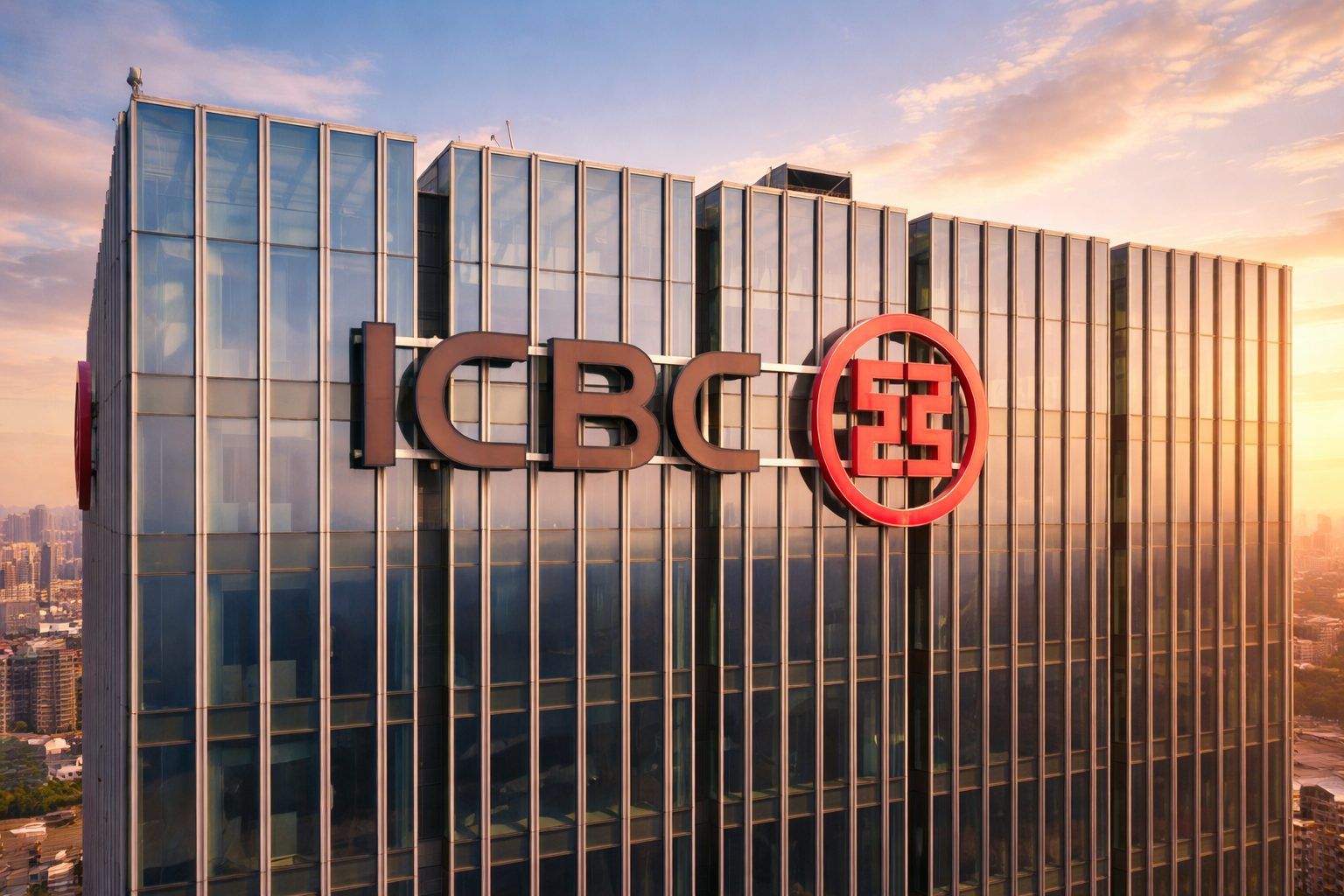
Industrial and Commercial Bank of China Ltd’s yuan-denominated Class A shares (601398.SS) head into Monday’s session amid renewed policy focus after China’s cabinet unveiled a set of fiscal and financial measures targeting domestic demand, including interest-subsidy support for consumer loans. The stock closed Friday at 7.71 yuan, up 0.26%, with around 241 million shares changing hands. Valuations stand at about 7.9 times earnings and 0.75 times book value, according to data.
Why it matters now: major state banks such as ICBC are key players in efforts to boost household spending and private-sector investment. Pushing them to increase consumer and small-business loans can drive volume higher, but it also raises familiar concerns—pricing, credit costs, and the extent of losses lenders will endure to implement policy.
Demand remains subdued. China’s consumer inflation rose 0.8% in December from a year ago, but the full-year rate held steady — the slowest in 16 years — while factory-gate prices stayed stuck in deflation. “Inflation remains relatively low and should not preclude further monetary easing this year,” said Lynn Song, ING’s chief economist for Greater China. Capital Economics’ Zichun Huang added there has been “no fundamental improvement in overcapacity.” Reuters
China’s December lending and money supply data will offer investors fresh insight into credit demand. A Reuters survey forecasts net new yuan loans hitting around 800 billion yuan ($114.6 billion) last month, up from 390 billion in November. Meanwhile, total social financing (TSF) — which covers bank loans and bond issuance — is expected to drop to 2 trillion yuan from 2.49 trillion in November. Citi Research analysts noted that “The RMB500bn policy-financing tool could have started to pass through to new RMB loans,” while Leah Fahy of Capital Economics pointed out that “growth in government bond issuance is set to slow further.” Reuters
Friday’s cabinet readout focused squarely on credit plumbing. It highlighted plans to boost loan support for services providers, expand interest-subsidy policies for personal consumer loans, and ease financing thresholds for equipment-upgrade lending. The update also introduced a special guarantee programme and a risk-sharing mechanism aimed at bonds issued by private companies.
For ICBC, the key question now is if this will spark actual loan growth or simply lead to cheaper refinancing and early quota consumption. Banks like China Construction Bank, Agricultural Bank of China, and Bank of China usually follow similar paths on stimulus news, but investors remain divided over subtle differences in dividend strategy, funding structures, and risk tied to weaker borrowers.
Margin talk won’t die down anytime soon. If there’s broad easing or moves to boost subsidised credit, net interest margins—the spread between what banks earn on loans versus what they pay on deposits—could get squeezed, even if loan demand picks up.
But the policy tool isn’t without its boundaries. Property sector stress continues to pose a real threat to lenders: developer China Vanke is reportedly working on a debt restructuring plan, Bloomberg News says. This underscores how real estate balance-sheet pressures could still push up credit costs throughout the banking system.
Before the next session kicks off, traders are zeroing in on follow-up details: how subsidies will operate, who bears the initial loss in risk-sharing, and if banks receive guidance on loan pricing for key sectors. The figures draw attention, sure, but the fine print can shift bank stocks just as quickly.
China’s next key date is Jan. 20, when it releases the monthly loan prime rate (LPR) at 9:15 a.m. local time. This benchmark guides most bank loans. A change could shake up margin forecasts and impact dividend strategies at major lenders like ICBC.