
UPDATE April 15, 2026, 22:40 (CET) – A U.S. appeals court has put Intel back on the hook in its $3 billion patent fight with VLSI Technology, tossing out a previous win for the chipmaker and ordering the dispute back to a jury. Reuters That ruling puts fresh legal risk on Intel’s plate right before earnings, stretching out a yearslong saga that’s already seen multibillion-dollar judgments and appeals. Reuters With the fight unresolved, Intel faces continued uncertainty on both the legal and financial fronts.
WASHINGTON, April 15, 2026, 08:21 EDT
Intel Corp is back in the courtroom spotlight after a U.S. appeals court revived VLSI Technology’s patent lawsuit, reigniting a legal battle that’s already produced jury awards of $2.2 billion and $949 million. The Federal Circuit set aside a 2024 California decision that had gone Intel’s way, now calling for a fresh jury trial. “The company was pleased,” VLSI CEO Scott Bain said. Intel did not respond to requests for comment. Reuters
Not the best moment, timing-wise. Shares dropped 2.1% Tuesday, finishing the session at $63.81. Still, despite that slip, they’re sitting about 44% higher for April—on pace for the strongest month since 1987, according to Barron’s. Intel is set to report first-quarter results April 23.
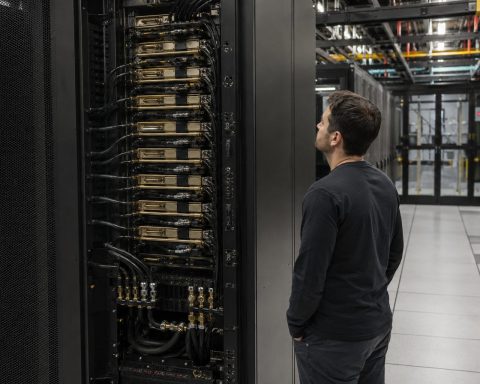
Sentiment turned once the AI narrative took a new direction. Intel and Google last week said they’re deepening their partnership, centering on Xeon chips and custom IPUs—specialized infrastructure processing units that ease workloads for CPUs—as attention in AI pivots toward inference, where models generate answers rather than just train. Chief Executive Lip-Bu Tan was direct: accelerator chips aren’t the only piece; he said, “balanced systems” matter just as much. Reuters
That’s put the spotlight back on the old-school CPU makers. Nvidia still dominates when it comes to chips powering big AI model training. But as more AI players deploy agents—software capable of tackling layered, demanding tasks—the dynamics are changing. Ben Bajarin at Creative Strategies says this stuff is increasingly happening on CPUs: “more and more,” he notes. Reuters
Intel moved fast once the tide turned, grabbing a spot just last week in Elon Musk’s Terafab project alongside Tesla and SpaceX. “An important step,” said D.A. Davidson’s Gil Luria, though he noted Intel still had to prove it could deliver on high-stakes jobs for headline clients. Even so, the company’s foundry business—Intel Foundry—faces a $10.32 billion operating loss in 2025. Reuters
Intel has tightened its grip on its manufacturing assets, snapping up the remaining 49% stake in Ireland’s Fab 34 joint venture from Apollo-managed funds. The price: $14.2 billion, as laid out in an April 8 SEC filing. To get the deal across, Intel tapped a $6.5 billion bridge loan—temporary funding it still plans to swap out. Earlier this month, CFO David Zinsner cited a “stronger balance sheet” and “improved financial discipline.” SEC
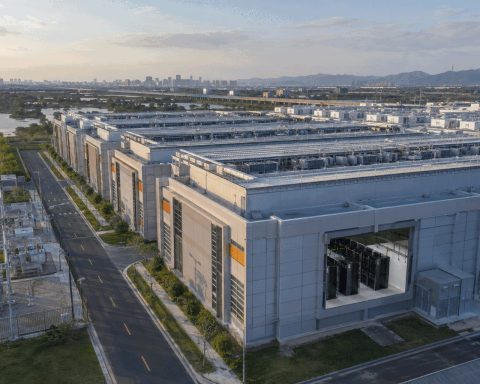
The rivalry grinds on. AMD keeps making inroads into Intel’s core server turf, according to a Reuters report from February that cited UBS figures. TSMC holds its position at the top of the global advanced AI chip market, hanging onto its edge in the most sophisticated manufacturing.
Even so, the turnaround has shown some weak spots. In March, Zinsner mentioned that Tan was reconsidering just how broadly Intel would make its 18A manufacturing available to outside customers. Barron’s flagged today that 34 of 50 analysts still rate the shares at Hold, despite the gains in April. As for the upcoming report—the pressure’s only ramped up.
Related articles: Semiconductors



![Australia Stock Market Today 26/08/2026 [UPDATE: 12:44 AEST] [Hot Core Inflation Tests ASX Advance as Hike Odds Rise]](https://ts2.tech/wp-content/uploads/2026/08/AU-market-dashboard-2026-08-26-1239-480x384.jpg "Australia Stock Market Today 26/08/2026 [UPDATE: 12:44 AEST] [Hot Core Inflation Tests ASX Advance as Hike Odds Rise]")