
SANTA CLARA, California, April 29, 2026, 11:05 PDT
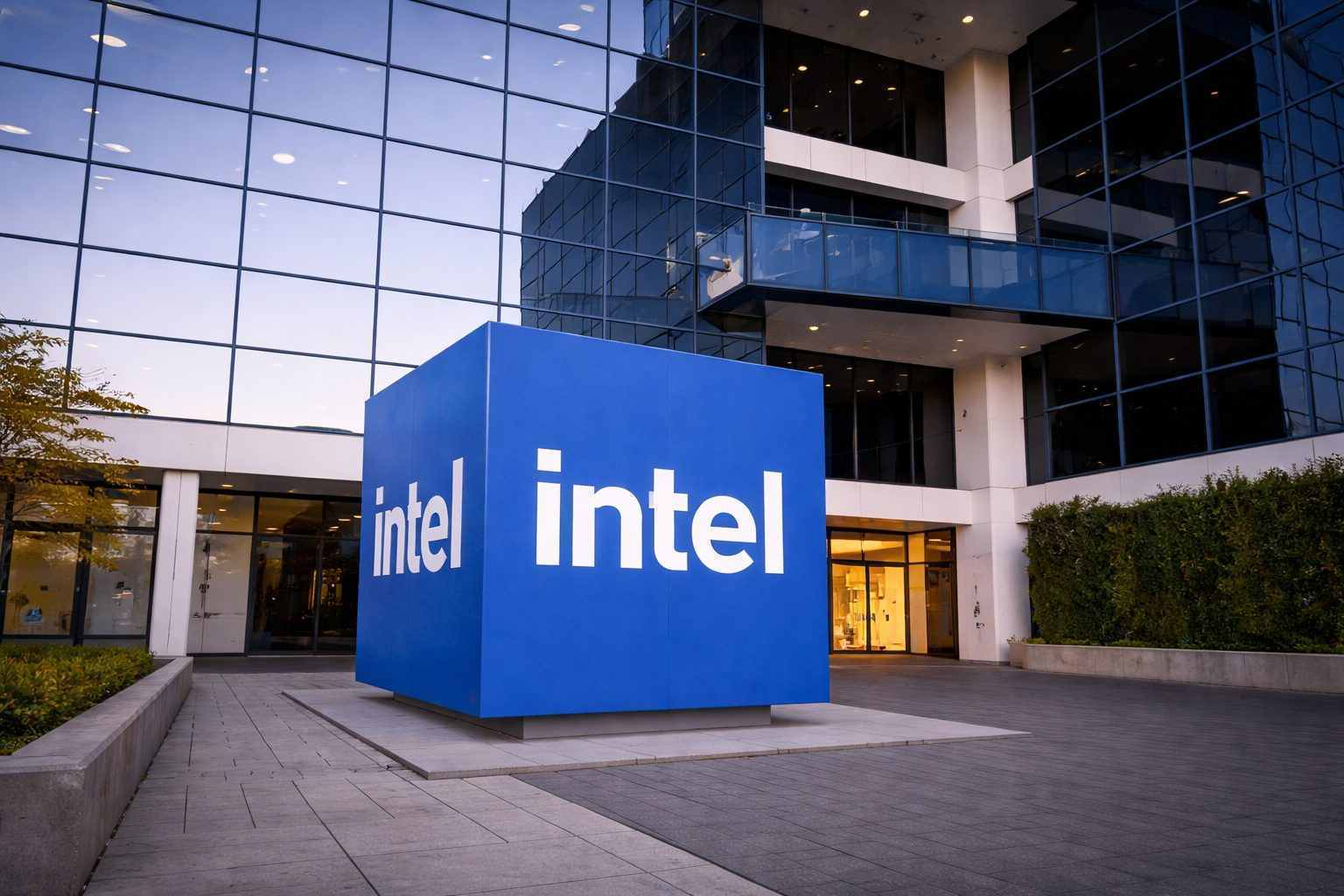
Intel Corporation stock surged roughly 10% late Wednesday morning, notching a new high after reports surfaced that Alphabet’s Google is considering Intel’s cutting-edge chip-packaging tech for an upcoming AI processor. Shares last traded at $93.23, with an intraday peak of $94.03, according to market data.
Why does this stick? Intel’s foundry push—the capital drain of Lip-Bu Tan’s turnaround—still has a lot to prove. A packaging contract tied to Google, if it lands, would give Intel some needed ammo against skeptics questioning whether it can truly rival Taiwan Semiconductor Manufacturing Co. on advanced AI chip work.
According to TrendForce, which referenced reporting from Taiwan’s Commercial Times, Google’s TPU v8e might be built with Intel’s EMIB tech. EMIB—Embedded Multi-die Interconnect Bridge—connects multiple chiplets into a single package. Google’s TPUs, or tensor processing units, power its machine-learning systems.
Just days after Intel’s first-quarter numbers—$13.6 billion in revenue, a 7% year-on-year jump—another report surfaced. For the second quarter, Intel is guiding revenue between $13.8 billion and $14.8 billion. Non-GAAP earnings landed at 29 cents a share, a marked improvement from the same period last year.
Intel is seeing demand pick up as the AI market shifts from training to inference—the point when AI models start handling actual user questions and tasks. “The next wave of AI” brings intelligence nearer to end users, Tan said last week. That shift is boosting appetite for Intel’s CPUs and packaging products. Intel Corporation
“Unprecedented demand for silicon,” CFO David Zinsner said. Still, Reuters noted that some of Intel’s first-quarter boost came from moving chips it had kept on ice. Zinsner wasn’t certain that tailwind would show up again in Q2, he told analysts. Reuters
Intel and Google weren’t strangers. Back on April 9, they rolled out a multiyear deal—tying up Xeon processors with custom infrastructure processing units, or IPUs, designed to shift networking, storage, and security work away from main CPUs. “Intel’s Xeon roadmap gives us confidence,” said Google’s Amin Vahdat in the announcement. Intel Corporation
Competition here is focused but significant. Nvidia holds its lead in AI training, thanks to its graphics processors. Advanced Micro Devices has been turning up the pressure in server CPUs and AI accelerators. Intel, for its part, is making the case that AI setups require a more balanced infrastructure—it’s not all about GPUs.
This is what puts the foundry issue front and center. Intel’s Products division hauled in $12.8 billion in first-quarter sales. The Foundry segment brought in $5.4 billion—but the bulk of that still comes from internal demand, not third-party clients.
Bob O’Donnell, who heads TECHnalysis Research, told Reuters that if the foundry business starts pulling real weight by 2027, that would signal Intel’s “turnaround is complete.” That scenario, not just another stretch of robust server-chip sales, is what investors are betting on now. Reuters
But here’s the rub: those Google EMIB reports aren’t backed by a confirmed order from the company, and Intel’s foundry ambitions still come with a hefty price tag. For the first quarter, Intel logged a GAAP net loss of $3.7 billion, weighed down by over $4 billion in restructuring and related charges.
Michael Schulman, partner at Cerity Partners, described the long-term picture to Reuters as a “high-stakes gamble” on Intel’s chances of establishing itself as a legitimate foundry rival by 2030. That risk is still hanging around. With Wednesday’s rally, the price of seeing the next milestone just moved higher. Reuters
Related articles: NASDAQ:INTC