
New York, May 18, 2026, 10:04 EDT
Intel stock picked up some ground in early New York trading Monday after chip names tumbled last week. Traders looked at fresh analyst targets, remarks from President Donald Trump on the government holding, and more arguments about how much is left in the AI trade.
The stock was last at $109.10, up 0.3%, after trading between $106.81 and $115.20. The iShares Semiconductor ETF slid 0.9%. Nvidia eased 0.2%. Advanced Micro Devices was unchanged.
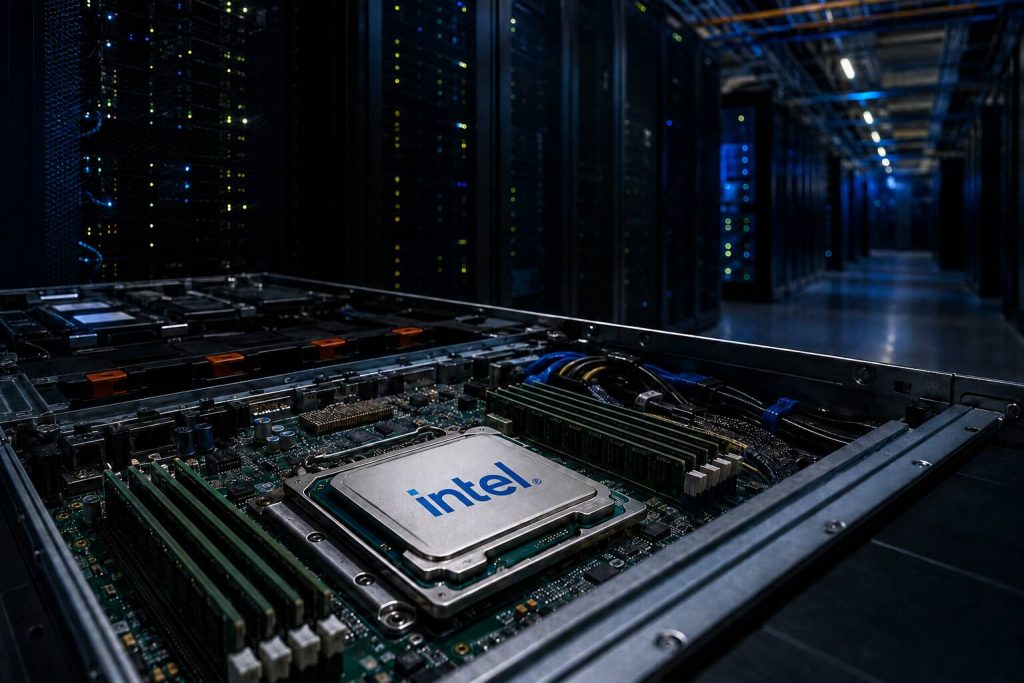
Intel is more than a turnaround story now. The stock is seen as a gauge of whether people still have an appetite for AI trades linked to CPUs, the standard server and PC chips, or if the focus is still on GPU players like Nvidia.
Intel saw some gains after the open as the broader market lifted. The S&P 500 and Nasdaq rose in early trade, chip stocks moved up, and bond selling slowed, Reuters reported. Still, Friday’s losses lingered—Intel dropped 6.2% last session and the Philadelphia semiconductor index fell 4%. Traders pointed to inflation and higher Treasury yields as pressure.
Trump put a political spotlight on the stock, telling Fortune he “should have asked for more” from Intel for the U.S. government, according to Reuters. The Trump administration took a 10% stake in Intel last year and committed about $10 billion tied to U.S. manufacturing plans. Reuters reported the government stake in Intel is now above $50 billion. Reuters
Intel got fresh target hikes from Wall Street. Citi analyst Atif Malik lifted his price target to $130 from $95. Benchmark analyst Cody Acree moved to $140, Barron’s reported. Still, Intel looked set for a five-day slide in premarket trade before bouncing Monday, according to Barron’s.
Intel reported first-quarter revenue of $13.6 billion, up 7% from the prior year. The company guided for second-quarter revenue in a range of $13.8 billion to $14.8 billion. Its Data Center and AI business rose 22%, while Intel Foundry, the contract chip unit, booked a 16% increase.
Chief Executive Lip-Bu Tan said AI’s surge is “increasing the need for Intel’s CPUs.” Finance chief David Zinsner called it “unprecedented demand for silicon.” Intel reports both non-GAAP and GAAP earnings. The non-GAAP figures strip out certain costs management doesn’t count as core. Business Wire
Intel lost some ground in the server CPU market in the first quarter, with its share falling to 54.9%, UBS analysts told Barron’s. AMD picked up share at 27.4%, and Arm reached 17.7%. Even as AI demand picks up, Intel’s competitors keep cutting into its lead.
Valuation risk is also in focus. Michel Lerner, head of HOLT at UBS, said investors could be pricing AI firms like they’re “immune to normal competitive dynamics.” HOLT looks at company performance and valuation through cash flow return on investment, or cash profit versus capital in. Barron’s
Semiconductor stocks have rallied. The Philadelphia Semiconductor Index surged 64% since March 30, according to Reuters. Intel shares nearly tripled in the same stretch. Michael O’Rourke, chief market strategist at JonesTrading, told Reuters semiconductors now make up enough of the S&P 500 that “any correction or any disappointment creates risk” for the index as a whole. Reuters
Intel reports next on Tuesday, when Tan is scheduled to speak at the J.P. Morgan Global Technology, Media and Communications Conference. Investors are watching for more on Intel’s strategy, the manufacturing roadmap, and if AI demand will start to lift profit or just bump up revenue.
Intel faces a tough spot if bond yields stay high, oil pushes inflation, or AMD and Arm gain more ground in servers. Investors might not pay up for Intel’s future profit in that case. The stock could take a hit, even if the long-term AI bull case is still there.