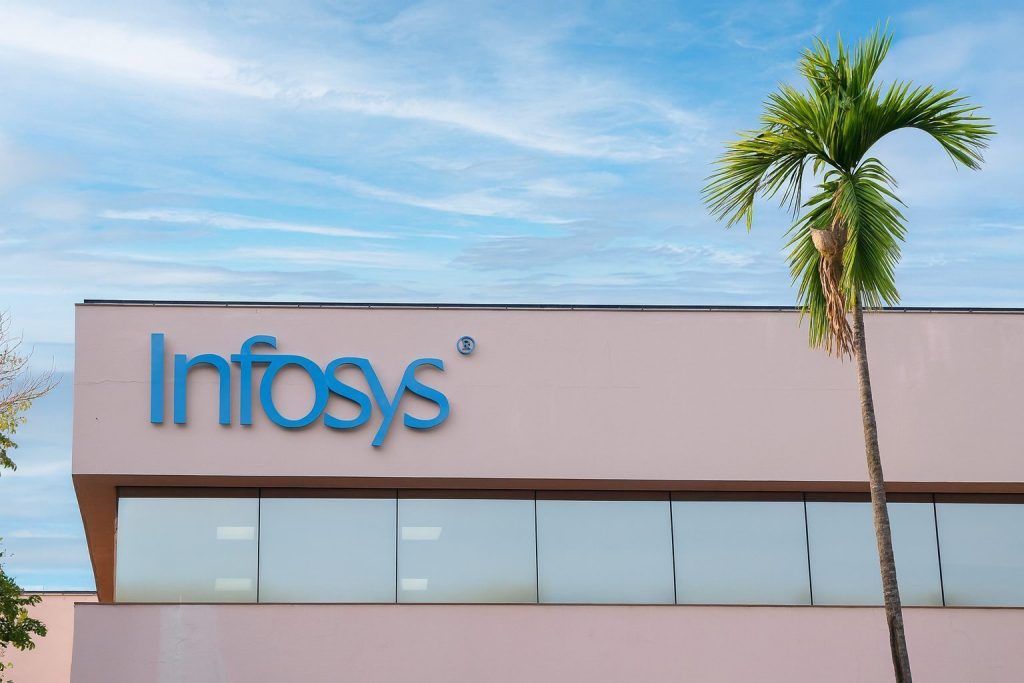
InterGlobe Aviation Ltd (IndiGo), India’s largest airline operator, has spent December doing what airlines do best: trying to fly straight through turbulence that refuses to stay neatly at cruising altitude.
As Indian markets are shut on Saturday (December 20, 2025), the latest tradable reference remains Friday’s close. InterGlobe Aviation ended December 19 on NSE around ₹5,153.50 (up about 0.74% on the day), after a volatile first half of the month driven by operational disruptions and a rapidly intensifying regulatory spotlight. Investing.com+1
The stock is still well below its 52-week peak (₹6,232.50, August 18, 2025) even after a recovery streak, underscoring how quickly “execution risk” can become “headline risk” for a market leader. NSE India
What follows is a full, up-to-date roundup (as of 20.12.2025) of the latest news flow, company guidance, broker forecasts, and key watchpoints shaping InterGlobe Aviation/IndiGo stock right now.
InterGlobe Aviation share price today: where the stock stands
InterGlobe Aviation (NSE: INDIGO, BSE: 539448) closed December 19 near ₹5,153.50 on the NSE, with the month’s tape showing a sharp drawdown early in December and a steadier rebound into the third week. Investing.com
That rebound has been meaningful: Reuters data carried by TradingView described the stock as among the top weekly gainers on the Nifty 50, with a weekly gain near 6% and a return to around 2,200 daily flights as operations stabilized—yet still down ~13% since early December at that time. TradingView
The story behind the volatility: operational disruption turned regulatory cascade
IndiGo’s early-December disruption has become one of those rare corporate episodes where the “why” matters as much as the “how much.”
Reuters reported that IndiGo cancelled roughly 4,500 flights earlier this month due to poor pilot roster planning, stranding tens of thousands of passengers and triggering government intervention—including temporary caps on fares during the disruption. Reuters
A Reuters Breakingviews analysis pushed the structural angle: IndiGo’s market share (around the mid-60% range in domestic skies) means operational issues scale into system-wide stress quickly—especially when pilot rest rules tighten and alternatives are limited. Reuters
The market reaction has effectively repriced one big question: Is this a short-lived execution stumble—or the start of a more persistent cost/regulatory regime change?
Today’s biggest new overhang: CCI antitrust review is now in play
What’s new as of Dec 20
India’s Competition Commission (CCI) is now formally in the frame.
Reuters reported the regulator is reviewing allegations of antitrust violations linked to the disruption and fare spikes, after it said it had taken cognizance of information filed against IndiGo and would proceed with an initial assessment. Reuters
Business Standard (via PTI) added important nuance overnight: CCI chairperson Ravneet Kaur said the commission’s decision came after an initial assessment, and the review is specific to IndiGo, with no decision yet on whether it will be examined under the abuse-of-dominance provision (Section 4) at this stage. Business Standard
Why investors care
For InterGlobe Aviation stock, a CCI review adds a second regulatory vector to an already crowded dashboard:
- DGCA / civil aviation compliance (operational resilience, crew planning, schedule integrity)
- Competition scrutiny (dominance + consumer harm allegations during disruption)
Even without immediate penalties, these processes can influence sentiment because they raise the probability of restrictions, mandated changes, or reputational drag.
DGCA action forced a guidance reset: capacity growth and unit revenue cut for Q3
If the antitrust review is the new headline, the most concrete near-term financial impact still comes from the operational disruption and regulator-directed capacity trimming.
Reuters reported IndiGo cut its Q3 capacity growth expectation to the “high single to early double-digit percentage” range (from “high teens” previously). It also guided to a mid-single-digit downward moderation in passenger unit revenue versus earlier expectations of flat-to-slight growth, after the regulator directed a 10% cut to the airline’s domestic winter schedule. Reuters
Jefferies’ note (reported by Economic Times) echoed the same chain of causality—disruption, higher costs, and the DGCA’s schedule cuts—while warning that crew availability under fatigue rules could become a binding constraint. The Economic Times
December 20 operational update: fog disruptions add near-term noise
IndiGo’s December operations are now fighting on two fronts: recovery from the roster shock and winter weather.
Economic Times reported that on December 20, dense fog/low visibility affected operations across northern India, with IndiGo cancelling 80+ flights from various airports due to adverse weather conditions (with local airport specifics also listed). The Economic Times
Fog disruption is not the same as a systems failure—airlines expect weather volatility—but after the early-December episode, investors tend to read any fresh disruption through a harsher lens.
Legal and tax developments: ₹900 crore customs duty refund plea and GST-linked penalty
Delhi High Court: ₹900 crore customs duty refund plea
InterGlobe Aviation has also taken a significant tax dispute to court.
Economic Times reported that the Delhi High Court sought a response from revenue authorities on InterGlobe’s plea seeking a refund of ~₹900 crore in customs duty paid on aircraft engines/parts re-imported after overseas repair, with the next hearing scheduled for April 8. The report also described InterGlobe’s argument that the levy amounted to a double charge on the same transaction (having paid duties at first import and GST on repair services). The Economic Times
GST-linked penalty: nearly ₹59 crore (company says it will contest)
LiveMint reported IndiGo disclosed a GST-linked penalty order of nearly ₹59 crore (₹58,74,99,439) for FY2020–21, said the company would contest the order, and indicated it did not expect a significant impact on operations or financials. mint+1
For stock-watchers, these items are rarely primary drivers day-to-day, but they add to a broader “regulatory and compliance intensity” narrative already active in the tape.
What brokerages and analysts are saying: targets are being cut, but “Buy” calls still dominate
December’s disruption triggered a wave of brokerage revisions. The pattern is consistent: targets trimmed, models de-risked for higher costs/lower growth, but many analysts still argue IndiGo’s scale advantage remains intact.
1) Jefferies: target cut, Buy maintained
Economic Times reported Jefferies cut its target price to ₹6,035 from ₹7,025, while retaining Buy, citing disruption and higher costs hurting near-term earnings, alongside sharp reductions to FY26–FY28 estimates. The Economic Times
2) Emkay Global: Buy, target ₹6,300; normalization thesis
Economic Times reported Emkay maintained Buy with a ₹6,300 target, while flagging the operational disruption and ongoing DGCA review. It also discussed the role of pilot fatigue norms and referenced temporary regulatory relief timelines as part of the near-term operating path. The Economic Times
3) Geojit: Buy, target cut to ₹5,830; competitive slot risk + hiring costs
Business Standard reported Geojit cut its target to ₹5,830 (from ₹6,720) while keeping Buy, pointing to heightened regulatory scrutiny, potential competitive reallocation of slots, and pilot recruitment challenges. It also noted IndiGo’s hiring plan (including 158 pilots by February and 742 by end-2026) and warned that the DGCA’s 10% flight reduction could open room for competitors to fill gaps. Business Standard
4) Prabhudas Lilladher: downgrade to Hold, target ₹5,236; “structural cost” concern
A Prabhudas Lilladher report (via a Moneycontrol-hosted PDF) took a more cautious line, downgrading to HOLD with a target price of ₹5,236. The note argues new FDTL norms pose a structural challenge to costs and ASKM growth, estimates higher employee costs per ASKM over FY26–FY28E, and highlights pilot availability constraints. Moneycontrol Images
5) Consensus snapshots: upside still implied, but dispersion is widening
Trendlyne’s compiled analyst view showed an average target around ₹6,185.67 (implying upside from the then-referenced price), but the more important takeaway for December is dispersion—targets are no longer clustered tightly when regulation and cost structure are moving variables. Trendlyne.com
Separately, Reuters data on TradingView described the stock as rated “buy” on average by a large analyst set, with a median price target around ₹6,000 in LSEG-compiled data. TradingView
A notable “today” call: Kotak raises IndiGo weight for 2026 positioning
One of the more market-moving analyst actions dated Dec 20, 2025 comes from portfolio strategy rather than a single-stock initiation.
Economic Times reported Kotak Institutional Equities expects Indian stocks to perform better in 2026 on improving earnings/consumption/macro dynamics, and in that context raised its weight on InterGlobe Aviation in its model portfolio. The Economic Times
This matters because it frames IndiGo not merely as a recovery trade—but as a potential core holding for a domestic-demand-led cycle, assuming regulatory aftershocks don’t permanently rewire margins.
Fundamentals check: why the long-term bull case hasn’t vanished
Even with December’s chaos, broker bulls keep returning to the same structural pillars:
- Scale in a fast-growing aviation market
- Network depth and aircraft pipeline
- Ability to spread costs, negotiate, and keep utilization high when conditions normalize
For financial context, an ICICI Securities results update from November (post Q2 FY26) showed IndiGo’s quarter included a large forex loss that swung reported profitability, while also detailing operating metrics like passenger growth, ASK/RPK, and cost/unit revenue measures. The note also highlighted how currency depreciation can pressure a USD-linked cost base and discussed management commentary on yields and capacity plans. AssetType Images
This is why December is being modeled as a shock to near-term earnings rather than a death blow—provided the airline can demonstrate sustained schedule integrity under the tighter rules.
Growth catalysts still in the pipeline: Navi Mumbai airport launch and route expansion
Away from the crisis headlines, IndiGo has continued to push network expansion.
IndiGo’s own press releases state the airline plans to start operations from the newly launched Navi Mumbai International Airport (NMIA) beginning December 25, 2025, connecting it to ten cities (including Delhi, Bengaluru, Hyderabad, Ahmedabad, Lucknow, Jaipur, Nagpur, Kochi, among others), with an intent to progressively add more direct routes. IndiGo
For InterGlobe Aviation stock, these expansions matter because they reinforce the underlying thesis: India’s demand runway is long, and IndiGo intends to be the biggest plane on it.
Key risks that could still move InterGlobe Aviation stock sharply
- Outcome risk from regulators
- DGCA actions and any penalties/restrictions tied to December disruptions
- CCI’s next step: whether it escalates from initial assessment to a deeper probe Reuters+1
- Structural cost reset
- Pilot availability, wage inflation, and staffing ratios under FDTL-style norms
- Higher “reliability spend” (buffers, standby crews, wet/damp lease costs) Moneycontrol Images+1
- Competitive slot dynamics
- If rivals capture temporarily ceded capacity/slots, pricing power can soften even after IndiGo normalizes Business Standard
- Reputation and demand elasticity
- Jefferies explicitly frames long-term brand impact as dependent on how quickly stability is sustained The Economic Times
- Winter ops volatility
- Fog-related disruptions are normal seasonality, but after a crisis, markets treat “normal disruption” as a stress test of robustness The Economic Times
What to watch next: the December 2025–February 2026 checklist
For investors tracking InterGlobe Aviation (IndiGo) stock into year-end and early 2026, the near-term tape is likely to be driven by a handful of measurable signposts:
- Consistency of daily operations (is the 2,200+ flights/day stability sustained?) TradingView+1
- DGCA and government findings (Business Standard reported a ministry committee expected to submit findings by Dec 28) Business Standard
- Any CCI escalation beyond the initial assessment phase Business Standard+1
- Further updates to Q4/FY26 guidance, after the regulator-induced Q3 reset Reuters
- Evidence on cost control: hiring pace, crew availability, and whether unit costs drift higher than earlier expectations Moneycontrol Images+1
Bottom line for Dec 20, 2025
InterGlobe Aviation stock is no longer trading purely on India aviation growth. It’s trading on growth plus governance, scale plus scrutiny, demand plus discipline.
The market has already seen two narratives collide in December:
- The bullish one: IndiGo’s dominance and India’s expanding travel demand can drive long-run value.
- The bearish one: dominance attracts regulators, and operational stumbles can quickly become financial and legal overhangs.
Right now, analysts are still largely positive—but they’re also visibly lowering targets and rebuilding models around a tougher regulatory/cost environment. That combination often produces the choppiest kind of market: not panic, not euphoria—just constant repricing as new facts land.