
IREN Limited NASDAQ:IREN fell sharply on Friday, Dec. 12, 2025 and steadied after the bell. Here’s what moved the stock, the latest financing and AI-cloud catalysts, updated analyst targets, and the key risks to monitor before the next Nasdaq session.
IREN Limited NASDAQ:IREN ended Friday, December 12, 2025 with a steep pullback and only a modest change after-hours—an important reset for a stock that has become a high-volatility proxy for two fast-moving themes: AI data-center buildouts and crypto-mining economics.
During the regular session, IREN closed at $40.145, down 8.64% on the day after trading between $44.150 and $39.350, with roughly 33.4 million shares changing hands. Investing.com In early after-hours action, the stock edged up to around $40.24.
What’s especially notable for investors heading into the next session: there is no regular Nasdaq open on Saturday, Dec. 13, 2025 (U.S. markets are closed on weekends). So the practical “next open” for IREN traders is Monday, Dec. 15, 2025—and the weekend may be a key window for crypto and macro narratives to reshape sentiment.
Below is what matters most from the Dec. 12 tape and the latest news cycle.
What happened to IREN stock on Dec. 12, 2025
The headline move was simple: a sharp selloff into the low-$40s, with the stock touching the high-$39s intraday before stabilizing near the close.
Market commentary focused on two overlapping pressures:
- Financing + dilution mechanics (a very common trigger for violent moves in “buildout” stories that need constant capital), and
- A cooling “neocloud” trade—the cluster of smaller AI-capacity providers whose valuations can swing quickly when the market gets nervous about capex, funding costs, or AI demand assumptions.
That second point mattered this week because Oracle’s latest results and guidance helped revive “AI overvaluation” concerns and briefly weighed on neocloud names (including IREN) in the prior session. Schaeffers Investment Research+1
The core overhang: IREN’s new convertible notes + equity financing (and why it can pressure the stock)
Investors have been digesting IREN’s early-December capital-raising package—large enough that its market impact can linger for days.
What IREN did (recently):
- Closed a $2.3 billion convertible senior notes offering (including exercised options) and used proceeds for capped call transactions, repurchases of existing convertibles, and general corporate purposes.
- Repurchased about $544.3 million principal of its existing convertibles (split between the 2029 and 2030 notes) using cash funded by a registered direct placement of ~39.7 million ordinary shares at $41.12.
The part traders focus on:
Convertible financings can create real, mechanical selling pressure via hedging. In IREN’s own disclosures around the transaction structure, it warned that holders and counterparties may buy/sell shares or derivatives to hedge/unwind positions—and that this activity can be substantial relative to typical trading volume and can adversely affect the share price.
That matters because it helps explain why IREN can fall hard even without a “new” negative headline on a given day: the market can be working through positioning and hedging flows.
The longer-term catalyst still in focus: Microsoft’s $9.7B AI cloud contract
While Friday’s move looked like a risk-off / financing digestion day, the longer-term bull thesis is still tied to IREN’s high-profile AI cloud expansion.
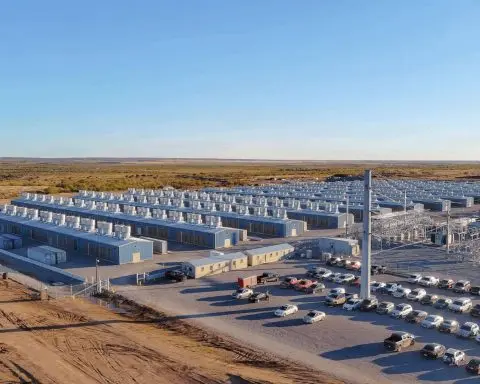
Reuters previously reported that Microsoft signed a $9.7 billion deal with IREN aimed at securing access to advanced Nvidia chips amid industry-wide compute constraints. The arrangement includes a Dell equipment component (about $5.8 billion) tied to Nvidia processors, and Reuters noted the deployment is scheduled in phases through 2026 at IREN’s Childress, Texas campus.
But Reuters also highlighted a critical point investors keep circling back to: timeline execution risk. The contract could be terminated if IREN fails to meet delivery timelines, which makes schedules, construction milestones, and supply-chain execution central to how the market values the story.
Why this matters for “after-hours + next open” positioning:
When a company has both (a) a blockbuster growth narrative and (b) financing dependence to execute it, the stock can swing between “AI infrastructure winner” and “capex + funding risk” in a matter of sessions.
Friday’s mood shift: “Neocloud” volatility and funding-cost anxiety
IREN trades in a peer set that includes other AI capacity providers (and former crypto miners pivoting into AI/HPC). This week, market coverage repeatedly returned to a theme: investors are watching funding costs, dilution risk, and debt-market appetite for AI infrastructure expansion.
A Nasdaq.com analysis published earlier this week framed the sector’s tension bluntly: debt markets can get nervous when capex ramps fast, and a company’s ability to finance expansion becomes part of the investment thesis. The same piece argued that IREN (and peers) are heavily reliant on capital markets while trying to convert physical power capacity into contracted AI revenue.
Separately, Schaeffer’s noted that “AI overvaluation fears” re-emerged after Oracle’s report and that IREN remained heavily shorted around that move—conditions that often amplify swings in either direction. Schaeffers Investment Research+1
Analyst forecasts and price targets: still bullish on paper, but the spread is huge
Even after the volatility, consensus targets (depending on the dataset) still imply meaningful upside—while the bear cases are not trivial.
- MarketBeat’s Dec. 12 roundup described a “Moderate Buy” consensus and cited a consensus price target around $69.85 (with a mix of Buy/Hold/Sell ratings). MarketBeat
- Investing.com’s consensus page (13 analysts) listed an average target around $81.85, with a high estimate of $136 and a low estimate of $24—a range that underscores how uncertain and narrative-driven the valuation remains.
How to interpret that spread before the next session:
When targets range from the mid-$20s to triple digits, the real takeaway isn’t “the target.” It’s that the market is still debating:
- whether IREN should be valued more like a Bitcoin miner with AI optionality, or
- more like a specialized AI cloud/compute infrastructure provider with long-duration contracted revenue potential.
That debate tends to reprice quickly when macro conditions change (rates, credit spreads), when large-cap AI names wobble, or when any data point suggests buildout timelines are slipping.
Short interest and volatility: why IREN can gap hard
IREN’s moves often look “too big” compared with conventional industrial or software stocks, and part of that is simply positioning.
MarketBeat’s short-interest snapshot (as of Nov. 28, 2025) showed about 54.53 million shares sold short, roughly 20.25% of the float, with a days-to-cover ratio around 1.4.
Add in the potential for hedging/arb flows around convertibles, and you have a setup where:
- rallies can be fast (short-covering + momentum), and
- selloffs can be fast (hedging + risk-off + profit-taking).
What to know before the next Nasdaq open (practically: Monday, Dec. 15)
Because Dec. 13 is a Saturday, the actionable question becomes: what can change sentiment between Friday’s close and Monday’s open? Here are the key items investors typically monitor for IREN specifically:
1) Any incremental news on financing, dilution, and hedging flows
Even without a new press release, the “after-effects” of a large financing can show up in:
- unusual volume patterns,
- persistent weakness into rallies, or
- volatility around key price levels.
IREN’s own filings warn that hedging/derivative activity tied to convertibles can affect the stock price—so this isn’t just theory.
2) AI infrastructure sentiment after Oracle’s ripple effect
This week showed how quickly sentiment can change when large-cap cloud names deliver mixed signals. Reports tying Oracle’s results to weakness across neocloud stocks explicitly included IREN among the names that sold off.
If broader AI infrastructure multiples compress Monday, IREN can move with them—often with leverage.
3) Bitcoin and crypto-market moves over the weekend
Even as IREN leans into AI cloud, it still trades with a “crypto-adjacent” halo in many investors’ minds. Weekend crypto volatility can shape Monday equity flows for mining-linked names.
4) Execution risk checkpoints for the Microsoft-linked buildout
The Microsoft deal is a major upside narrative—but Reuters underscored that timelines matter and that the agreement could be terminated if delivery timelines aren’t met. Reuters
That puts extra attention on any weekend chatter or Monday headlines about:
- Nvidia GPU supply,
- data center buildouts, power and cooling,
- Dell AI server capacity, and
- hyperscaler procurement behavior.
5) Calendar awareness: next earnings window is approaching (and dates vary by source)
Earnings calendars are not perfectly aligned across providers, but multiple listings point to mid-February 2026 as the next major scheduled catalyst—some estimating Feb. 11, 2026, others listing Feb. 18, 2026 (after close). Zacks+1
With a stock as headline-sensitive as IREN, traders often start repositioning well ahead of earnings.
6) Verify whether there’s actually “new” company news since Friday
IREN’s investor relations news feed shows the most recent company release was Dec. 8, 2025 (the convertible close and repurchase update), with prior items on Dec. 3 and Dec. 1. IREN
So Friday’s action appears more about market digestion and sector sentiment than a fresh company announcement.
The bottom line for Dec. 12 after-hours: stable quote, unstable narrative
IREN’s slight after-hours stabilization following an ~8.6% regular-session drop suggests dip-buyers showed up—but the “next open” setup is still shaped by three variables that can change quickly:
- Capital markets confidence (can IREN fund expansion smoothly without excessive dilution?), sec.gov+1
- AI infrastructure sentiment (neocloud multiples can re-rate fast), TipRanks+1
- Execution credibility (milestones tied to large customer contracts).
For investors heading into Monday, the most useful mindset is less “What did the stock do after the bell?” and more: What new information could change the market’s confidence in IREN’s buildout plan—and what will funding cost if sentiment sours again?
Related articles: NASDAQ:IREN