
New York, May 12, 2026, 11:11 EDT
- IREN slipped roughly 2.4% to around $53.80 by late Tuesday morning, as attention turned from Nvidia’s boost to the company’s $2.6 billion upsized convertible-note pricing—raising fresh worries over dilution and funding costs.
- Bulls are banking on limited AI infrastructure. IREN points to its $3.4 billion Nvidia AI Cloud contract, a 5 GW strategic partnership, and $3.1 billion in contracted ARR. That figure refers to annual recurring revenue—the sales per year tied to signed agreements.
- Investors watching the downside point to balance-sheet strain and execution risks. Shares of crypto-infrastructure rivals Cipher Digital, Riot Platforms, and Marathon Digital slipped as well. IREN posted a net loss of $247.8 million for its most recent quarter.
Shares of IREN Limited slid Tuesday after investors were handed the tab for the fresh narrative they’d signed up for. The company upsized its offering, pricing $2.6 billion in 1.00% convertible senior notes due 2033—more than the $2 billion it initially targeted. Convertible notes deliver immediate funds but carry the risk of future shareholder dilution as they’re swapped for equity down the line.
That’s what drove the action. Nvidia’s tie-up gave IREN bona fides as an AI-infrastructure player instead of just a bitcoin miner with excess power lying around. The note sale brought focus back to the capital costs—data centers, substations and the GPUs powering AI—all need upfront funding. IREN shares changed hands around $53.80, under the $55.15 closing level from May 11, which served as the benchmark for the financing.
On paper, the terms look reasonable. The notes pay a 1% coupon, so investors get some annual cash, and they’re set to convert at roughly $73.07 per share—a hefty 32.5% premium to where shares finished on May 11. This setup limits quick dilution. Still, the overhang isn’t gone. The market is pricing IREN for what it is now: a capital-heavy infrastructure play, not just a stock that jumps on contract news.
IREN snapped up capped calls—those option hedges that are supposed to soften dilution if the convertible debt flips into equity. The cap starts at $110.30. That helps, sure, but it’s not a cure-all. IREN made it clear: the hedges only protect against dilution up to that ceiling. And don’t forget, hedge trades themselves can shake the stock, both at pricing and when conversions roll around.
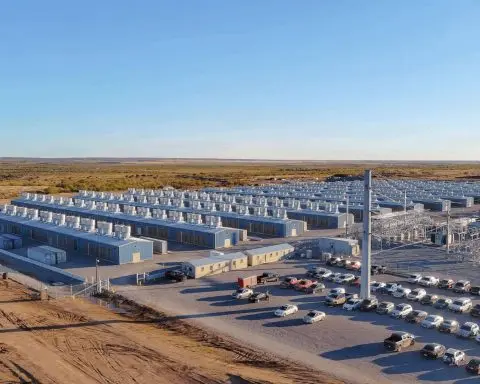
The Nvidia factor is still a big driver. Last week, IREN announced a five-year AI Cloud agreement worth about $3.4 billion, aimed at handling Nvidia’s internal AI and research work using air-cooled Blackwell systems at the company’s Childress, Texas site. Daniel Roberts, who co-founded IREN and serves as co-chief executive, called the deal proof that IREN can deliver “fully managed cloud solutions, not just bare metal.”
On the latest call, the tone was both confident and edged with urgency. Roberts assured investors that IREN isn’t “chasing demand”—the focus now is on getting enough supply online. He singled out “time-to-compute” as the crucial metric. To put it simply: the quicker IREN converts its power and infrastructure into operational AI capacity, the sooner those contracts will start generating revenue. SEC
Traders aren’t hanging around, and the numbers lay out the reasons. Revenue for the March quarter dropped to $144.8 million, down from $184.7 million in the previous period, as bitcoin-mining income slid and mining hardware was pulled offline to make room for GPU setups. AI Cloud brought in $33.6 million, nearly doubling from $17.3 million, but that wasn’t enough—net loss ballooned to $247.8 million, with non-cash impairment charges, mostly from mining gear, weighing on the bottom line.
The bullish pitch: IREN sits on the critical resource—large-scale, grid-linked power. Management insists every megawatt they operate is spoken for, with $3.1 billion in annual recurring revenue locked down by contract. Plans for a 2026 ramp-up to 480 MW? Still moving forward. Nvidia, for its part, landed a five-year option allowing it to scoop up as many as 30 million IREN shares at $70, a stake potentially worth $2.1 billion. But don’t confuse that with cash on hand; it’s more a mark of execution than immediate liquidity.
The bear case follows. As of March 31, IREN had $3.69 billion in convertible notes payable on the books—before factoring in this new deal. Its most recent cash-flow statement listed $949.2 million spent on property and plant, plus $406.1 million on hardware during the quarter. It’s not demand for compute that’s in question here. The concern is whether IREN can continue to fund these builds and still hit targets for margin, uptime, and delivery.
No lift from the peer tape here. Cipher Digital slipped roughly 5.2%, Riot Platforms dropped about 5.5%, and Marathon Digital tumbled more than 10% by late Tuesday morning, as Bitcoin held just under $80,599. The prediction markets weren’t signaling widespread crypto nerves: Polymarket had the May 12 Bitcoin range at $80,000 to $82,000 with an 89% probability, and Kalshi’s crypto page was showing around a 51% chance of Bitcoin breaking $85,000 this month. IREN’s slide, then, appears more about funding and miner-equity jitters than Bitcoin’s move.
The Mirantis deal throws more complexity into the discussion. IREN is handing over roughly $625 million in stock to pick up a cloud infrastructure and enterprise support player with a customer list topping 1,500. Bulls argue that software, orchestration, and support could fill key gaps, letting IREN move past just selling raw GPU capacity. Bears are focused on the pile-up of integration work and fresh shares coming at a time when IREN is already in the middle of an intense build-out.
No, today isn’t some outright dismissal of the Nvidia trade. What’s happening is a reset on what it’s going to cost to chase it. IREN just landed exactly the contract update AI infrastructure bulls look for. The catch? Now, the shares are left dealing with new debt, outsized capex, and questions about whether they can actually get the build done on time.
Related articles: Artificial Intelligence