New York, Jan 12, 2026, 11:26 (ET) — Regular session
- JPMorgan Chase shares fell about 2% in late morning trade as bank stocks weakened broadly.
- The drop followed President Donald Trump’s call for a one-year cap on credit card interest rates at 10%.
- Investors are now bracing for JPMorgan’s quarterly results on Tuesday for clues on consumer credit and pricing.
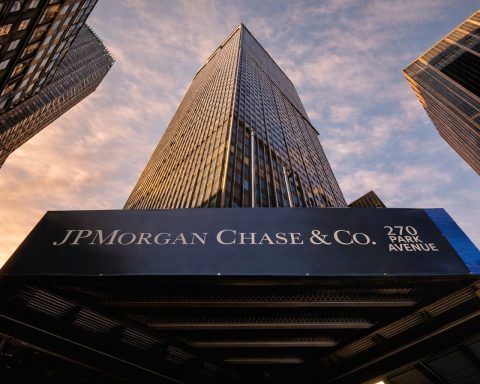
JPMorgan Chase & Co shares fell on Monday as traders sold bank stocks after President Donald Trump called for a one-year cap on credit card interest rates. JPMorgan was down $6.60, or about 2%, at $322.59 in late morning trading.
The timing is awkward for bulls. JPMorgan reports results on Tuesday, kicking off earnings season for the biggest U.S. lenders, when executives will have to address consumer credit trends and the bank’s exposure to any shift in card economics.
Credit cards are a rich business. That’s the point. They also sit at the intersection of politics, household stress and bank risk appetite, and markets do not like sudden rule talk in that corner.
Trump on Friday called for a 10% cap on credit-card interest rates starting Jan. 20, without spelling out how the administration would force compliance. JPMorgan and Bank of America fell 2.5% and 1.6% in early trade, while Citigroup slid 3.7% and Wells Fargo 1.5%; Synchrony, Bread Financial and Capital One dropped 8% to 11%. UBS Global analysts said “It would take an Act of Congress” to put caps in place, and Seaport Research’s Bill Ryan wrote that “‘affordability’ has become a top concern” as average card rates ran 20.97% in November; J.P. Morgan analyst Vivek Juneja warned the cap “could push consumers towards more expensive debt.” Reuters
For banks, the worry is straightforward: a rate cap compresses profit on card balances and can change who gets credit. Credit cards are “unsecured loans,” meaning there is no collateral if a borrower defaults, so issuers typically charge more to cover losses.
In Washington on Friday, Trump wrote on Truth Social that Americans had been “ripped off” and urged the cap for one year, but offered no legislative path. Industry groups said a 10% cap would “reduce credit availability,” and Annex Wealth Management’s Brian Jacobsen said lenders would “reduce credit lines or cut off access to credit entirely” if they cannot price risk. Reuters
The policy shock also hit a market already jumpy about interest rates and the Fed. The Trump administration threatened to indict Federal Reserve Chair Jerome Powell, Reuters reported, reviving fears over central bank independence; “Any further meaningful moves towards less independence is not going to be viewed favorably by markets,” GammaRoad Capital Partners’ Jordan Rizzuto said. Investors also have Tuesday’s U.S. CPI report on the calendar. Reuters
For JPMorgan holders, the near-term read-through is less about slogans and more about numbers: credit-card delinquencies, net charge-offs and how much the bank sets aside for future losses. Those provisions can swing results and shape how investors judge consumer health.
Still, the selloff could fade if the rate-cap idea stalls, or if Washington signals it cannot move without Congress. The flip side is that even a low-probability cap can keep pressure on valuations if investors start pricing recurring political risk in consumer finance.
JPMorgan said it will release fourth-quarter and full-year 2025 results at about 7:00 a.m. ET on Tuesday and hold its conference call at 8:30 a.m. ET. The bank said it also plans to file the earnings results on a Form 8-K. JPMorgan Chase
The next catalyst for JPMorgan stock is Tuesday’s report and call, when investors will listen for any mention of card pricing, credit standards and what the bank would do if the rate-cap talk turns into legislation.