
- The Buck Moon peaks on 10 July 2025 at 4:37 p.m. EDT (20:37 UTC).
- Earth reached aphelion on 4 July 2025, making this the farthest full Moon from the Sun in 2025.
- During the 18.6-year major lunar standstill, the Moon hugs the southern horizon, producing the lowest July full Moon path since 2006.
- The Moon is not a supermoon, as it occurs near apogee on 5 July 2025 at a distance of 404,400 km.
- July’s full Moon is traditionally named Buck Moon (Algonquin) and Thunder Moon.
- In New York, Moonrise is at 8:53 p.m. and sunset at 8:28 p.m., a 25-minute gap.
- DSLR/Mirrorless quick-start: Mode Manual, Aperture f/8, Shutter 1/125 s, ISO 100–200, Lens 200 mm or longer; for landscapes, use 24–70 mm at moonrise.
- Smartphone hacks: Pro/Manual mode with ISO 50, shutter 1/250 s, focus to infinity, brace on a tripod, use a 3-second timer and underexpose by -1 EV.
- Composition ideas include Low Moon beside landmarks and Reflection shots along urban waterfronts.
- Old Farmer’s Almanac lists July names such as Hay and Raspberry, while New York Post astrologers say the 18° Capricorn Buck Moon invites steady surrender for goal-setting on 10 July.
A full Moon is always photogenic, but the one cresting the horizon on Thursday, 10 July 2025 is laced with rare orbital quirks: it peaks just days after Earth’s aphelion, during a major lunar‑standstill year, and only five days after the Moon’s apogee. The result is 2025’s most distant full Moon from the Sun, travelling an unusually low arc across the sky—perfect for dramatic skyline shots but easy to miss if you look too late. Below you’ll find the science, culture, up‑to‑the‑minute viewing times, expert quotes and step‑by‑step imaging advice, all backed by primary sources.
1. Why This Full Moon Is Special
1.1 A Buck Moon with Extra Orbital Flair
- Name & folklore. July’s full Moon is traditionally the Buck Moon (Algonquin), marking the season when male deer sprout new antlers, and also the Thunder Moon for rampant summer storms.
- Peak illumination. 10 July 2025 at 4 : 37 p.m. EDT / 20 : 37 UTC.
- Aphelion effect. Earth reached aphelion on 4 July, so this is the farthest full Moon from the Sun in 2025.
- Low‑rider trajectory. Owing to the 18.6‑year major lunar standstill, the Moon hugs the southern horizon—its lowest July full‑Moon path since 2006.
- Not a supermoon. July’s full Moon occurs only days after apogee (5 July 2025, 404 400 km), so it will appear slightly smaller than average.
“A rare cocktail of orbital characteristics makes the 2025 ‘Buck Moon’ unmissable.” —Anthony Wood, Space.com Space.com
2. Exact Timing & Global Moon‑Rise Table
| City (local) | Moonrise | Sunset | Gap |
|---|---|---|---|
| New York | 8 : 53 p.m. | 8 : 28 p.m. | 25 min |
| San Francisco | 9 : 02 p.m. | 8 : 30 p.m. | 32 min |
| London | 9 : 45 p.m. | 9 : 18 p.m. | 27 min |
| Rome | 9 : 02 p.m. | 8 : 47 p.m. | 15 min |
| Cairo | 8 : 04 p.m. | 6 : 58 p.m. | 66 min |
| Tokyo | 6 : 59 p.m. | 6 : 56 p.m. | 3 min |
Source: Space.com using Time‑and‑Date data.
Tip: The Moon looks biggest about an hour after rise thanks to the Moon Illusion; frame it with foreground objects for scale.
3. Recent News & Research Highlights
- NBC Chicago explains why 2025’s Buck Moon is the farthest from the Sun and “even lower than usual.” NBC 5 Chicago
- Space.com notes the standstill enhances this low path, offering skyline photographers unique angles.
- India celebrates the same Moon as Guru Purnima, a festival honoring teachers.
- EarthSky confirms 2025 supermoons cluster in Oct–Dec; July’s Buck Moon is not on the supermoon list—dispelling social‑media myths.
4. How to Observe Like a Pro
4.1 Gear Checklist
- Eyes‑only: a low eastern‑southeastern horizon free of buildings or trees.
- Binoculars: 7×50 or 10×50 show the darker maria and Tycho’s rays well.
- Small telescope (60–90 mm): resolves craters along the terminator the night before or after full.
4.2 Location & Light Pollution
Use a light‑pollution map or drive 15 km out of major metro areas; even suburban skies reveal lunar detail because the Moon is bright.
4.3 Safety & Comfort
Bring insect repellent, a red‑light torch to preserve night vision, and check local thunder‑storm forecasts—July lives up to its Thunder Moon moniker.
5. Moon Photography Masterclass
“A telephoto of almost any focal length is good enough—just give the Moon something interesting to sit next to.” —Jamie Carter, Digital Camera World Digital Camera World
5.1 Quick‑Start Settings (DSLR/Mirrorless)
- Mode: Manual • Aperture: f/8
- Shutter: 1/125 s (start)
- ISO: 100–200
- Lens: ≥200 mm; for landscapes use 24 – 70 mm at moonrise.
5.2 Smartphone Hacks
- Pro/Manual mode → ISO 50, shutter 1/250 s, focus to infinity.
- Brace on tripod or rooftop ledge; use 3 s timer to avoid shake.
- Under‑expose by –1 EV to preserve detail.
5.3 Composition Ideas
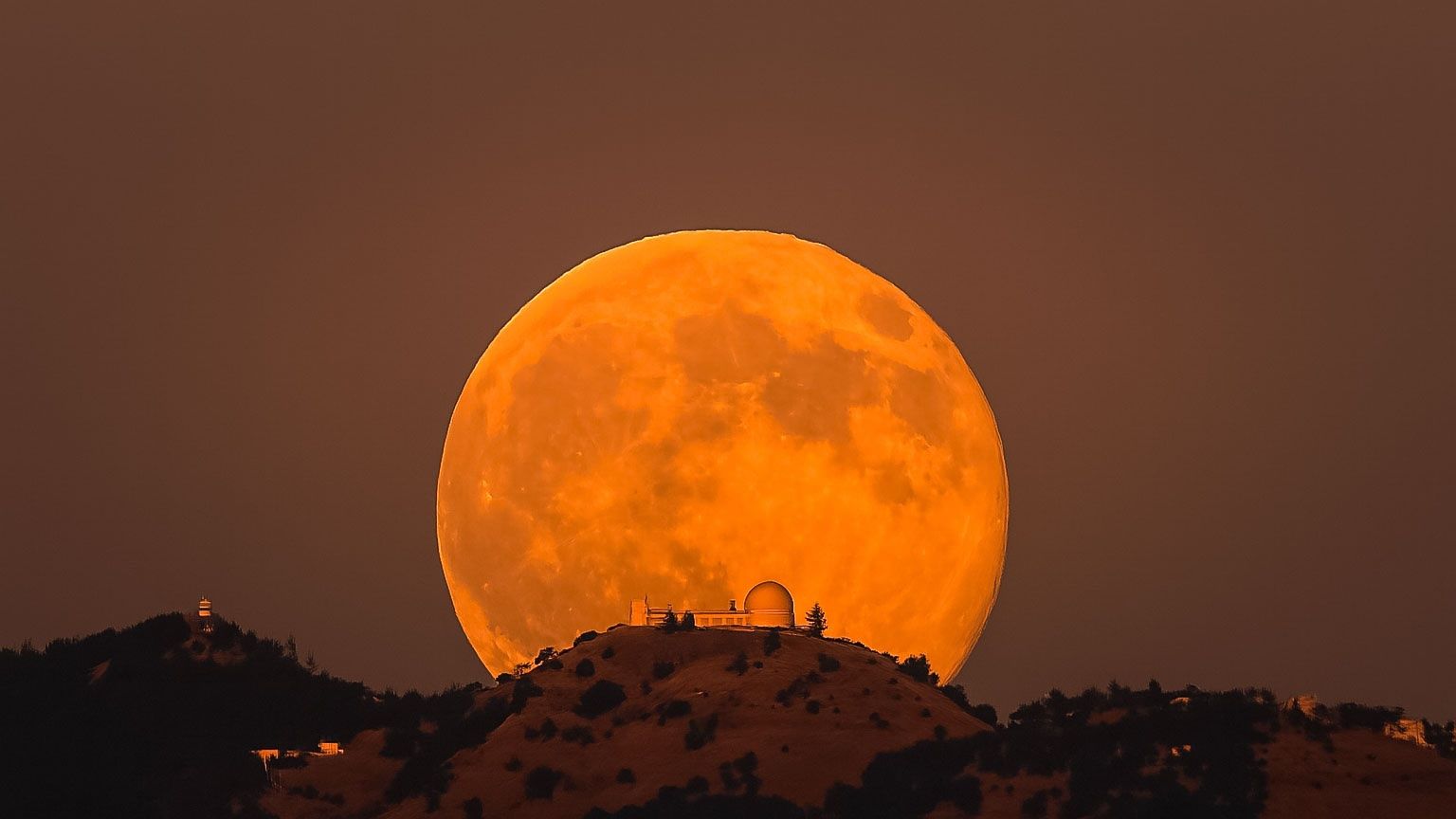
- Low Moon + Landmark: exploit the low standstill arc to place the disk beside skyscrapers or mountain silhouettes.
- Reflection Shots: urban waterfronts work well because moonrise coincides with lingering twilight colours.
5.4 Post‑Processing
Apply gentle clarity and de‑haze; sharpen only the luminance channel to keep noise down.
6. Cultural & Astrological Notes (Bonus)
- Old Farmer’s Almanac lists alternative July names—Hay, Feather‑Moulting, Raspberry and more—reflecting diverse seasonal cues.
- NY Post astrologers say the 18° Capricorn Buck Moon invites “steady surrender” for goal‑setting on 10 July. New York Post
7. Expert Soundbites
| Expert | Affiliation | Takeaway |
|---|---|---|
| Gordon Johnston | NASA lunar blogger | “Algonquin peoples called it the Buck Moon because antlers push out in velvet this month.” NASA Science |
| Anthony Wood | Space.com | “This is the farthest full Moon from the Sun in 2025.” Space.com |
| Jamie Carter | Astrophotographer | “Foreground context turns a bright disk into an emotive landscape.” Digital Camera World |
8. Key Takeaways
- Look SE shortly after local sunset on 10 July for the biggest‑looking Moon; check rise times above.
- Expect a golden, horizon‑hugging disk—ideal for wide‑angle skyline photos.
- Use f / 8, 1/125 s, ISO 100 as a baseline; bracket exposures.
- Though dramatic, this Buck Moon is not a supermoon; the true full‑supermoon sequence begins in October.
- Share your shots! Publications like Space.com welcome reader images of the event.
Clear skies and happy shooting!




![UK Stock Market Today 29/08/2026 [UPDATE: 08:49 BST] [Weekly Recap + Week Ahead: Midcaps Lead Before Bailey and Gilt Auction]](https://ts2.tech/wp-content/uploads/2026/08/UK-market-dashboard-2026-08-29-0843-480x384.jpg "UK Stock Market Today 29/08/2026 [UPDATE: 08:49 BST] [Weekly Recap + Week Ahead: Midcaps Lead Before Bailey and Gilt Auction]")