
NEW YORK, August 29, 2026, 11:20 (EDT)
- Kailera shares closed Friday at $16.21, down 12.52% and only 1.3% above April’s $16 IPO price.
- The $2.10 billion equity value stood about $930 million above $1.172 billion of cash and marketable securities.
- Its lead ribupatide injection program has more than 4,700 participants, but global Phase 3 data are not due until 2028.
Kailera Therapeutics Inc. (NASDAQ: KLRA) fell 12.52% on Friday to $16.21. The stock finished at its session low after opening at $18.26. Volume reached 532,030 shares Yahoo Finance quote.
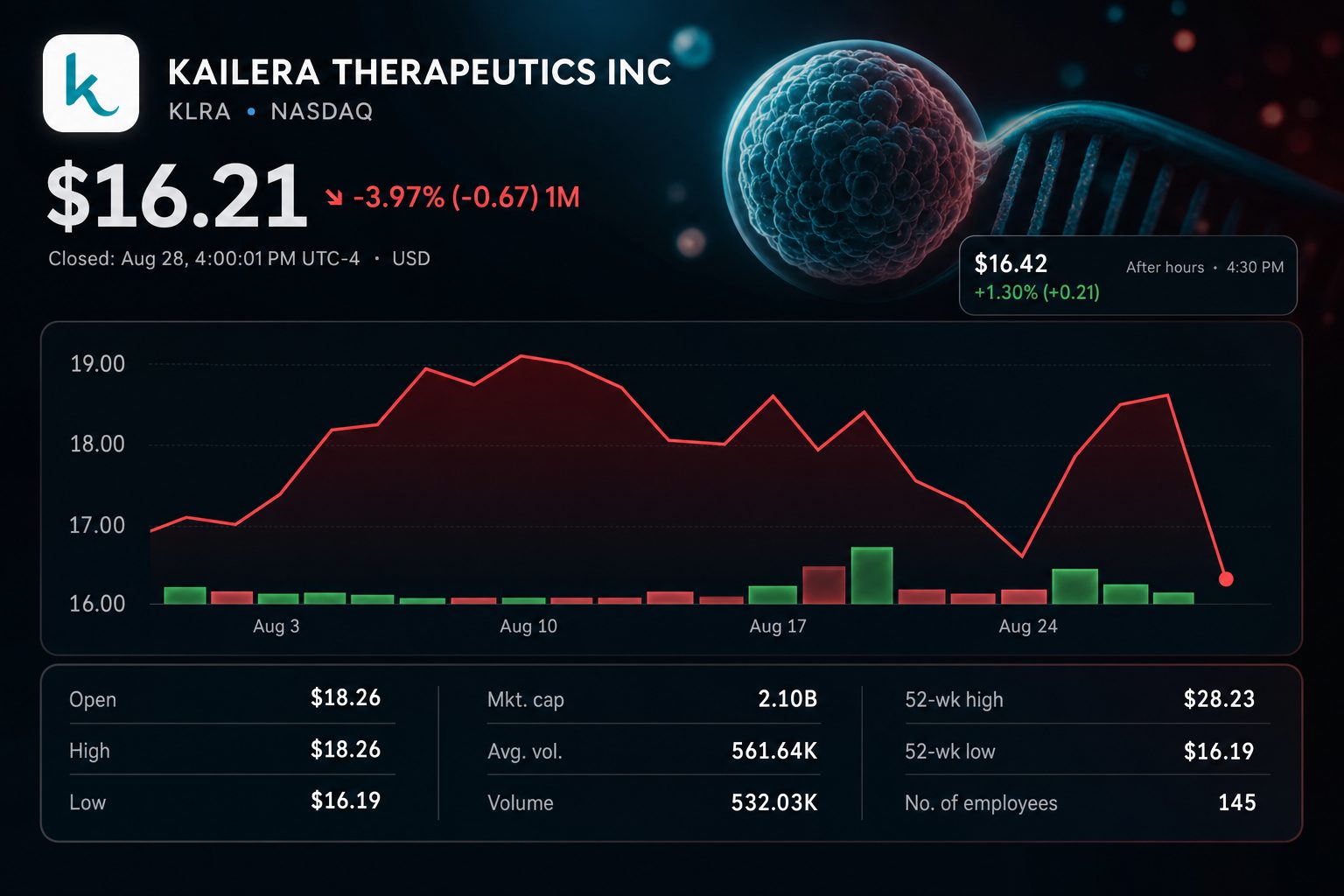
The decline left Kailera barely above its April offering price. Its roughly $2.10 billion market value was only about $930 million greater than June cash and securities. That gap is an imperfect but useful price for the clinical pipeline.
There was no new company release or SEC filing tied to Friday’s move. The latest official operating update remains the August 12 quarter. Broader biotech weakness added pressure: the SPDR S&P Biotech ETF (NYSEARCA: XBI) lost 3.46%.
| Friday close / metric | Value | Investor read-through |
|---|---|---|
| Kailera | $16.21; -12.52% | 1.3% above $16 IPO price |
| XBI biotech ETF | -3.46% | Sector pressure, but much smaller decline |
| Eli Lilly (NYSE: LLY) | -0.18% | Established obesity leader held firm |
| Novo Nordisk (NYSE: NVO) | -1.42% | Commercial peer also outperformed |
| Cash and securities | $1.172 billion | About $9.04 per share |
Kailera had 129.64 million shares outstanding in early August. Friday’s price implies a $2.10 billion capitalization. Cash and securities therefore covered about 56% of that amount, or roughly $9.04 per share.
The balance sheet is substantial because Kailera has no approved product revenue. Second-quarter research spending reached $101.1 million. The net loss widened to $111.3 million from $28.9 million a year earlier Kailera’s August 12 results.
Management expects the $1.172 billion cash pool to fund operations into mid-2028. That runway reaches the expected timing for global Phase 3 ribupatide injection data. It does not leave much room for a major delay.
The KaiNETIC program spans three global trials and more than 4,700 participants. It tests weekly ribupatide doses up to 10 milligrams over 76 weeks. A separate 264-person high-dose study should read out in mid-2027.
The pipeline also includes oral ribupatide, KAI-7535 and KAI-4729. Kailera plans to begin global Phase 3 oral-ribupatide trials in the first half of 2027. Two other programs are due to report data next year.
Clinical tolerability remains the most visible debate. KAI-7535 produced up to 11.1% mean weight loss in a China Phase 3 obesity study. Nausea affected about 70% of treated patients and vomiting more than 65%, according to the July data Reuters.
Kailera is testing lower starting doses and slower titration in its global Phase 2 trial. The design aims to balance weight loss with tolerability. Results are expected in 2027.
The valuation is now close to where public investors first entered. Kailera sold about 39 million shares at $16 in April. They opened at $26 as demand for obesity assets supported the listing Reuters IPO report.
Wall Street remains optimistic. Five tracked analysts carry an average recommendation of Buy and an average target of $42.75. Those targets largely depend on unproven clinical success rather than near-term earnings MarketWatch estimates.
Risks: Kailera may spend faster than planned, encounter trial delays or report weaker efficacy. Gastrointestinal side effects could limit dose intensity. Competitors may also reset efficacy, convenience or pricing standards before Kailera reaches the market.
Friday’s selloff did not change the trial calendar. It changed the price investors pay to wait. The next decisive evidence should arrive in 2027, while the largest ribupatide outcome remains a 2028 event.
Related articles: Stock Market