New York, Jan 30, 2026, 12:57 PM EST — Regular session
- LMT is up roughly 1.2% in midday trading following Thursday’s close at a 52-week high
- Lockheed projects 2026 EPS between $29.35 and $30.25, with sales forecasted in the $77.5 billion to $80 billion range
- Under the new framework agreement, THAAD interceptor production is set to increase to 400 units annually
Lockheed Martin shares climbed 1.2% to $629.97 on Friday, building on a big gain after the defense giant forecast stronger results for 2026 and announced plans to ramp up missile production. The stock surged 4.23% on Thursday, closing at $622.51 and hitting a fresh 52-week high on heavy volume, according to MarketWatch data.
Lockheed announced a new framework deal with the U.S. Department of War to ramp up Terminal High Altitude Area Defense (THAAD) interceptor production from 96 to 400 units annually over the next seven years. CEO Jim Taiclet emphasized, “Today’s agreement to quadruple THAAD production means we will have more interceptors available than ever before to deter our adversaries.” Media – Lockheed Martin
The timing is crucial. Lockheed is framing the deal as part of a larger push to speed up deliveries, while investors are weighing if stronger defense demand will lead to funded, multi-year contracts and more reliable cash flow. On Thursday, Lockheed projected 2026 sales between $77.5 billion and $80 billion, with earnings per share forecasted at $29.35 to $30.25, plus free cash flow — the cash remaining after capital expenses — of $6.5 billion to $6.8 billion. The company also revealed a record backlog of $194 billion—work booked but not yet completed. “With a record $194 billion backlog, 2025 marked a year of unprecedented demand,” Taiclet said. Media – Lockheed Martin
A Reuters report noted Lockheed’s outlook surpassed Wall Street revenue and profit estimates tracked by LSEG, highlighting new contract terms designed to boost production. Taiclet said if Lockheed exceeds production and profit targets on Patriot and THAAD programs, “we start to share some of the increased profits with the U.S. government,” funneling part of the gains back into expanding capacity. The report also mentioned “make-whole” clauses to shield Lockheed if appropriations fall short of planned multi-year munitions purchases and referenced a January executive order tying dividends, buybacks, and executive compensation to delivery schedules. Investing.com
On the earnings call, Taiclet stressed that finalizing the contract hinges on Congress approving fiscal 2026 funding. He also outlined a multi-year plan to boost capacity. CFO Evan Scott highlighted contract terms designed to soften the cash impact from increased spending, noting, “I think you are going to see an elevated working capital benefit,” as payments and other mechanisms help offset the jump in capital investment. Breaking Defense
On Friday, defense stocks showed mixed results. RTX dipped 0.4%, Northrop Grumman dropped 1.5%, General Dynamics inched up 0.1%, while L3Harris tumbled nearly 3.9% by midday.
Traders are zeroing in on how fast the THAAD ramp and overall munitions expansion impact segment margins, not just top-line sales. Another immediate concern is capital returns: increased capex might squeeze free cash flow in the near term, even amid robust demand.
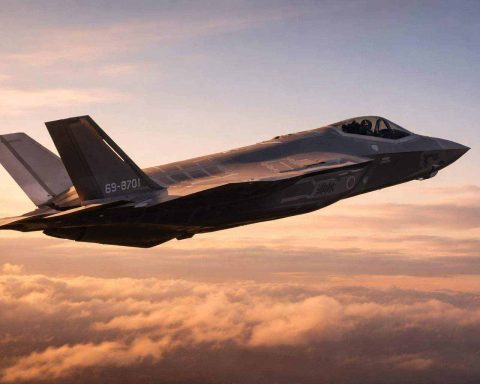
However, the bullish outlook hinges largely on securing funding and flawless execution. Barron’s highlighted investor concerns over margins and Lockheed’s reliance on the F-35 program, pointing out that some analysts still hold reservations despite the stock’s recent breakout.
Investors will soon focus on contract details and timing as Congress advances fiscal 2026 appropriations — the milestone Lockheed links to an initial THAAD framework award. Attention will also turn to whether the company’s ramped-up 2026 investment plan alters buybacks and dividends in the upcoming quarter.