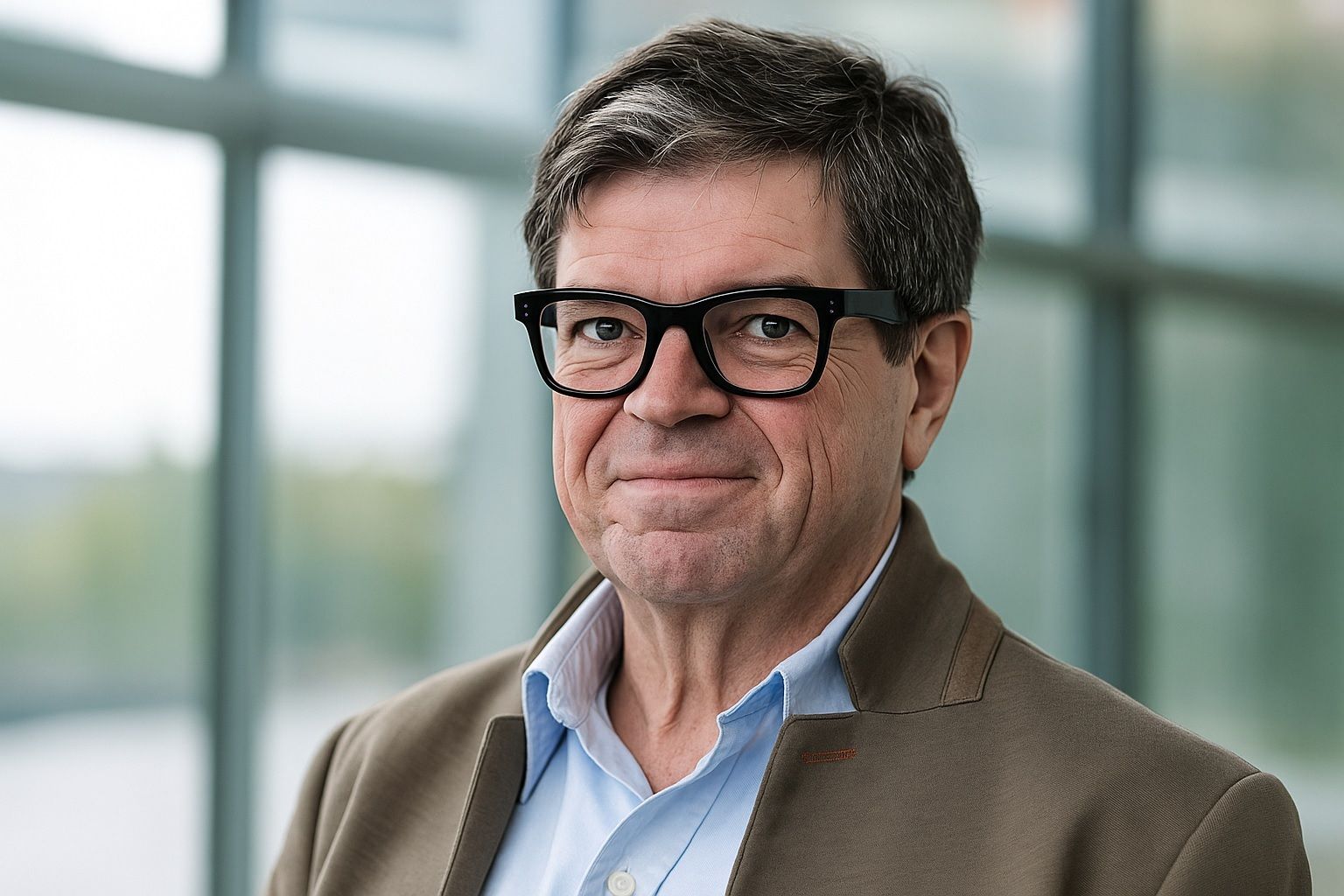
Meta’s longtime chief AI scientist, Yann LeCun, is planning to leave the company to found a new artificial‑intelligence startup, according to reports published today. The move, which comes amid a sweeping reorganization of Meta’s AI efforts, would mark the most significant leadership change in Meta’s research ranks since the creation of its FAIR lab a decade ago. Reuters+1
Key facts at a glance
- LeCun’s next step: He plans to launch an AI startup and is already in early fundraising discussions, according to people familiar with the matter. Neither LeCun nor Meta immediately commented. Reuters
- Timing & context: The report lands just months after Meta centralized its advanced AI work under “Meta Superintelligence Labs” (MSL) and installed Alexandr Wang as the company’s first Chief AI Officer. LeCun’s reporting line shifted under that reorg. Reuters+1
- Why this is notable: LeCun is a deep‑learning pioneer and 2018 A.M. Turing Award co‑laureate whose work on convolutional neural networks underpins today’s computer‑vision systems. He joined Facebook/Meta in 2013 to launch FAIR, the company’s blue‑sky AI research group. Reuters
Why LeCun matters
Few researchers have shaped modern AI as profoundly as Yann LeCun. Alongside Geoffrey Hinton and Yoshua Bengio, he helped propel deep learning from an academic curiosity to the engine behind image recognition, speech, and many generative‑AI breakthroughs. That pedigree has given LeCun an unusual platform to push for alternatives to the large‑language‑model‑only (LLM) path to AI. He has repeatedly argued that future systems must reason, plan, and learn from the physical world, not just from text.
Those views have increasingly diverged from big‑tech roadmaps centered on ever‑larger LLMs—and they help explain why any LeCun‑led startup will draw outsize attention from researchers and investors alike.
What LeCun’s startup could build (and why it’s different)
While today’s reporting doesn’t reveal the new company’s product plans, LeCun’s public research gives strong hints:
- World models & JEPA: LeCun has championed world‑model‑based systems and the Joint‑Embedding Predictive Architecture (JEPA) family as stepping‑stones toward machines with common sense. His teams have published I‑JEPA/V‑JEPA variants for images and video, exploring non‑generative, self‑supervised learning that predicts in representation space rather than raw pixels. Expect any LeCun venture to double down here. CVF Open Access+2Meta AI+2
- Beyond chatbots: In talks and interviews, LeCun has forecast a “new paradigm of AI architectures” within a few years, with robotics and embodied learning playing a larger role than today’s text‑first models. That aligns with the idea of building agents that perceive, remember, reason, and plan—capabilities still brittle in LLMs.
Takeaway: If the startup follows this playbook, it will likely compete less with LLM‑centric assistants and more with labs racing to build grounded, physically aware AI—an area that major players now see as crucial to “superintelligence.” Financial Times
Inside Meta’s AI reshuffle—and how LeCun fits
Meta has spent 2025 restructuring and accelerating its AI push. The company consolidated advanced research under Meta Superintelligence Labs (MSL) and named Alexandr Wang (the Scale AI founder) as Chief AI Officer to lead it—an unusually high‑profile talent move that underscores Meta’s urgency to catch up and surpass rivals. After that reorg, LeCun, who previously reported into product leadership, reported into Wang. Meta+1
That new chain of command—and Meta’s pragmatic tilt toward shipping near‑term products—has raised questions about the role of long‑horizon research at the company. LeCun’s reported exit will intensify those debates inside and outside Menlo Park. Reuters
What this means for open‑source AI and the talent market
LeCun has been one of big tech’s most outspoken champions of open, reproducible AI research. His departure could have ripple effects on how Meta balances open releases versus proprietary models, and it may influence whether top FAIR‑style researchers follow him to a startup or remain within MSL’s product‑aligned structure. The broader industry—flush with demand for grounded AI and robotics‑ready models—has ample capital and infrastructure to back a LeCun‑led team.
Investor lens: potential near‑term impacts
- Meta narrative risk: Losing a marquee scientist can create short‑term headline risk for a company repositioning its AI story around speed and scale. That said, Meta’s centralized structure under MSL and a deep bench of applied researchers could blunt execution risk if leadership continuity holds. Reuters
- Startup funding dynamics: With LeCun’s reputation and a differentiated thesis (world models/JEPA), fundraising could be swift, particularly from funds specializing in infrastructure, robotics, and embodied AI. (Today’s reporting notes early talks are already under way.) Reuters+1
What to watch next
- Official confirmation & timing — Look for statements from Meta and LeCun clarifying the timeline and any transitional role at FAIR/MSL. Reuters
- Founding team — Which FAIR alumni or academic collaborators (vision, self‑supervised learning, robotics) join the new company.
- Research agenda — Early preprints, open‑source releases, or demos tied to world models or JEPA‑inspired systems. CVF Open Access+1
- Ecosystem partnerships — Compute providers, robotics labs, or data‑collection partners needed to train physically grounded models at scale.
- Meta’s research posture — How MSL balances near‑term productization with long‑horizon research in the post‑LeCun era. Meta
The bottom line
Today’s reporting signals a changing of the guard in Meta’s AI research—and potentially the birth of a new, high‑profile independent lab led by one of the field’s defining figures. If Yann LeCun’s startup becomes the flagship for world‑model‑centric AI, it could reshape competition not only with model labs betting on ever‑larger LLMs, but also across robotics, multimodal perception, and embodied agents—the domains where tomorrow’s breakthroughs are most likely to emerge. Reuters+1
Sources & further reading
- Reuters: “Meta chief AI scientist Yann LeCun plans to exit to launch startup — FT reports” (Nov. 11, 2025). Reuters
- Financial Times: “Meta chief AI scientist Yann LeCun plans to exit and launch own start‑up” (Nov. 11, 2025). Paywalled. Financial Times
- Seeking Alpha brief on the FT report (Nov. 11, 2025). Seeking Alpha
- Meta (official): Executive bio for Alexandr Wang, Chief AI Officer leading Meta Superintelligence Labs. Meta
- ACM: LeCun’s 2018 A.M. Turing Award profile (background).
- TechCrunch: LeCun on a coming “new paradigm of AI architectures” and the limits of LLMs (Jan. 23, 2025).