
NEW YORK, Dec. 27, 2025, 9:18 a.m. ET — Market closed
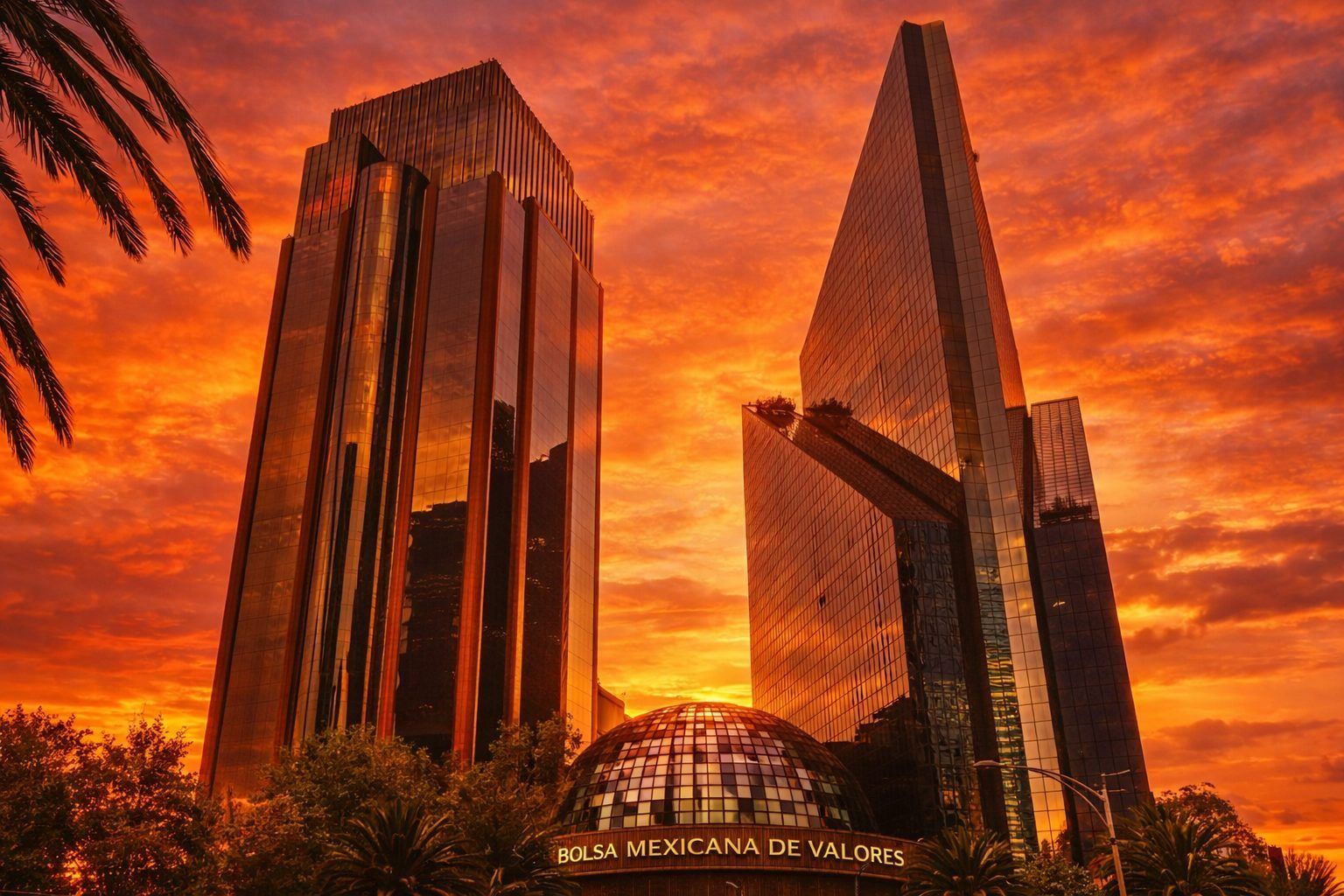
Mexico’s main equity market is closed today for the weekend, giving investors a rare, quiet window to digest what was—despite thin holiday liquidity—another milestone week for Mexican stocks.
On Friday, the benchmark S&P/BMV IPC (often referred to locally as the IPC)—the flagship index tracking the largest and most liquid names listed on the Bolsa Mexicana de Valores (BMV)—finished essentially flat on the day (+0.03%), but that was enough to notch a new record close at 65,636.36. The move capped a six-session winning streak and extended a run in which the last four closes each marked new all-time highs.
Record close in a “quiet” tape—yet the trend stayed intact
The headline is deceptively small: a marginal uptick on the day. The context is louder.
Holiday conditions throttled trading activity, making price moves more sensitive to incremental flows. Gabriela Siller, head of economic and financial analysis at Banco Base, told EFE that global markets generally advanced during the week, but volume was notably light because of Christmas festivities—an environment that can amplify both rallies and pullbacks.
Even with that caveat, Mexico’s index performance was hard to ignore:
- Weekly gain: +2.61%
- December gain (month-to-date, cited): +3.2%
- Year-to-date gain (cited): +32.58%
Those figures were highlighted by Enrique Covarrubias, Actinver’s director of economic analysis, underscoring how the IPC’s late-year push has turned into a sustained 2025 narrative rather than a one-off spike.
Peso strength stayed in the spotlight
Mexico’s equities weren’t the only asset grabbing attention. The peso ended Friday at 17.89 per dollar in wholesale trading, according to Banco de México’s reference close—keeping the currency below the psychologically important “18 handle.” Jornada+1
That level has become a focal point for positioning risk. Felipe Mendoza, executive director at IMB Capital Quants, warned via Reuters (as reported by La Jornada) that while “the peso is strong,” it is also “very close to zones where the market usually takes profits.” Jornada
For Mexico Stock Exchange watchers, the peso matters because it can cut both ways: it helps tame imported inflation and lowers FX volatility—both supportive for risk assets—but it can also pressure exporters’ peso-denominated revenue and complicate earnings translation for firms with significant dollar exposure.
Who moved: metals-linked names led, and liquidity was thin
Friday’s record was achieved with unusually low turnover. La Jornada, citing Reuters, reported just about 23.1 million shares traded—far below a recent daily average near 200 million—highlighting how “holiday-thin” the tape was. Jornada
In that low-volume environment, metals sensitivity showed up clearly. Shares of Industrias Peñoles—often treated as a proxy for precious-metals momentum in Mexico—rose 2.59% to 980.99 pesos, aided by strength in international silver pricing; Megacable gained 1.70% to 52.09 pesos, according to La Jornada’s market wrap.
A broader snapshot of the day’s range also shows the market was active under the surface even if the close was modest: Investing.com’s historical table lists Friday’s intraday high near 65,882.59 and a low around 65,507.77 for the index.
Meanwhile, Banco Base’s Siller pointed to strong weekly advances in several bellwether names—including Peñoles (+12.57% weekly), Alsea (+5.94%), Grupo México (+5.26%), Qualitas (+3.83%), Grupo Aeroportuario del Centro (+3.53%) and Grupo Carso (+3.03%)—as the index pressed into uncharted territory.
Why the rally looks different: concentration, valuation talk, and a 2026 thesis
Recent analysis has emphasized that Mexico’s record highs are not evenly distributed across the market.
An El Cronista review published this week noted that 12 of the 35 IPC constituents hit record levels during 2025, with gains increasingly powered by a smaller set of heavyweights that together represent a large share of the index’s total weight. The piece also cited a BX+ note arguing that Mexico became “an attractive investment alternative” on valuation and fundamentals versus pricier U.S. markets—an argument that has helped sustain foreign interest during periods of global volatility. El Cronista
El Cronista also reported that Actinver analysts expect the IPC to maintain a positive trajectory into 2026, with tailwinds tied to a more favorable macro backdrop, catalysts linked to the 2026 FIFA World Cup, and a constructive baseline around the USMCA/T-MEC trade framework. The same report said Banorte analysts see elevated optimism among many forecasters heading into 2026, even with geopolitical and inflation uncertainties still in the mix.
In other words: part of the “Mexico Stock Exchange story” right now is a forward narrative—investors aren’t only reacting to this week’s close; they’re pricing a 2026 setup.
Rates and inflation: Banxico cut, but signaled caution
Mexico’s central bank remains a key driver for equity multiples and currency stability.
On Dec. 18, Banxico cut its benchmark rate by 25 basis points to 7.00% (effective Dec. 19). The decision was not unanimous; Deputy Governor Jonathan Heath voted to hold, a detail that markets have treated as a hint that the easing cycle may be approaching a more cautious phase.
Banxico’s statement also flagged the macro tradeoff investors will keep revisiting in 2026: economic activity has been weak, but inflation—especially core services inflation—has proven sticky. The central bank projected convergence back to its 3% target by the third quarter of 2026, while acknowledging near-term inflation risks.
From the private-sector research side, BBVA Research (in a report published Dec. 17) laid out the argument for “one last” 25 bp cut to 7.00% and then a likely shift to the sidelines—citing persistent core inflation (notably services) and a temporary inflation shock expected in early 2026, even as the peso remains strong and domestic demand shows signs of weakness. BBVA Research
Global backdrop: easing expectations, a weaker dollar, and record metals
Mexico’s market isn’t trading in a vacuum. The broader global narrative has been supportive for risk assets and for metals-linked equities—two themes that matter directly to the Mexico Stock Exchange because of the IPC’s sector mix.
Reuters reported this week that major central banks delivered the fastest and largest scale of rate cuts since the financial crisis period, while emerging markets (including Mexico) also contributed meaningfully to 2025’s easing wave—helping keep global financial conditions relatively supportive as the year closes.
On currencies, Reuters also highlighted a 2025 environment in which the dollar has been pressured by shifting rate expectations and year-end liquidity conditions—an external backdrop that can reinforce peso strength, particularly when Mexico’s rates remain high in real terms versus peers.
And on commodities—a crucial lever for several IPC heavyweights—Reuters noted that gold and silver hit fresh records amid rate-cut expectations and geopolitical uncertainty, a theme that helps explain why metals-exposed stocks have stayed in focus during Mexico’s rally.
What investors should know before the next Mexico Stock Exchange session
Because the BMV is closed today, the next key moment is the Monday reopening—when positioning, liquidity, and headline sensitivity can matter more than usual near year-end.
1) Know the BMV’s trading window and the holiday calendar.
BMV’s core continuous market runs from 8:30 a.m. to 3:00 p.m. Mexico City time. Grupo BMV
The exchange has also emphasized that its operating schedule is adjusted at times to remain compatible with Wall Street’s hours—an important detail for cross-listed flows and institutional execution. Expansión
Looking ahead, BMV’s published holiday schedule shows the market will be closed on Jan. 1, 2026 for New Year’s Day.
2) Expect thin liquidity and “bigger-than-normal” reactions.
The latest record was made on extremely light volume, according to local reporting—conditions that can exaggerate moves in either direction when markets reopen. Jornada
3) Keep one eye on FX and one on rates.
With USD/MXN near the 18 level and Banxico now at 7.00%, Monday’s tone may be shaped less by Mexico-only headlines and more by how global rates and the dollar behave into the final trading days of the year.
4) Watch metals and “Mexico proxies” abroad.
A meaningful slice of the IPC’s momentum has been tied to metals-linked names and global risk appetite. If silver and gold remain volatile, Mexico’s mining and materials names could move disproportionately even if domestic news is quiet. Reuters+2Jornada+2
5) Global equities are still setting the rhythm.
Reuters’ week-ahead coverage has emphasized that U.S. markets are hovering near record levels into year-end, with investors watching Fed communications (including minutes) and the possibility of year-end portfolio adjustments causing bursts of volatility—signals that often spill into Mexico through ETFs, ADRs, and macro-linked positioning.
Bottom line
The Mexico Stock Exchange heads into the weekend closed—but not quiet. Friday’s record close on the S&P/BMV IPC, a peso holding below 18, and a policy rate now at 7.00% combine into a setup where Monday’s reopening could be driven as much by global rates and commodities as by local headlines.
Investors coming into the next session should be prepared for thin liquidity, end-of-year positioning effects, and potentially sharp moves in index heavyweights—especially those tied to metals and currency dynamics—because in late-December markets, small inputs can produce large outputs.
Related articles: Stock Market