
BOISE, Idaho, August 27, 2026, 09:39 EDT — Micron Technology’s (MU) stock has erased 82% of its Nvidia-driven opening gap, with attention staying on its projected $1,300 price target.
- Micron began trading 3.05% above Wednesday’s closing price but was up just 0.54% after nine minutes.
- Nvidia posted quarterly data-center revenue of $89.0 billion and projected overall revenue of $108.0 billion for the ongoing quarter.
- The $1,300 target that is generating search interest suggests a potential gain of 37.8% from $943.46 and represents roughly 8.4 times anticipated earnings for fiscal 2027.
Micron Technology (NASDAQ:MU) shares gave up nearly all of their early surge driven by Nvidia on Thursday. Micron started trading at $967.01, marking a 3.05% rise from Wednesday’s close at $938.40, before dropping to $943.46 as of 09:39 EDT. The stock retained a 0.54% advance.
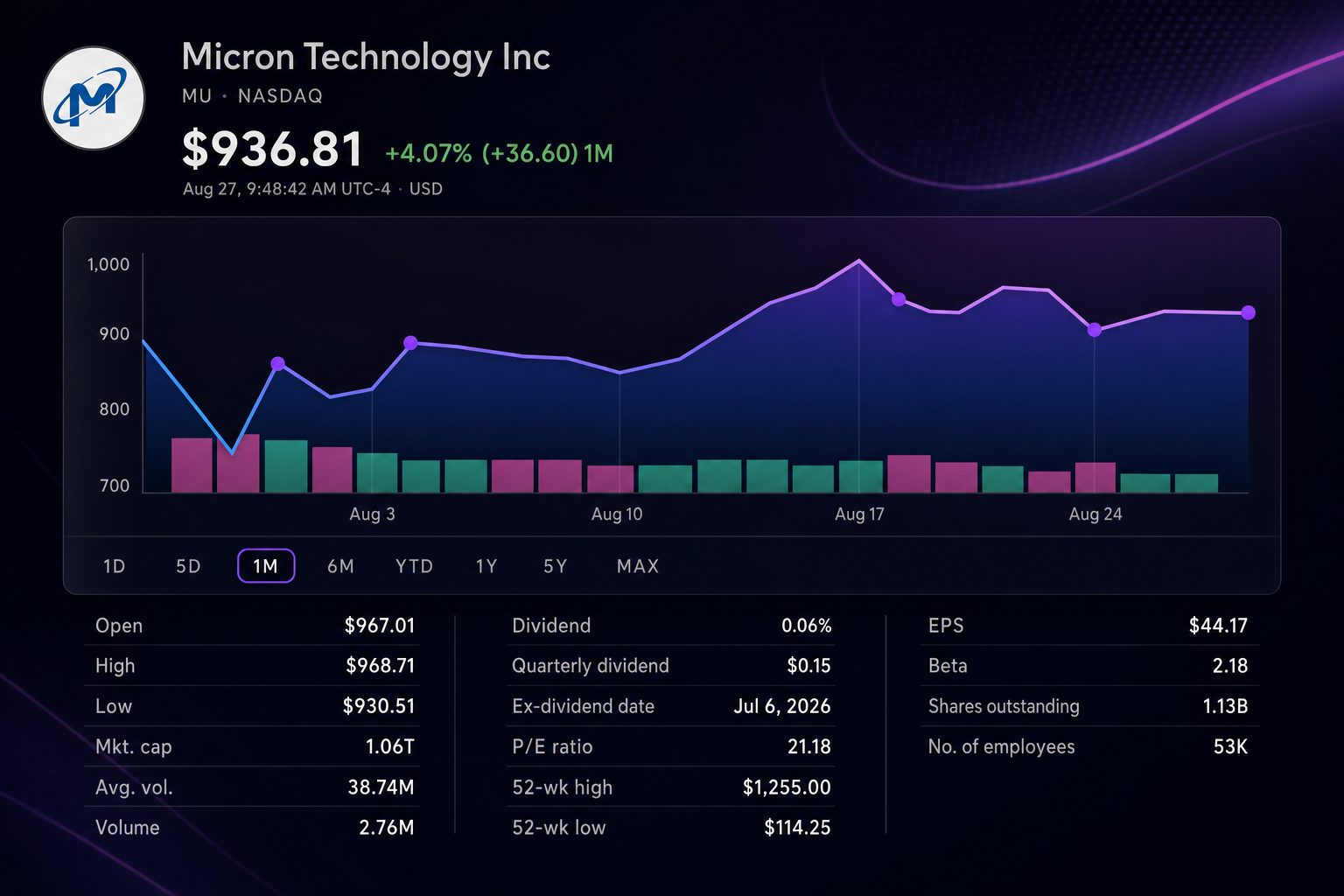
The move reversed close to 82% of the initial gap, shifting what was a widespread AI-memory rally into a more pronounced valuation challenge for a stock that has climbed over sevenfold in the past 12 months.
Nvidia was the trigger for the latest surge. The chipmaker posted fiscal second-quarter revenue of $96.22 billion, an increase of 106% compared to the prior year. Data-center revenue came in at $89.0 billion. Its forecast for current-quarter revenue stood at $108.0 billion, with a possible variance of 2%.
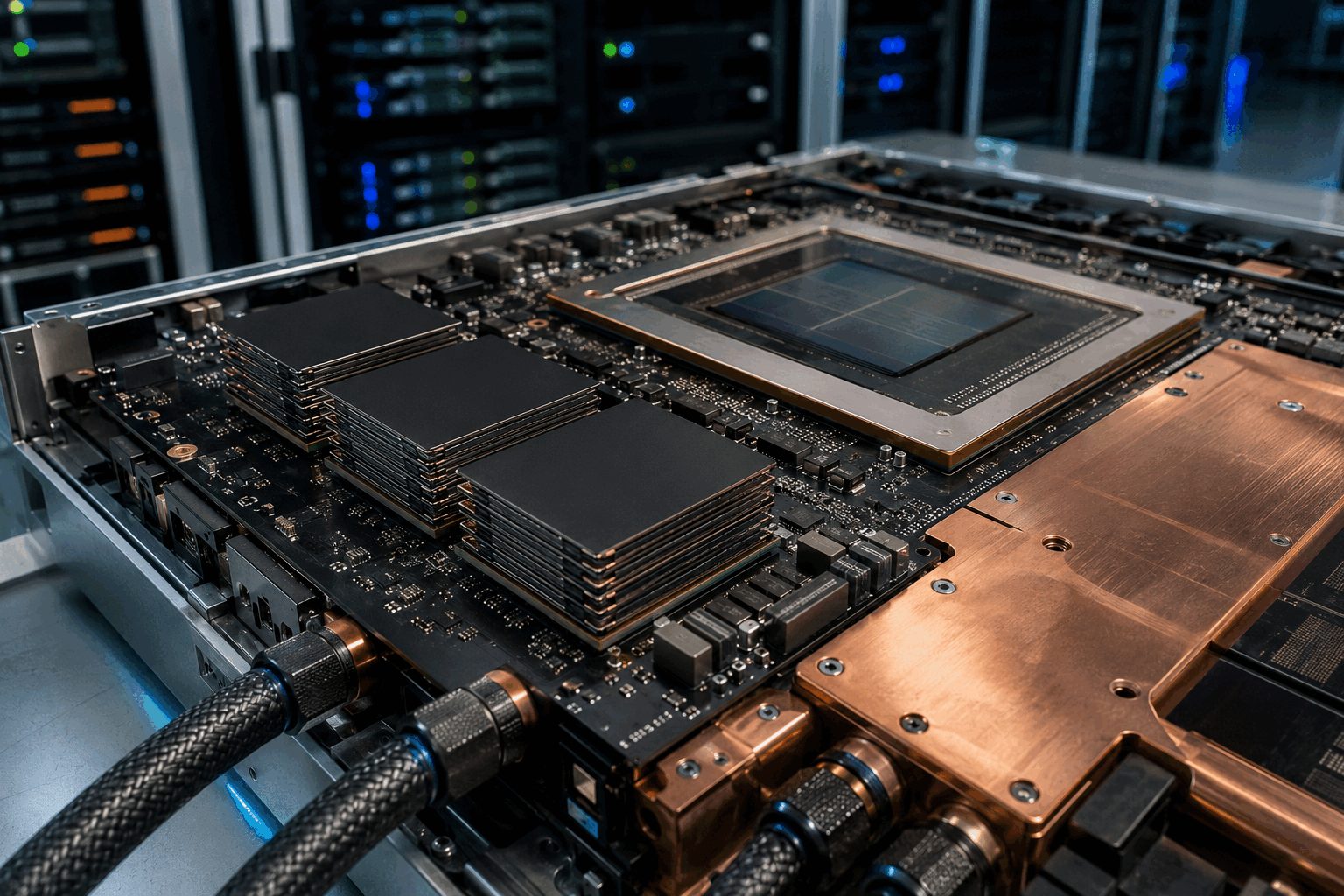
This is significant for Micron, as high-bandwidth memory (HBM) is positioned next to AI accelerators and supplies them with data. In the first quarter, Micron started volume shipments of its 36-gigabyte HBM4 for Nvidia’s Vera Rubin platform. The component provides over 2.8 terabytes per second of bandwidth and achieves more than 20% greater power efficiency compared to Micron’s HBM3E.
Micron’s financials indicate an upward trend in the memory market. Fiscal third-quarter revenue climbed to $41.46 billion, up from $23.86 billion the prior quarter. Operating cash flow jumped more than twofold to $25.39 billion sequentially, and adjusted free cash flow hit $18.3 billion.
| Investor marker | Verified figure | What it tests |
|---|---|---|
| Aug. 26 close | $938.40 | Reference price |
| Aug. 27 open | $967.01 | Opening gap of +3.05% |
| 09:39 EDT | $943.46 | +0.54%; 82% of gap closed |
| $1,300 target | +37.8% off $943.46 | Roughly 8.4× projected FY2027 EPS |
| Consensus target | $1,515 | Strong Buy consensus from 47 analysts |
Attention has turned to whether Micron shares could climb to $1,300. This figure is not the most bullish forecast, nor does it represent consensus. BMO began coverage with a $1,300 price target on August 20, and Mizuho lowered its projection to $1,300 from $1,375 on August 25. The average price target from 47 analysts surveyed by S&P Global stood at $1,515, with 43 issuing Buy or Strong Buy recommendations.
The calculation for the $1,300 figure is tough but clear. Splitting the target by the consensus fiscal 2027 earnings-per-share forecast of $155.03 yields an implied multiple of 8.4. The share price at 09:39 stood at roughly 6.1 times that estimate. So, the difference hinges more on analysts’ earnings outlooks holding through the upcoming memory cycle rather than on a lofty multiple.
Micron’s initial decline suggests investors are distinguishing between Nvidia’s demand outlook and Micron’s own performance. Nvidia reported that Vera Rubin racks have started full-scale production. Micron now needs to convert this rollout into high-bandwidth memory shipment volumes, maintain pricing, and preserve margins, all while avoiding surplus conventional memory capacity.
On Wednesday, management took steps to strengthen the execution chain. Manish Bhatia was appointed president and chief operating officer, overseeing capital investment, manufacturing, customer demand, pricing, and delivery. Scott DeBoer assumed the role of president and chief technology and products officer.
Risks: Memory continues to follow a cyclical pattern, and Micron’s Q3 adjusted gross margin of 84.9% offers limited tolerance for setbacks. A deceleration in AI-server rollouts, softer HBM pricing, or accelerated capacity growth from competitors could place pressure on both profits and the valuation multiple. With a beta of 2.21, the stock is also highly sensitive to market swings.
The next major test comes on September 30, as Micron releases its fiscal fourth-quarter results at 2:30 p.m. Mountain time. Investors will be looking for robust data on shipments, pricing, and margins to support the earnings assumptions reflected in the $1,300 trend target and analyst consensus forecasts.
Related articles: NASDAQ:MU