
NEW YORK, May 5, 2026, 07:13 EDT
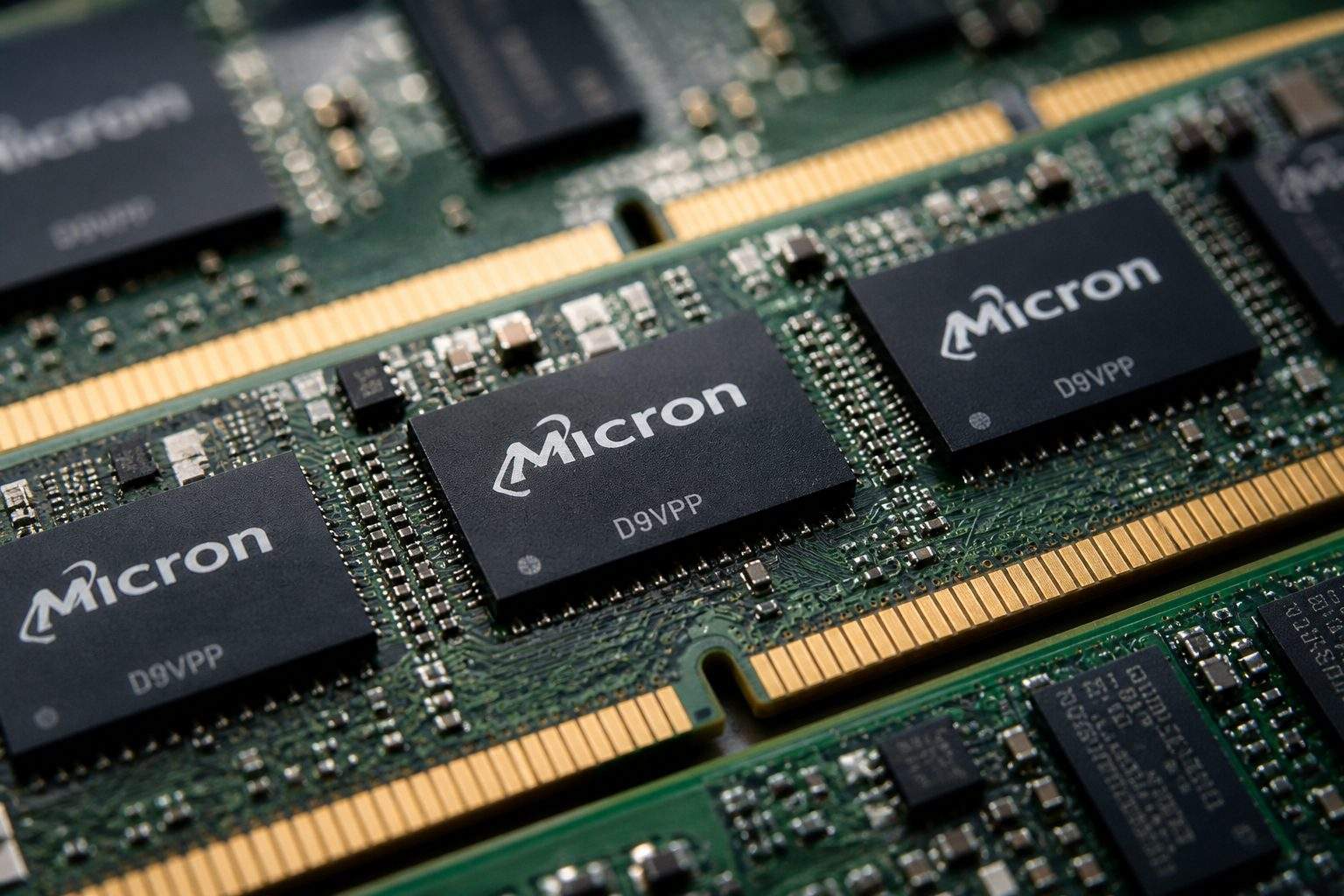
Micron Technology was trading higher ahead of the U.S. open Tuesday, adding to a rally that’s propelled the memory-chip maker near the upper ranks of U.S. companies by market cap. Shares were last at $576.45, putting the company’s valuation around $658.3 billion.
Wall Street’s view of Micron has shifted. No longer just a cyclical play on PC and phone memory, the company vaulted from just outside America’s top 100 to the verge of No. 13, hitting $600 billion in market cap for the first time Friday, according to MarketWatch and Dow Jones Market Data. “As recently as a year ago, Memory was considered one of the lower-value parts of the compute market,” D.A. Davidson’s Gil Luria told MarketWatch. MarketWatch
Artificial intelligence data centers are driving the change, turning memory into a bottleneck instead of an afterthought. High-bandwidth memory, or HBM, stacks chips to shuttle huge volumes of data at speed and with less power—crucial for AI processors. Micron announced in December it’s leaving the Crucial consumer memory business by February 2026, shifting its focus fully to advanced memory for AI data centers—a segment where Samsung Electronics and SK Hynix are also active.
Micron put up numbers that justified its recent valuation surge. For its fiscal second quarter, revenue hit $23.86 billion, a sharp jump from $8.05 billion a year ago, with GAAP net income reaching $13.79 billion. The company projected third-quarter revenue at $33.5 billion, give or take $750 million. CEO Sanjay Mehrotra called memory “a strategic asset” in the AI era. Micron Technology
The rally is still all about pricing, and that’s a double-edged sword. In its latest quarterly filing, Micron reported DRAM sales jumping 74% over the previous quarter, thanks mostly to average selling prices climbing in the mid-60% range. NAND sales saw an even bigger leap—up 82%—driven by prices shooting higher by a high-70% percentage. But the same document flagged turbulence in memory prices and suggested that new supply, if demand lags, could squeeze margins going forward.
Micron wants to shore up this cycle. During prepared comments on the March earnings call, Mehrotra said the company locked in its first-ever five-year strategic customer agreement—a contract aimed at boosting supply-demand transparency for both Micron and its clients. He also said AI has “fundamentally recast memory” as a strategic asset.
This isn’t happening in a vacuum. On Monday, Zacks flagged Micron, Alphabet, and SanDisk, pointing to AI-fueled gains across memory, storage, and cloud stocks. Alphabet’s first-quarter earnings call underscored the trend for suppliers: capital spending hit $35.7 billion, much of it funneled directly into technical infrastructure for AI.
Micron’s ramping up its spending, aiming to keep pace with surging demand. The company flagged that capital expenditures for fiscal 2026 should top $25 billion—most of that going into plants and equipment. Then, there’s an even bigger jump coming in fiscal 2027, as it shifts more money toward HBM and DRAM. Construction-related outlays alone are set to climb by over $10 billion from the previous year in 2027.
Now, the question is whether the shortage sticks around long enough to support Micron’s new price tag. The stock is one of the most direct U.S. plays on AI-driven memory demand, but there’s still plenty of risk: if fresh supply floods in, competitors ramp up, or data-center growth loses steam, the narrative could shift quickly.
Related articles: Semiconductors