
NEW YORK, April 16, 2026, 11:41 AM EDT
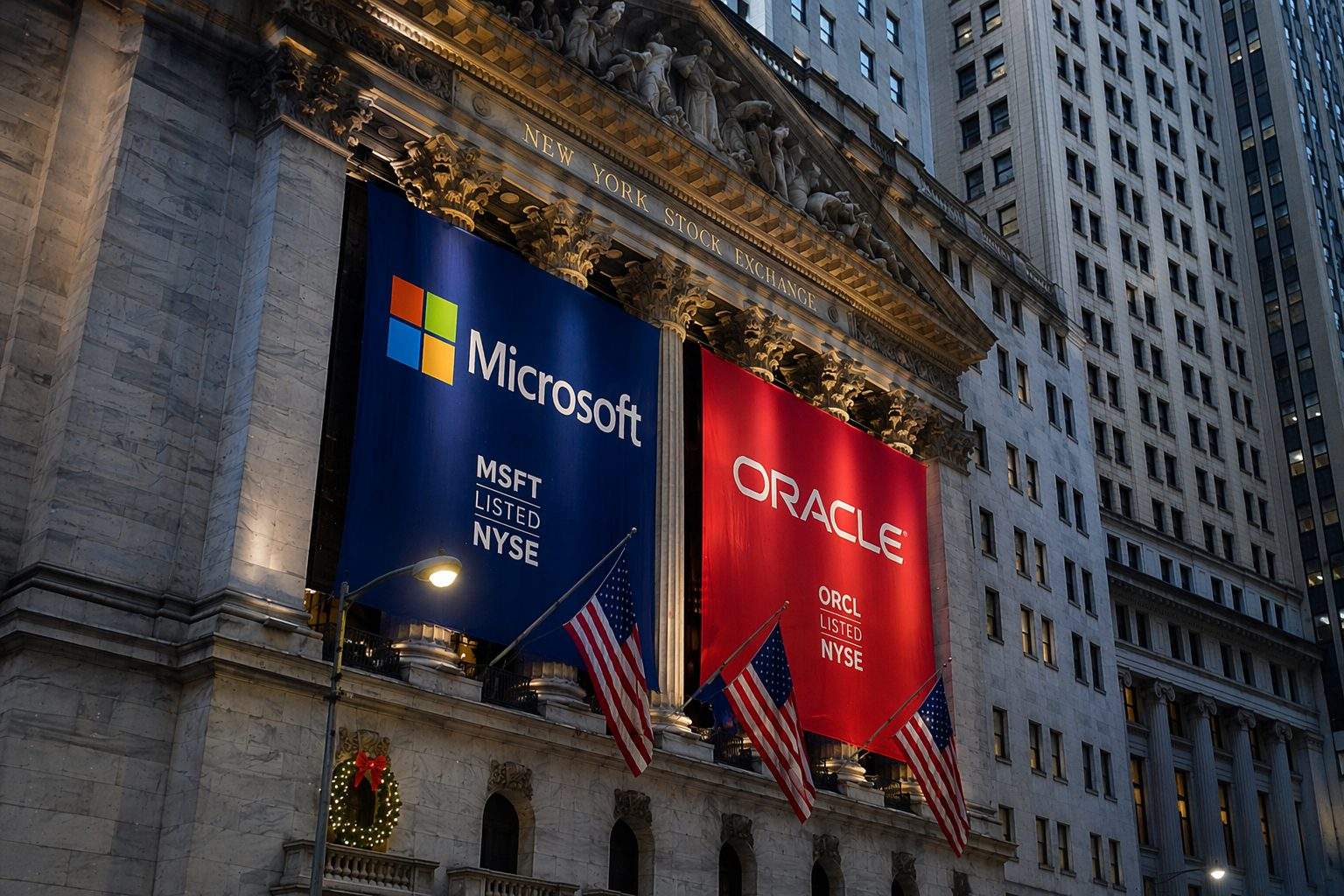
Microsoft and Oracle shares caught a bid Thursday, lifted by fresh evidence of strong AI demand and Oracle’s latest move to secure more power for its data centers—both factors helping ease concerns over how quickly heavy investment in chips and servers might translate into profits. By late morning in New York, Microsoft traded $6.46 higher at $417.68, while Oracle added $7.04 to reach $176.85.
This shift is significant: both firms now stand at the center of the 2026 debate around AI outlays. TSMC’s C.C. Wei described AI demand as “so strong,” while ASML bumped up its yearly forecast, putting another checkmark in the bull column for those betting Microsoft and Oracle won’t rein in their cloud spending just yet. Reuters
The shift in sentiment is surfacing outside trading floors too. This week, a Motley Fool article on Yahoo Finance singled out Microsoft and Tesla as the weakest links among the so-called Magnificent Seven—Wall Street’s shorthand for the top U.S. tech players—with both stocks down over 20% in 2026. TipRanks, for its part, pointed out that Microsoft and Oracle are now trading at rare discounts after the latest selloff. Meanwhile, Fool.ca, in a different piece, called attention to longer-horizon tech names like Shopify, Descartes Systems Group, Nvidia and Topicus.com—suggesting that bargain seekers are casting a wider net than just the major U.S. giants.
Microsoft continues to shoulder the larger short-term load. Its January results—marked by all-time high AI spending and cloud revenue gains—fell flat with investors. The next earnings update lands April 29 for the fiscal third quarter. Back in January, Reuters noted Microsoft’s AI tab had already topped $200 billion since the beginning of fiscal 2024, fueling debate over when those bets might actually start to pay dividends.
Skepticism, according to some analysts, may have overshot. Baird’s William Power trimmed his Microsoft price target, bringing it down to $500 from $540, TipRanks noted, yet he’s sticking with his Outperform call. Copilot uptake, steady Azure momentum, and solid earnings were his reasons, suggesting sentiment could stabilize. Over at Barron’s, KeyBanc didn’t budge from its Overweight rating or $600 target. Their survey showed 85% of IT and cybersecurity execs expect to boost Azure budgets—pointing to Microsoft holding firm against Google Cloud and AWS.
Oracle stands out. Last month, the company reported its remaining performance obligations, or RPO—a closely watched figure for future contracted revenue—surged 325% to $553 billion. eMarketer analyst Jacob Bourne summed up the quarter as “a stress test result for the AI trade.” That phrase stuck. Investors remain focused on whether Oracle’s bulging contract backlog will actually deliver cash and margins. Reuters
Oracle grabbed attention this week after striking a bigger deal with Bloom Energy, locking in up to 2.8 gigawatts of fuel-cell power. They’ve already committed to roll out 1.2 gigawatts, with that portion in motion. “Quickly meet the demands” of Oracle’s U.S. cloud customers—Mahesh Thiagarajan, Oracle Cloud Infrastructure’s EVP, says that’s the goal as the new capacity comes online. Reuters
Power is now on the investment checklist. Last week, the Energy Information Administration projected U.S. electricity demand will hit fresh records in 2026 and 2027, driven by AI and data center expansion. That’s a key issue for Oracle, which has been working to close the distance with Amazon’s AWS and Microsoft’s Azure on the cloud side; for them, securing electricity quickly could end up almost as critical as getting chips.
Risks haven’t gone away. Back in March, Reuters flagged Oracle’s move to trim jobs and tap the brakes on hiring as it wrestled with rising data-center expenses and persistent worries about debt and cash burn. Microsoft, meanwhile, is staring down a different kind of uncertainty: investors are still wrestling with the possibility that AI-first upstarts like Anthropic could upend software profit models before Azure and Copilot deliver the returns bulls are banking on.
So, the mood has shifted—it’s looking up. The Nasdaq landed at a fresh record on Wednesday, with tech stocks drawing buyers again. But for Microsoft and Oracle, the real hurdle is straightforward: whether earnings, margins, and cash flow finally match the big spending narrative.
Related articles: NASDAQ:MSFT