
Stafford, Texas, May 12, 2026, 04:03 (CDT)
- Microvast posted a 48% drop in first-quarter revenue, down to $60.6 million. Lower volumes, delays in customer rollouts, and regional headwinds all weighed on deliveries.
- The company showed a GAAP profit; however, after factoring out noncash valuation gains, adjusted results landed at a $14.6 million loss.
- Early Tuesday, Microvast shares slipped to $2.02, a roughly 5% drop from their prior close.
Microvast Holdings Inc. posted a steep decline in first-quarter sales and, in its quarterly filing, warned that its current cash and assets marked for sale won’t cover operations for the next year unless planned measures take hold. Management pointed to potential refinancing, equity sales, and efforts to boost cash flow as ways to address the gap, but the disclosure again spotlights funding as a key issue.
It’s a critical point for Microvast, which is working to convince investors that last quarter’s stumble came down to timing issues, not faltering demand. The company’s stepping up its new production line in Huzhou, China and pushing ahead with localized pack assembly in Clarksville, Tennessee. But shifting tariffs, changes in subsidies, and customers taking longer to roll things out are all putting pressure on delivery timetables.
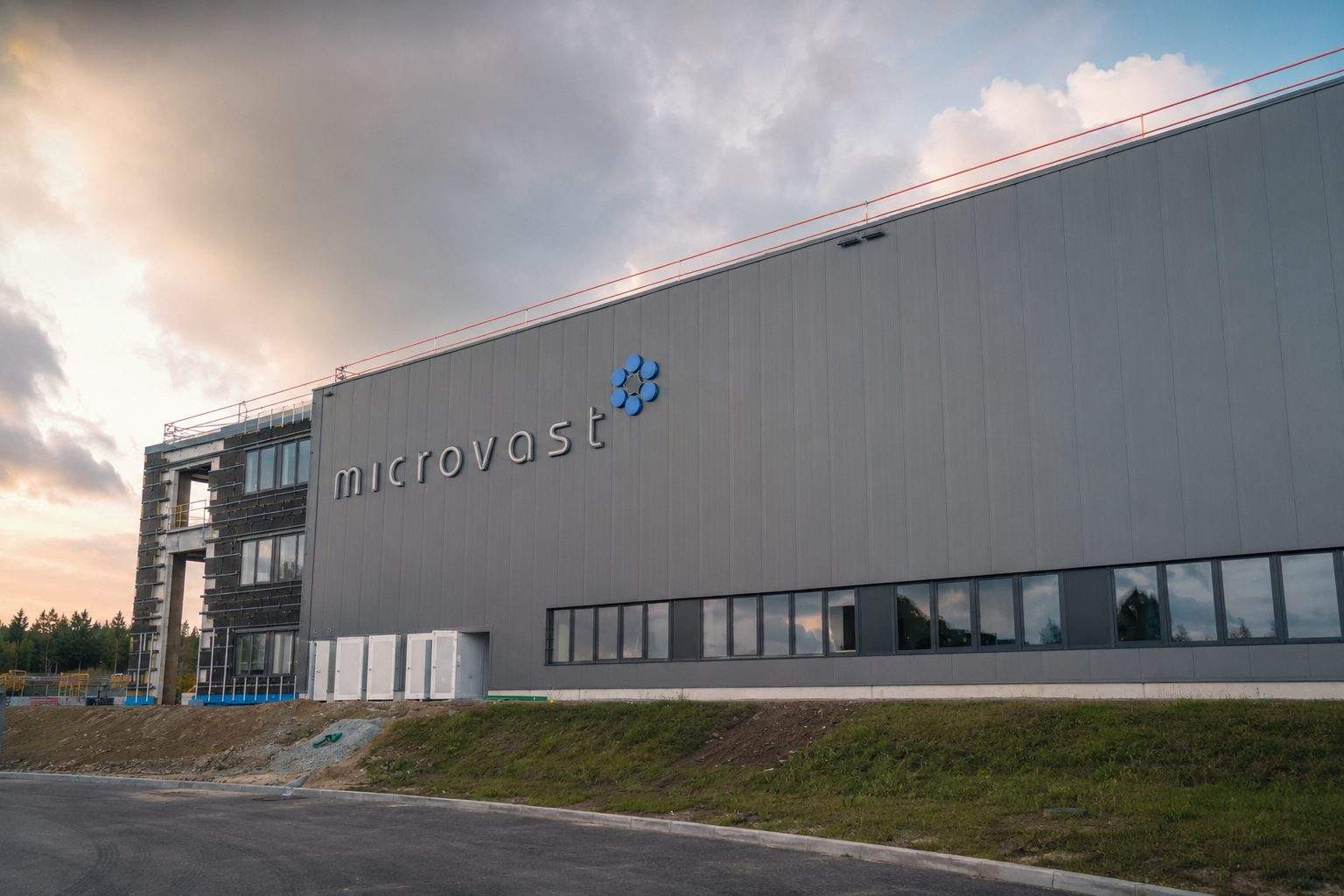
Stafford, Texas-based Microvast Holdings, Inc. reported revenue dropped to $60.6 million, down from $116.5 million the previous year. The company pointed to several hurdles: delivery schedules, regulatory and geopolitical pressures in India and Korea, growing demand for lower-cost products in India, plus delays for original equipment manufacturer platforms—those are the vehicle-maker programs integrating its battery systems.
Gross margin dropped to 31.6% from 36.9%, hit by weaker factory utilization and less fixed-cost coverage. Operating expenses eased, coming in at $27.1 million compared with $29.2 million. Adjusted EBITDA, which strips out certain items and excludes interest, taxes, depreciation and amortization, swung deep into the red at a $5.5 million loss—last year, that number was a $28.5 million profit.
Microvast reported GAAP net income of $48.2 million, a drop from $61.8 million previously. Results got a lift from a $63.8 million fair-value gain related to warrants and a convertible loan; according to the company’s 10-Q, most of that gain stemmed from a decline in Microvast’s share price during the remeasurement period.
During the earnings call, CEO Yang Wu described the revenue decline as “temporary.” CFO Rodney Worthen reported a sales volume drop to roughly 274 megawatt-hours, compared with 536 megawatt-hours for the same period last year. For context, a megawatt-hour represents enough stored power to supply one megawatt for an hour. The Motley Fool
Cash burn worsened. Net cash used in operating activities swung to $22.8 million, reversing from $7.2 million generated the previous year, according to the filing. As of March 31, cash, cash equivalents and restricted cash totaled $174.0 million. On the debt side: $138.8 million in bank borrowings, $41.7 million in convertible bonds, and a $76.5 million convertible loan set to mature May 28 unless it’s converted or the terms are extended.
The sales mix skewed even more heavily toward Europe, which jumped to 71% of first-quarter revenue from 52% last year. Asia-Pacific slipped to 29%, down from 43%. U.S. sales? Barely $234,000. Two customers dominated, bringing in 52% and 18% of the total. According to the filing, customer orders typically remain flexible—they can be changed, canceled, or pushed back.
Microvast is betting heavily on Huzhou Phase 3.2. According to the company, the expansion has the potential to add as much as 2 gigawatt-hours of modular capacity by 2026—a gigawatt-hour equals one million kilowatt-hours. The first localized pack assemblies in Clarksville are still on track for year-end, but the 10-Q makes clear that full-scale battery plant construction there will hinge on securing more financing or a strategic partner.
Microvast is betting on its 290Ah lithium iron phosphate battery pack—an LFP unit favored for applications that prize cost, safety, and durability. The company plans to slot the pack into its KAF electric powertrain, targeting heavy-duty vehicles and transit, with school buses on the list. The move aims to boost full-system sales, not just battery cells or packs.
Competition remains fierce. During the first two months of 2026, CATL pulled further ahead with a 42.1% share of global EV-battery usage, Reuters reported in April. BYD came in at 13.4%, a distant second. Microvast trails well behind; its own disclosure singles out mounting price pressure in China and cheaper demand from India as clear hits to revenue.
Still, there’s no guarantee of a rebound. Microvast flagged several risks—tariffs, geopolitics, swings in raw-material costs, shifts in subsidies, and customer holdups. The filing warns that if management’s strategies don’t deliver, doubts about the company’s ability to keep operating could persist. Any setbacks, whether it’s a holdup at Huzhou, customers not following through, or if that May convertible loan isn’t converted or extended, would further squeeze the margin for error.
The bigger hurdle: cash, not signed orders. Microvast pointed to $168.7 million in backlog, with the bulk of those orders likely shipping out in 2026 and 2027. Still, the company acknowledged that those customers aren’t locked into minimum purchases. Extra capacity is useful only if buyers actually show up to collect.
Related articles: Earnings Reports