Published: Friday, November 7, 2025
Topic: Magic‑angle graphene, superconductivity, twistronics, condensed‑matter physics
What happened
MIT physicists have presented the clearest evidence so far that magic‑angle twisted trilayer graphene (MATTG) hosts unconventional, nodal superconductivity. The results, published in Science on November 6, show a distinctive V‑shaped superconducting gap—a hallmark of non‑BCS (non‑conventional) pairing—captured with a custom platform that combines tunneling spectroscopy and transport on an all–van der Waals stack.
On the same news cycle (Nov. 7), international outlets amplified the finding, and Nature Physics ran a companion News & Views analysis (published Nov. 6) placing trilayer graphene’s superconductivity into a broader “two‑dome” phase‑diagram context. The Debrief+2Donga Science+2
Key details from the new experiment
- Two coexisting V‑shaped gaps were identified: a low‑energy gap that collapses at the superconducting critical temperature and field (the bona fide superconducting gap), and a higher‑energy pseudogap. The tunneling spectra fill in linearly with temperature and magnetic field and exhibit the Volovik effect, all consistent with a nodal order parameter rather than a conventional, fully gapped state.
- The work provides direct, spectroscopic evidence for unconventional pairing in MATTG, building on earlier transport‑only signatures and giving researchers a way to watch the gap evolve in real time as conditions change.
- The study—by Jeong Min Park, Shuwen Sun, Kenji Watanabe, Takashi Taniguchi, and Pablo Jarillo‑Herrero—appeared Nov. 6, 2025 in Science (DOI: 10.1126/science.adv8376).
Why this matters
Superconductors that operate at higher, more practical temperatures could dramatically reduce energy losses in power grids, transform MRI and particle‑accelerator tech, and accelerate quantum devices. MATTG’s unconventional, likely interaction‑driven pairing offers a promising route—not a room‑temperature superconductor today, but a sharper map toward designing one tomorrow. MIT emphasizes that understanding one such system well can guide the design of higher‑temperature superconductors, long considered a “holy grail” of the field. MIT News
The “two‑dome” backdrop you’ll see referenced today
A separate line of work in Nature Physics shows double‑dome superconductivity in twisted trilayer graphene when tuned by displacement field and carrier filling, with superconductivity suppressed near a specific flat‑band filling. Theory (Hartree–Fock with mild strain) points to an incommensurate Kekulé spiral that peaks where superconductivity dips—hinting at competing orders. This picture helps situate the MIT result within a richly structured phase diagram. (*Published Sept. 30 for the research article; Nov. 6 for the News & Views “A tale of two domes”.) Nature+1
Reality check on temperatures: Current measurements are at cryogenic temperatures (for example, representative data in the two‑dome study are taken near 100 mK). The significance here is mechanistic—pinning down how electrons pair—rather than a claim of ambient‑temperature operation.
How the MIT team measured an elusive gap
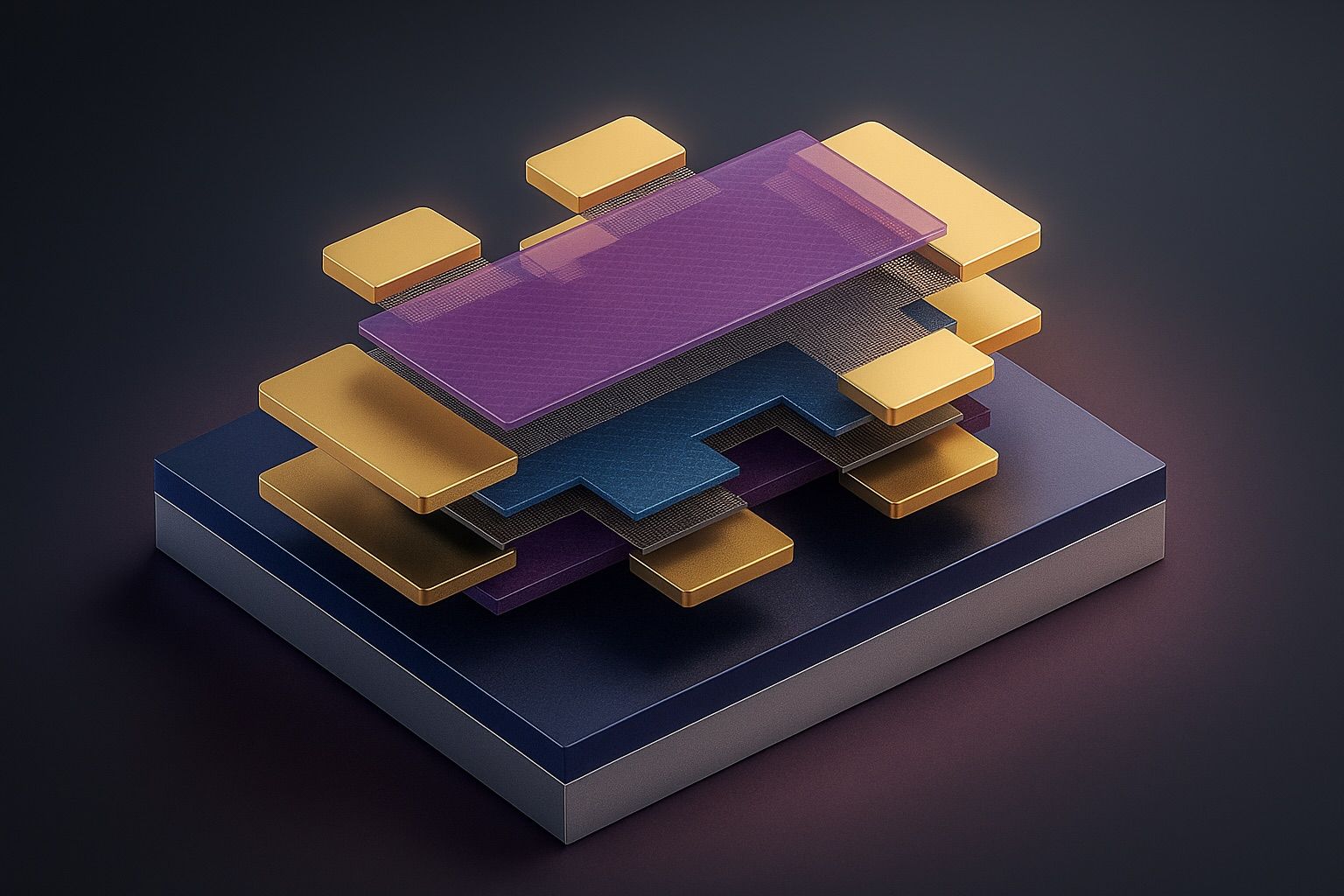
Traditional tunneling spectroscopy is powerful but, on its own, can be ambiguous about whether a sample is truly superconducting at that moment. The MIT platform integrates simultaneous tunneling and transport on an all–van der Waals heterostructure, so the team could confirm the superconducting state while they directly read out the gap. That combination makes the V‑shaped, nodal character unambiguous and separates the superconducting gap from a higher‑energy pseudogap.
How today’s coverage framed it (Nov. 7, 2025)
- The Debrief highlighted the nodal‑gap discovery as a fresh avenue on the path toward room‑temperature superconductivity, quoting the team’s view that decoding the mechanism could guide materials design.
- Dong‑A Science (Korea) explained the 1.1° “magic angle” moiré stacking and emphasized that the V‑shaped gap is the most direct evidence to date for unconventional pairing in MATTG, as well as the value of the new measurement platform. Donga Science
What scientists will watch next
- Symmetry of the nodal state: The spectra are consistent with nodes but do not by themselves fix the pairing symmetry (e.g., d‑wave vs. p‑wave vs. more exotic). Expect angle‑resolved probes and phase‑sensitive tests.
- Competition and coexistence: The double‑dome phase diagram and hints of competing orders (e.g., Kekulé‑like states) will motivate coordinated transport‑plus‑spectroscopy campaigns across fillings and fields.
- Generality: The MIT platform can be applied to other moiré materials to see whether nodal gaps and pseudogaps are common across the family—crucial for turning mechanism into design rules.
Bottom line
- New: Direct spectroscopic evidence for nodal, unconventional superconductivity in magic‑angle twisted trilayer graphene.
- Context: A two‑dome superconducting landscape in trilayer graphene suggests rich competing orders that may shape how and where superconductivity emerges.
- Impact: The result refines the mechanistic roadmap for higher‑temperature superconductors while offering a versatile toolkit to probe quantum phases in 2D moiré materials.
Sources & further reading (Nov. 6–7, 2025)
- MIT News: “MIT physicists observe key evidence of unconventional superconductivity in magic‑angle graphene” (Nov. 6, 2025). MIT News
- Science: “Experimental evidence for nodal superconducting gap in moiré graphene,” Park et al. (published Nov. 6, 2025); see PubMed and EurekAlert summaries. PubMed+1
- Nature Physics News & Views: “A tale of two domes in twisted trilayer graphene” (Nov. 6, 2025), and related research article “Gate‑tunable double‑dome superconductivity in twisted trilayer graphene” (Sept. 30, 2025). Nature+1
- Coverage on Nov. 7, 2025: The Debrief; Dong‑A Science.
Editor’s note: This article summarizes Nov. 7, 2025 coverage around the MIT paper published Nov. 6, 2025 and the Nature Physics commentary also published Nov. 6, 2025. Dates are shown explicitly for transparency.