
JERUSALEM, May 14, 2026, 00:30 (IDT)
- Mobileye ended the session up 14.1% at $10.53 on Nasdaq. Shares held steady in after-hours trading.
- Stronger revenue in the first quarter, an improved 2026 forecast, and a $250 million buyback are behind the move.
- Risks on the table: hefty goodwill write-down, murky demand in China, and a jam-packed robotaxi field.
Mobileye Global Inc. surged 14.1% Wednesday to finish at $10.53 on Nasdaq, snapping back into favor as traders keyed in on its Q1 results, the recently announced buyback, and fresh updates around robotaxi progress. According to Google Finance, the shares held steady after the bell.
Mobileye’s push is significant right now as it looks to show that its bread-and-butter ADAS tech—those systems behind lane keeping and hands-on automated driving—still generates cash, even as it pours money into pricier robotaxi and high-autonomy bets. In April, Mobileye reported first-quarter revenue climbing 27% to $558 million, driven by heavier demand for its EyeQ chips.
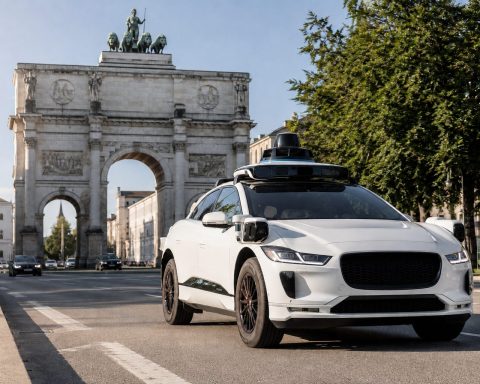
This week, autonomous driving grabbed plenty of attention. On Tuesday, Reuters said Tesla’s Texas robotaxi effort is still stuck in something like beta, with wait times that stretch out. Waymo—Alphabet’s self-driving arm—pulled roughly 3,800 robotaxis from service after spotting a flaw that could send cars onto flooded streets.
Mobileye bumped its full-year 2026 revenue outlook up to a range of $1.935 billion to $2.015 billion, compared with the previous $1.90 billion to $1.98 billion band. The company signed off on as much as $250 million in share buybacks, aiming to partially counter dilution from both stock-based pay and shares issued for the Mentee Robotics deal.
Chief Executive Amnon Shashua described the first quarter as a “stronger than expected start to 2026,” highlighting a new ADAS design win with Mahindra and fresh momentum on robotaxi development with Volkswagen. Mobileye reported that over 100 Volkswagen ID. Buzz vehicles equipped with its Drive system are now on public roads across six cities. Mobileye
Robotaxis aren’t the whole story for the company. The EyeQ system-on-chip—designed for automotive vision and driving tasks—still drives most of the business. For the first quarter, Mobileye attributed revenue growth primarily to a 28% jump in EyeQ volume, plus some recovery as customers rebuilt safety inventories after last year’s dip.
During the earnings call, Chief Financial Officer Moran Shemesh Rojansky pointed to Chinese automaker export volumes as a source of the upside—Mobileye’s share is higher in those exports than in cars sold within China. Still, she added, the company expects a significant drop in China volumes in the second half, citing limited visibility in that market.
Robotaxi rollout poses the tougher challenge here. Shashua told analysts that Mobileye aims to launch commercial rides—starting with a safety driver—before shifting to fully driverless service, saying those efforts are “on track.” Looking out to 2027, he flagged scale as the next big marker: hundreds of vehicles, at least six cities. Mobileye
Mobileye is up against some heavyweight rivals. Waymo’s driverless ride-hailing keeps rolling out, Tesla is pushing to scale its robotaxi platform, and Qualcomm is making moves in driver-assist alongside BMW via Snapdragon Ride Pilot. Last year, Qualcomm and BMW said their tech would launch in the electric iX3, with validation across more than 60 countries and plans to reach over 100 markets by 2026.
But here’s the wrinkle: Mobileye booked a $3.79 billion non-cash goodwill impairment for the first quarter, triggered after Class A shares tumbled 35% and the company’s market cap slipped, forcing a review. Citing elevated macroeconomic and geopolitical risk premiums, Mobileye pointed to exposure in the Middle East and the ongoing Israel-Iran conflict.
The company flagged in its latest quarterly filing that its fate is still closely hitched to a handful of big customers. Any shift—say, those customers ordering less or tweaking what they buy—could hit results. That’s a straightforward risk for a supplier whose rebound rests on automakers’ production lines, export moves, and how much they pour into advanced driving tech.
Even with Wednesday’s news, investors shrugged off the accounting hit to zero in on cash flow gains, stronger chip shipments, and a fatter 2026 operating-income outlook. Mobileye booked $75 million in operating cash flow for the first quarter, while management bumped its adjusted operating-income guidance to a range of $185 million to $235 million.
Related articles: Autonomous Vehicles