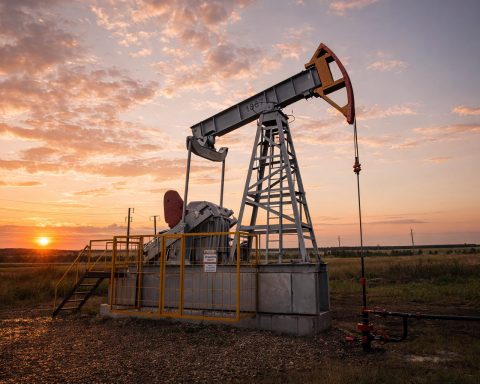
Natural gas “today” (Thursday, December 25, 2025) is a classic holiday-market paradox: not many people are trading, but the people who are trading can move prices. Across the major benchmarks, the story is broadly consistent—winter weather risk is back in focus, LNG demand remains a powerful support in the U.S., and Europe is watching both temperature swings and storage levels as it heads deeper into the heating season. Baird Maritime / Work Boat World
Here’s what’s driving the market on Christmas Day:
- U.S. (Henry Hub/NYMEX): Front-month futures turned volatile in thin pre-holiday trading, slipping after touching a near two-week high as traders reacted to updated temperature forecasts, record output, and strong LNG feedgas flows.
- Europe (TTF/UK): Dutch and British gas contracts nudged higher ahead of the holiday period, with colder forecasts boosting expected consumption—but plentiful supply flows helped cap the upside.
- Asia (spot LNG): Northeast Asia spot LNG prices edged up week-on-week, supported by South Korean demand into a colder pocket, while China’s muted buying kept the broader tone soft.
U.S. natural gas prices today: Henry Hub dips after a near two-week high
In the U.S., the headline on December 25 is holiday volatility—price action amplified by lighter participation.
Reuters reported that January NYMEX natural gas futures were down 16.6 cents (about 3.8%) at $4.242 per MMBtu, after earlier climbing to $4.593, the highest level since December 11. The pullback came after an 11% jump on Tuesday, described as the sharpest daily rise since October 30—exactly the sort of “thin-market rocket fuel” traders love to hate. Baird Maritime / Work Boat World
Why the market moved
Three near-term drivers did the heavy lifting:
1) Weather risk is back (but not extreme—yet).
Meteorologists cited in the report forecast a slight nationwide temperature drop through January 8. Heating degree days (a proxy for heating demand) were expected to rise from 358 on Tuesday to 377 on Wednesday, still below a cited “normal” level of 447, but with forecasters anticipating colder conditions ahead. Translation: the market is paying for the option value of colder weather, even if the baseline forecast isn’t screaming “polar vortex.” Baird Maritime / Work Boat World
2) LNG feedgas remains a major support beam.
Flows to the eight large U.S. LNG export plants averaged 18.4 Bcf/d so far in December, up from a monthly record 18.2 Bcf/d in November, according to the same Reuters reporting. When LNG terminals run hard, they effectively convert domestic gas into global gas—tightening the U.S. balance and making Henry Hub more sensitive to winter demand swings.
3) Production is strong—record strong.
LSEG projected U.S. Lower 48 output averaging 109.8 Bcf/d in December, a record monthly high that narrowly tops November’s 109.6 Bcf/d record. Strong supply can blunt rallies, but it also creates a weird tension: when you’re producing at record levels and prices are still elevated, the market is basically admitting demand (especially LNG and winter heating) is doing real work.
The “thin liquidity” effect (aka: the holiday gremlin)
One of the most important details for readers tracking natural gas prices today: volume was light. Reuters cited trading volume around 19,541 lots at that point in the session, with a market participant noting that holiday conditions can exaggerate intraday swings. In practical terms, that means price moves can look more dramatic than the underlying fundamentals justify—until normal liquidity returns.
Europe natural gas prices today: TTF edges up as cold forecasts meet steady supply
European gas markets headed into Christmas with a small upward nudge, but not a breakout.
Reuters-reported prices showed the Dutch TTF front-month up €0.42 to €28.20/MWh (about $9.75/mmBtu), while the Dutch February contract rose €0.30 to €27.90/MWh. In the UK, the day-ahead contract was up 3.55 pence to 74.00 pence/therm.
What’s pushing European gas right now
Colder weather expectations are the bullish spark.
An LSEG analyst quoted in the report said the Christmas break leaned “bullish,” with Germany and France expected to show higher consumption than last year, driven by a “steep temperature drop” expected over Christmas Day and Boxing Day. Hellenic Shipping News
But supply is acting like a lid on the pot.
The same report emphasized that strong supply from Norway and LNG was expected to offset some demand-driven pressure. This balance—temperature-driven demand rising into winter, while supply and infrastructure keep the market from panicking—is exactly why Europe can see higher day-to-day volatility without necessarily revisiting crisis-era extremes.
The number Europe keeps checking: storage
Europe’s gas storage is still a key psychological anchor. The report cited EU storage sites 66.49% full, referencing Gas Infrastructure Europe data. That’s not “empty,” but it’s also not a cozy overstuffed pantry—especially if the cold snaps arrive in clusters instead of politely spaced-out intervals. Hellenic Shipping News
Asia spot LNG today: prices inch up as South Korea buys, China stays quiet
In Asia, spot LNG prices firmed modestly, but the bigger narrative remains a split screen: South Korea responding to cold, and China remaining reluctant.
Reuters-reported market estimates put the average LNG price for February delivery into Northeast Asia at $9.60/mmBtu, up from $9.50 last week—and still described as the lowest since April 2024. The same report noted that weak buying in China left prices down 34% since the start of 2025.
Why China is the “quiet giant” in today’s LNG market
One analyst cited in the report pointed to “continuous soft demand,” weak economic indicators, and ample alternative supplies like coal in China, adding that the La Niña pattern hadn’t delivered the colder phases some expected—at least not yet. (In other words: if you can burn coal, and it’s cheaper, and the weather isn’t punishing you, you hesitate before paying for spot LNG.) Hellenic Shipping News
Why South Korea is the “loud buyer” this week
South Korea showed more immediate spot interest because temperatures were expected to fall to two-year lows on December 26, according to a market source quoted by Reuters. The report also said five cargoes had been diverted from China to South Korea in recent weeks—an unusually concrete example of how quickly demand signals can reroute global molecules.
The Europe–Asia tug-of-war: LNG pricing, freight, and where cargoes want to go
One of the most consequential “natural gas today” themes is not just price, but direction: where do flexible LNG cargoes flow next?
The Reuters report cited multiple European LNG price assessments for February delivery:
- S&P Global’s Northwest Europe LNG Marker (February, ex-ship): $9.001/mmBtu on Dec. 23, a $0.53 discount to TTF
- Argus: $9.015/mmBtu
- Spark Commodities (January): $9.110/mmBtu
That pricing structure matters because it feeds directly into arbitrage math—especially once you add shipping.
LNG freight rates eased again
According to the report, Atlantic LNG shipping rates fell for a fourth week to $80,750/day, while Pacific rates eased to $71,250/day. Lower freight can widen the map of “profitable” routes, but the same analysis said the U.S. front-month arbitrage to Northeast Asia (via the Cape of Good Hope) narrowed—yet still pointed more toward Europe, with the Panama route only marginally favoring Asia. Hellenic Shipping News
A key forward-looking signal: early Q1 2026 buying in Central and Eastern Europe
S&P Global’s Atlantic LNG manager was quoted saying that key LNG gateways into Central and Eastern Europe are emerging as firm buyers for early Q1 2026, aiming to ease pressure from declining Russian pipeline gas and LNG flows. With Asia and North Africa showing limited spot appetite, the report suggested incremental LNG supply may funnel into Europe.
That’s the market’s quiet way of saying: Europe still needs to “buy insurance” through LNG, even when prices aren’t screaming crisis.
Russia and LNG shipping: a new ice-class tanker enters the chat
Another Christmas-week headline with real natural gas implications: LNG logistics in the Arctic.
Reuters-reported shipping news said Sovcomflot received the first Russian-built ice-class LNG tanker from the Zvezda shipyard, with plans to receive two more next year, according to Interfax citing the company’s CEO. The report underscored that sanctions related to the war in Ukraine have made it difficult for Russia to secure specialized gas carriers—particularly ships capable of operating in thick Arctic ice.
The tanker, named Alexey Kosygin, is expected to join the fleet serving Arctic LNG 2, which the report noted is sanctioned by the United States. It also said Novatek (which owns 60% of Arctic LNG 2) has indicated 15 Arc7 ice-class tankers are eventually expected to be built at Zvezda, and that Novatek has contracted 21 of these tankers in total.
Why this matters for natural gas markets: specialized shipping capacity can be a hard bottleneck. If you can produce LNG but can’t reliably move it—especially through ice conditions—then “supply” becomes seasonal, political, and more fragile than the headline production number suggests.
The data calendar: what’s missing today, and when it returns
Because it’s Christmas Day in the U.S., the normal weekly rhythm of government energy data is interrupted—something traders watch closely in winter.
- The U.S. Energy Information Administration (EIA) said there would be no Natural Gas Weekly Update released on Thursday, Dec. 25 (or Jan. 1), with the next NGWU scheduled for Jan. 8, 2026.
- The EIA’s Weekly Natural Gas Storage Report holiday schedule shows the Christmas-related alternate release date set for Monday, Dec. 29, 2025 (12:00 p.m.).
In winter, missing or delayed data doesn’t just create informational gaps—it can amplify uncertainty, especially when weather forecasts are shifting and prices are already jumpy on low volume.
A U.S. reliability sidebar: Texas ramps winter gas readiness checks
Not all “natural gas today” news is about price screens. Some of it is about whether the system holds together under stress.
A Texas-focused report said the Railroad Commission of Texas has stepped up winter inspections of natural gas infrastructure, conducting weatherization checks of critical facilities through March 2026. It also cited a milestone inventory figure: 524.9 Bcf of working gas in storage as of Nov. 30, 2025, described as the highest in more than 25 years.
Given Texas’s outsized role in U.S. production and LNG feedgas supply, infrastructure readiness isn’t just a local concern—it’s part of the national winter reliability picture.
What to watch next in natural gas markets
As liquidity returns after the holiday window, the market is likely to reprice three things quickly:
Weather models (U.S., Europe, Northeast Asia):
If forecasts trend colder and more persistent, winter risk premiums can rebuild fast—especially with LNG facilities pulling hard on U.S. supply.
LNG feedgas and export reliability:
The U.S. is leaning on LNG flows as a structural demand pillar. Any hiccup—operational or weather-related—can change balances quickly.
Storage and withdrawals:
With the EIA storage report shifted to Dec. 29, the next official read on inventories will land when traders are back at their desks—potentially creating a sharper reaction than usual if the number surprises.
Europe’s storage trajectory vs. cold snaps:
With storage cited around 66%, each cold spell is a “drawdown test.” If supply remains steady, Europe stays calm. If supply tightens while temperatures fall, the tone changes quickly. Hellenic Shipping News