Updated: December 14, 2025
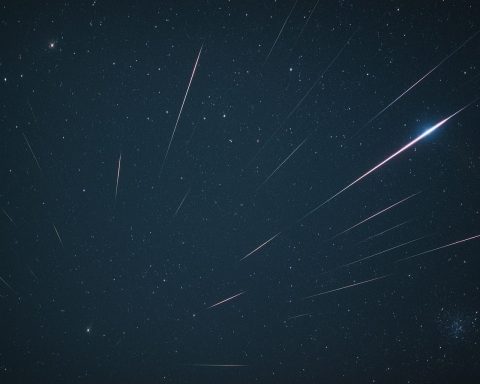
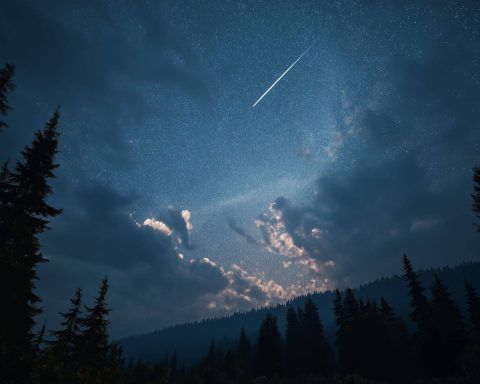
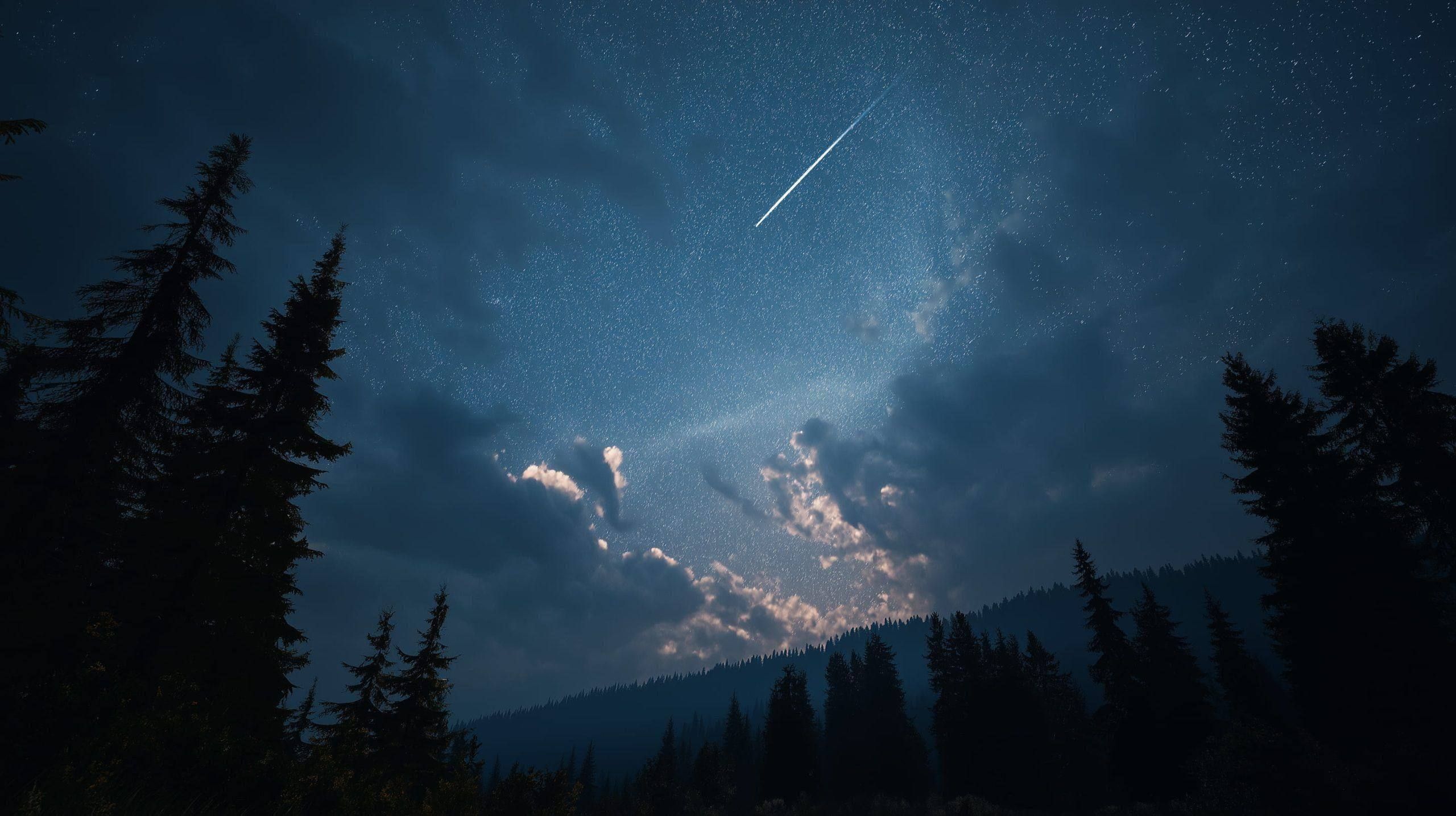
December’s night sky is delivering exactly what skywatchers hope for: long hours of darkness, bright planets, and two headline-grabbing celestial events arriving back-to-back. First, the Geminid meteor shower—often called the year’s most reliable “shooting star” show—peaks across the night of December 13–14 with minimal moonlight for much of the prime viewing window. NASA Science+2EarthSky+2
Then, as the month heads toward the December solstice, attention shifts to a rarer visitor: interstellar comet 3I/ATLAS, which makes its closest approach to Earth on December 19, 2025—still very far away, but scientifically thrilling and a legitimate observing target for telescopes. NASA Science+2NASA Science+2
Below is a detailed, publication-ready guide to the Night Sky in December 2025, anchored in what’s making headlines on December 14, 2025, and packed with practical tips for watching the sky tonight—and planning the rest of the month.
What’s making night-sky news on December 14, 2025
Across major outlets and observatories today, three themes dominate the skywatching conversation:
1) The Geminids are peaking right now—and conditions are unusually favorable
Today’s coverage emphasizes two reasons this year’s Geminids are worth braving the cold for:
- High expected activity (often cited at 100+ meteors per hour in dark skies) The Times+2NASA Science+2
- A late-rising waning crescent Moon, meaning many locations get hours of darker skies before moonrise Live Science+2EarthSky+2
2) Weather is the wild card—fog in the West, snow in parts of the Northeast
Local reporting today is heavily weather-focused:
- In the San Francisco Bay Area, stargazers are being warned that patchy dense fog and clouds could interfere, even as the timing is excellent. San Francisco Chronicle
- In Connecticut, forecasters are flagging clouds shifting to rain and snow that could wipe out visibility for many. CT Insider
- Nationally, a Space.com forecast suggests good-to-excellent viewing for large portions of the central U.S., with poorer conditions likely along parts of the East Coast and Pacific Northwest. Space
3) Interstellar comet 3I/ATLAS is trending again—new imagery, “green glow,” and a key date ahead
On December 14, fresh reporting—especially in international coverage—highlights that 3I/ATLAS has been imaged showing a greener appearance and increasing activity as it continues through the inner solar system, with closest approach to Earth coming December 19. www.ndtv.com+2NASA Science+2
Geminid meteor shower 2025: when to watch tonight (December 14) and what to expect
The Geminids peak spans late Saturday (Dec 13) into early Sunday (Dec 14), and you can still see elevated numbers tonight even as the peak timing varies by model and time zone. NASA Science+2Time and Date+2
Best viewing window (simple rule that works almost everywhere)
- Start: mid-to-late evening (once it’s fully dark) EarthSky+1
- Best: after midnight through pre-dawn, when the radiant is higher and trails look longer Space+1
- Moon factor: In many locations, a waning crescent Moon rises after midnight, so earlier hours can be especially dark. Live Science+1
Local reporting adds more specific “sweet spots”:
- Bay Area: best roughly 11 p.m. to 3:30 a.m., with some meteors possible earlier. San Francisco Chronicle
- UK: headlines point to around 2 a.m. as a key moment when the radiant is high (weather permitting). The Times
- Thailand: NARIT is urging viewers to look up from about 8 p.m. to ~2:30 a.m. nationthailand
How many meteors could you see?
Meteor rates depend heavily on darkness, your horizon, and luck. But under truly dark skies, credible guides commonly cite ranges like:
- Up to ~120 per hour (NASA and other skywatching references often use this benchmark) NASA Science+1
- Up to ~150 per hour in ideal conditions in some forecasts and coverage Space+2Live Science+2
A realistic expectation for many suburban observers: fewer meteors than the headline number, but still a steady show—especially if you commit to at least 30–60 minutes outside. Space+1
Why the Geminids look different (and sometimes colorful)
The Geminids are linked to asteroid 3200 Phaethon—a “comet-like” rocky body—rather than a classic icy comet. NASA Science+2American Meteor Society+2
That backstory matters because Geminid meteors are widely described as bright, and they can appear yellowish or even multi-colored depending on composition and how they burn up. Live Science+2People.com+2
How to watch the Geminids tonight: a practical checklist that actually improves your odds
You don’t need equipment—just smart setup.
1) Pick darkness over “the perfect direction”
- Get away from streetlights and bright windows; even a short drive can transform what you see. CT Insider+2San Francisco Chronicle+2
- If you can’t travel, aim for the darkest corner of your neighborhood and block direct lights.
2) Give your eyes time to adapt
Most guides recommend at least 20–30 minutes for full dark adaptation—longer if you keep checking your phone. Space+2CT Insider+2
3) Watch wide: no telescope, no binoculars
The best “tool” is a wide field of view, so a blanket or reclining chair is better than standing. San Francisco Chronicle+1
4) Dress for stillness, not just temperature
Space.com’s U.S. forecast warns that in many regions the bigger problem isn’t clouds—it’s dangerous cold if you’re outside for long stretches. Layer up, protect hands/feet, and plan warm-up breaks. Space
5) If it’s cloudy, watch online
If weather shuts you out, there are free livestream options being promoted in current coverage. Space
Where to look in the sky tonight: finding Gemini fast
The Geminids “radiate” from the constellation Gemini, near its bright stars Castor and Pollux—but meteors can streak across any part of the sky. Space+2International Meteor Organization+2
A simple method used in many guides:
- Find Orion (the three-star belt is the giveaway), then look northeast to locate Gemini’s twin stars. Space
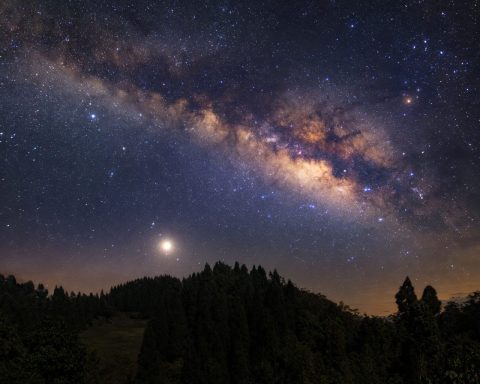
And yes, there’s a bonus this year: Jupiter is near Gemini, acting like a bright signpost in the same general area of sky. EarthSky+2NASA Science+2
December 2025’s other “don’t miss” night-sky dates
Tonight’s meteors are the headline, but December’s calendar stays busy.
December 19: Interstellar comet 3I/ATLAS makes its closest approach to Earth
This is a genuine rarity: 3I/ATLAS is only the third confirmed interstellar object observed passing through our solar system (after 1I/ʻOumuamua and 2I/Borisov). NASA Science+2European Space Agency+2
Key facts that matter for skywatchers:
- Closest approach: December 19, 2025, at roughly 1.8 AU (~170 million miles / ~270 million km)—so it’s not a close pass in everyday terms, and it’s not a threat. NASA Science+2NASA Science+2
- Visibility: Expect a telescopic target, not a naked-eye comet, with observing difficulty depending on your instrument and sky conditions. Time and Date+2NASA Science+2
- What’s new in the news cycle: December reporting highlights a greener appearance in imagery and ongoing observation campaigns. www.ndtv.com+1
- NASA context: NASA’s December skywatching briefing explicitly flags Dec 19 as a monthly highlight. NASA Science+1
If you’re planning to try it, use a reliable finder/chart tool and go in expecting a faint, subtle object—more “bucket list astronomy” than spectacle. The Sky Live+1
December 19–20: New Moon brings darker skies (time-zone dependent)
For deep-sky observers, the best nights are often those closest to the New Moon:
- NASA’s phase listing places the New Moon on Dec 19 NASA Science
- Other skywatching guides list the moment as 01:43 UTC on Dec 20, which is Dec 19 in parts of North AmericaEarthSky+1
Either way, the takeaway is consistent: late Dec 19 through the following nights are among the darkest windows of the month.
December 21: December solstice (the longest night in the Northern Hemisphere)
The solstice arrives December 21 at 15:03 UTC (also widely expressed as 3:03 p.m. GMT). EarthSky+1
For skywatchers, that means:
- The Northern Hemisphere gets its longest night (more observing hours). EarthSky+1
- The Southern Hemisphere gets its shortest night. EarthSky
December 22: Ursid meteor shower peaks in dark skies
The Ursids are smaller than the Geminids—often 5–10 meteors per hour in ideal conditions—but they benefit this year from the moonless period near the New Moon, making them a nice “second chance” meteor event. EarthSky+1
EarthSky’s meteor guide lists a predicted Ursid peak timing around 11 UTC on Dec 22, with dark skies around the peak. EarthSky
Planets in the December 2025 night sky: what you can spot without gear
Even if you see zero meteors (clouds happen), December still offers bright, easy planetary targets.
Jupiter: the all-night beacon
Jupiter is repeatedly highlighted this month as the dominant bright planet, rising in the evening and staying visible through night and into dawn in many locations. EarthSky+1
Saturn: early-evening, low in the west
Saturn remains an evening object, generally sitting in the western sky and setting earlier as the month progresses. EarthSky+1
Mercury: a morning treat—brief and low
December offers one of Mercury’s better morning appearances (especially for the Northern Hemisphere), but it stays low near dawn and becomes harder closer to late December. EarthSky+1
Venus: essentially out of view right now
Venus is moving toward superior conjunction, with EarthSky noting the alignment behind the Sun comes January 6, and Venus returns to the evening sky in early 2026. EarthSky
Aurora check: what the forecasts say for mid-December
If you’re hoping for northern lights and meteors, here’s the mid-month reality check:
- NOAA’s official forecast text product indicates no G1 (Minor) or greater geomagnetic storms are expected for Dec 14–16, with the greatest expected 3‑hour Kp below storm thresholds. NOAA SWPC Services+1
- The University of Alaska Fairbanks forecast data suggests moderate activity levels around this period (with daily Kp estimates in the mid range). gi.alaska.edu
That doesn’t rule out aurora at high latitudes, but it does suggest this stretch is not the kind of “far south” aurora alert that makes national headlines.
(For context, earlier coverage noted auroral displays in recent nights and weekend outlooks—but those were tied to earlier disturbances.) EarthSky+1
Quick FAQ: Night Sky December 2025
Do I need binoculars or a telescope for the Geminids?
No. The Geminids are best viewed with the naked eye because meteors can appear anywhere in the sky. San Francisco Chronicle+1
What if I only have 15 minutes?
Go outside anyway—just set expectations. Most guides recommend longer because your eyes need time to adapt, and meteors arrive in bursts. Space+1
Why do some Geminids look yellow or green?
Reports often describe Geminids as bright and sometimes colored, which can relate to composition and how the material burns in the atmosphere. Live Science+2The Times+2
Will 3I/ATLAS look like a dramatic comet?
No—think faint telescopic comet, not a naked-eye “tailed” showpiece. The event is compelling because it’s interstellarand scientifically rare, not because it will dominate the sky. NASA Science+2Time and Date+2