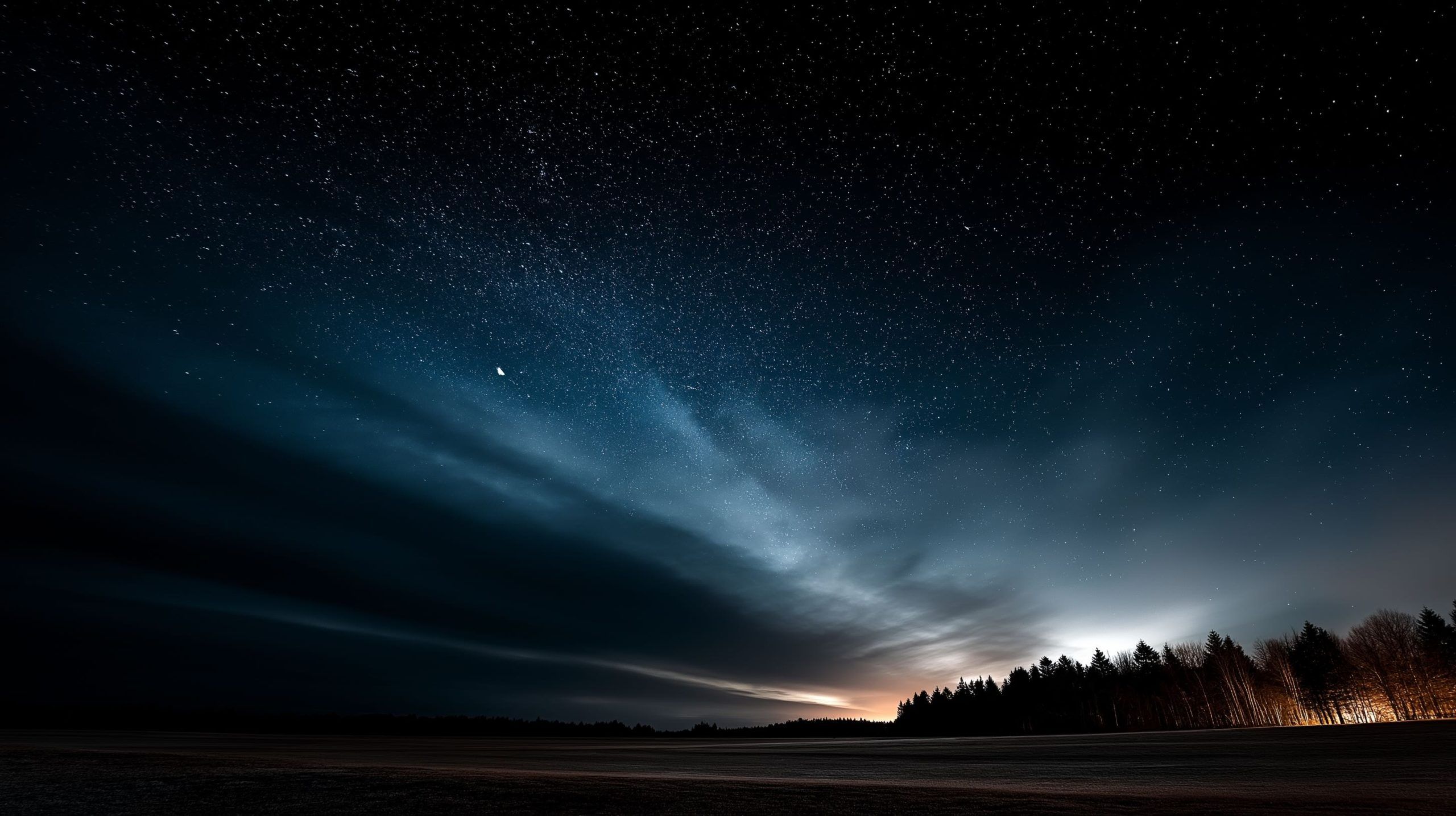

Short version: Tomorrow evening brings a nearly full supermoon gliding through Taurus near the Pleiades, lingering Taurid fireballs after midnight, bright Saturn in early evening, late‑night Jupiter, and—thanks to a new G3 (Strong) geomagnetic storm watch—a real chance of northern lights at mid‑latitudes.
What’s new as of November 5, 2025
- Aurora alert: NOAA’s Space Weather Prediction Center issued a G3 (Strong) geomagnetic storm watch for Nov. 6–7 (UTC) after multiple X‑class solar flares and a CME. If the CME arrives on schedule, auroras could spill well into the northern U.S., Canada, and northern Europe late Thursday into Friday. Track updates on the SWPC site and its Aurora Dashboard before you head out.
- Supermoon, still dazzling: Yesterday’s peak full moon was this year’s closest and brightest. Although technically past full, Nov. 6 features a 99% waning gibbous “supermoon” that will look full to the eye and rise around dusk. Live Science+1
- Moon + Pleiades: On Nov. 6 the moon makes a close approach to the Pleiades (M45)—a photogenic pairing in Taurus.
- Taurid fireballs continue: The South Taurids peaked around Nov. 5 (13:00 UTC), with the North Taurids peaking around Nov. 9 (12:00 UTC). Even with moonlight, slow, bright Taurid fireballs remain possible tonight. 2025 is expected to be a modest “swarm” year (weaker than 2022), so keep an eye out. EarthSky
Sky timetable for Thursday, Nov. 6 (local times)
- Dusk–evening: The nearly full supermoon rises in the east. Saturn stands well‑placed in the south through the evening; its rings are close to edge‑on this month in small scopes.
- Late evening to pre‑dawn: The moon slides near the Pleiades; by late night Jupiter joins the scene, rising late and shining toward dawn (it becomes an evening object for several hours by month’s end).
- Around midnight–pre‑dawn: Best window for Taurid meteors. Moonlight will wash out faint streaks, so focus on the brighter fireballs and look 40–90° away from the moon.
- Late night into early Friday: If the CME arrives, aurora chances improve after local midnight; watch the Kp index (Kp≈6–7 often reaches mid‑latitudes).
The supermoon, explained (and what it’s called this year)
- Brightness & size: November’s full moon reached peak at 13:19 UTC on Nov. 5, near lunar perigee later that day—why it’s the year’s brightest supermoon. On Nov. 6 it remains ~99% lit (visually “full”). EarthSky+2EarthSky+2
- Name notes: Many outlets are calling it the “Beaver Moon.” Strictly speaking, by the classic definition the Hunter’s Moon is the full moon after the Harvest Moon; because the Harvest Moon fell in early October this year, some astronomy sources label the Nov. 5 full moon the “Hunter’s Moon.” Both names are in circulation—don’t be surprised to see either. Live Science+1
Photo target: The Moon + Pleiades (M45) conjunction on Nov. 6 is a great binocular view. With a telephoto (85–200 mm), frame the bright lunar disk with the tiny, dipper‑shaped Pleiades off to one side.
Taurid meteors: what to expect tonight
- Status: The South Taurids just peaked; North Taurids peak Nov. 9. Typical rates are modest (~5/hour per stream under dark skies), but Taurids are famous for occasional fireballs—slow, bright, sometimes leaving persistent trains. 2025 offers a weaker “swarm” than 2022, and moonlight will suppress fainter meteors; still, a few eye‑poppers are possible. EarthSky
- When & where: Try midnight to 3 a.m. with Taurus high up. Look broadly across the sky; you don’t need to face the radiant. Blocking the moon with a building or tree helps.
- Background / schedule: Meteor‑shower calendars from AMS and coverage at Space.com/EarthSky outline this week’s timing and the “swarm year” expectations. American Meteor Society+1
Planets to catch on Nov. 6
- Saturn (evening): Bright in the south after dusk; small scopes show the rings (quite edge‑on this month).
- Jupiter (late night to dawn): Still primarily a morning object in early November, rising late and climbing high before sunrise; it becomes an evening standout later this month and reaches opposition Jan. 10, 2026.
- Mercury & Mars: Hugging bright twilight—challenging this week for most observers north of ~30° N.
- Looking ahead:Uranus reaches opposition on Nov. 21, best seen with binoculars/telescopes once the moon wanes later in the month.
Aurora watch: how to maximize your chances
- Check real‑time conditions before you go: NOAA’s Aurora Dashboard and 3‑day forecast summarize arrivals and visibility. Kp≥6 often pushes auroras to mid‑latitudes.
- Timing: If the CME hits Thursday evening or overnight, the best glow often occurs after local midnight toward dawn.
- Where to look: Face north, find dark, unobstructed horizons, and shield your eyes from the moon.
Practical observing & photo tips (moon, meteors, aurora)
- Beat the glare: Stand where a roofline, hill, or tree can block the moon when meteor‑watching.
- Adaptation: Give your eyes 20–30 minutes to dark‑adapt; avoid phone screens.
- Supermoon shots: Try 1/250–1/500 s, ISO 100–200, f/8–11 for a clean lunar disk; bracket exposures.
- Meteor settings: Wide lens (14–24 mm), ISO 1600–3200, 10–20 s, f/2–f/2.8, repeated sequences.
- Aurora: Start around ISO 1600–3200, 2–8 s, f/1.8–f/2.8; shorten exposure for fast beams.
What’s next this month
- Northern Taurids: best Nov. 11–12 (moon at last quarter on the 12th).
- Leonids: peak Nov. 17–18 (typical 10–15/hour), with improving moon conditions.
- Uranus at opposition:Nov. 21—all‑night visibility in Aries for binocular/telescope users.
Sources & further reading
- NOAA SWPC G3 Watch (Nov. 6–7): official watch and forecast products.
- EarthSky — November guide (planets, supermoon, dates): includes charts for Nov. 6–7.
- Moon phase & illumination on Nov. 6: ~98–99% waning gibbous.
- Moon near the Pleiades (M45) on Nov. 6: event listing.
- Taurids 2025 – peaks, swarm context & tips: overview and timing.
- Southern Taurids peak coverage: recent explainer.