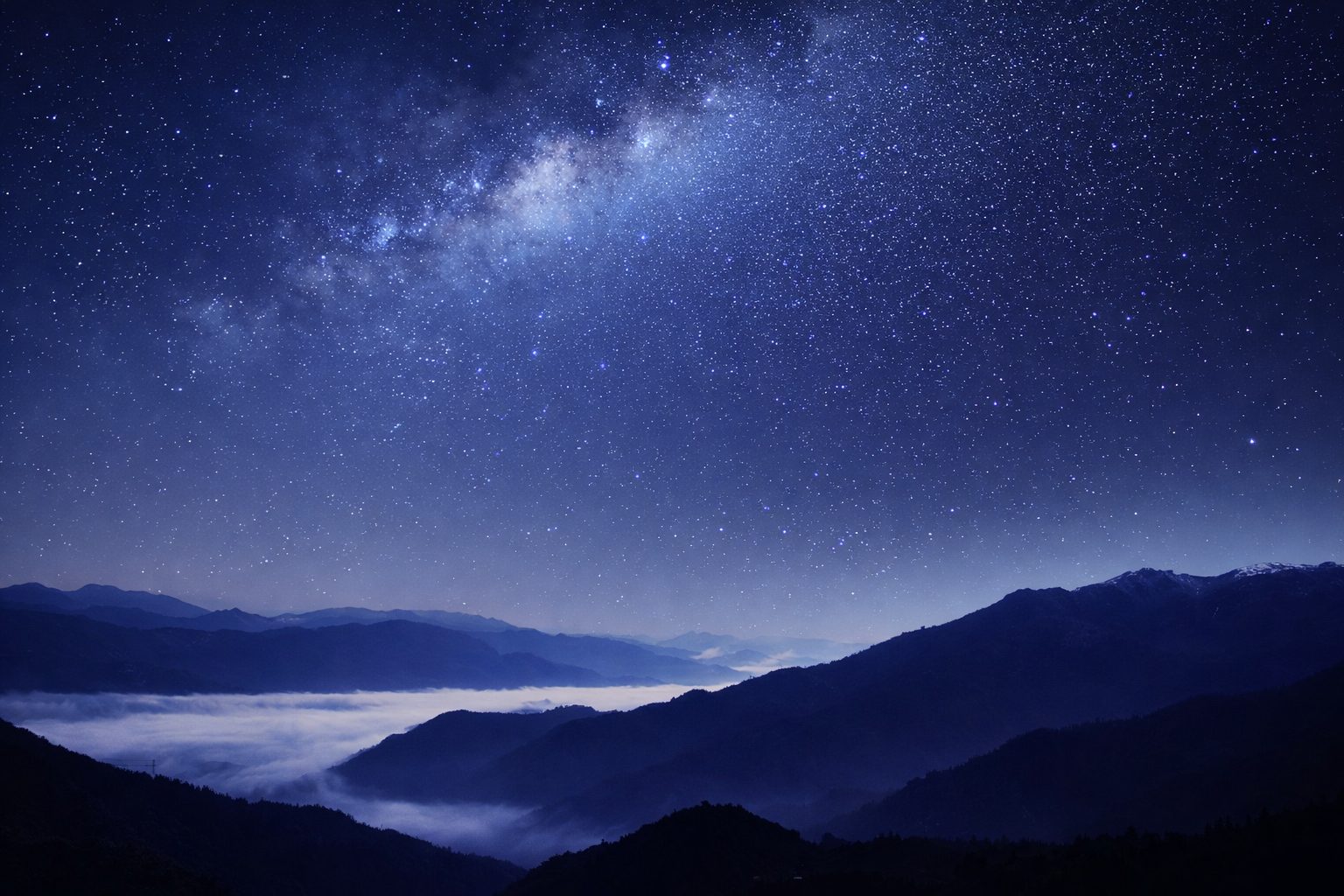
If you’ve been waiting for a “big” skywatching night, Sunday, December 21, 2025 delivers one of the most atmospheric setups of the year: it’s the December solstice, bringing the longest night and shortest day for the Northern Hemisphere—precisely when a thin crescent Moon keeps skies dark for the Ursid meteor shower. And while Jupiter dominates the late evening, skywatchers with the right telescope may still have a shot at a once-in-a-lifetime target: interstellar comet 3I/ATLAS, which made its closest pass by Earth just two nights ago. NASA Science+3Time and Date+3EarthSky+3
Below is a practical, publication-ready guide to Night Sky Today—built from the day’s major skywatching forecasts and news reports dated 21.12.2025, plus the most relevant official updates leading into tonight.
Tonight’s headline: the winter solstice brings the year’s longest darkness (and a skywatching bonus)
The December solstice occurs at 15:03 UTC today—10:03 a.m. EST in New York—the moment the Sun reaches its southernmost point in our sky. For northern observers, that translates into the shortest daylight and the longest stretch of night, which is exactly what you want when you’re chasing faint meteors or trying to pull detail out of a telescope view. EarthSky+3Time and Date+3Time and Date+3
The solstice isn’t just an astronomy note—it’s also a global human story. In England, thousands gathered before dawn at Stonehenge to mark the solstice sunrise, with about 8,500 people onsite and more than 242,000 watching via livestream, according to the Associated Press. AP News
As one attendee put it in a UK report: “I feel special, in my heart.” The Guardian
Moon phase tonight: a young waxing crescent that keeps skies dark
Tonight’s Moon is a waxing crescent—only about 2% illuminated (roughly 2–3% depending on the exact time and location), which is why the sky after evening twilight feels unusually ink-black for late December. The Sky Live+2US Naval Observatory+2
That darkness is no accident of timing. A New Moon occurred around 01:43 UTC on December 20 (evening of December 19 in North American time zones), which means the Moon is still only about a day old on the night of Dec. 21 and will set relatively early—ideal conditions for meteor watching later tonight. EarthSky+2Sky Telescope+2
Where to look: Shortly after sunset, scan the western sky for the delicate crescent low over the horizon; this is one of the most photogenic lunar phases, even if you’re just viewing with the naked eye. Moongiant+1
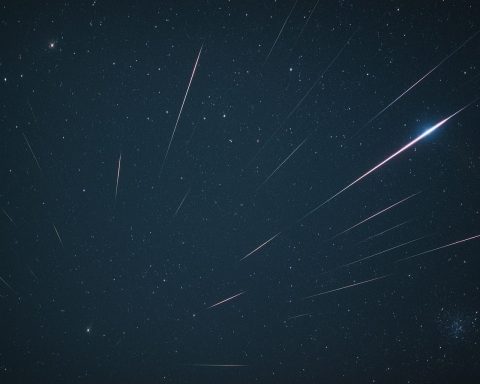
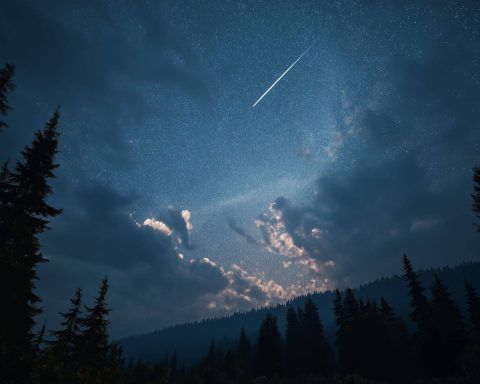
Meteor shower tonight: the Ursids peak overnight (Dec. 21–22)
If you’re searching “meteor shower tonight,” this is the one: the Ursid meteor shower is the final major shower of 2025 and is expected to peak late tonight into early Monday, with unusually favorable moonlight conditions. TIME+2EarthSky+2
When is the peak?
Forecasts cluster around the same window:
- EarthSky highlights a predicted peak around 11 UTC on Dec. 22, 2025, and recommends watching the evening of Dec. 21 through dawn. EarthSky
- The American Meteor Society’s 2025 guide lists the strongest activity around 10:00 UT on Dec. 22 and underscores how favorable the Moon is this year. American Meteor Society
That difference (10 vs. 11 UTC) is normal—meteor streams are messy, and peak timing can shift.
How many meteors can you see?
The Ursids are typically modest—often around 5 to 10 meteors per hour under dark skies—but they’ve produced occasional surprise outbursts in past years. EarthSky+1
Best time to watch tonight
Multiple forecasts converge on the classic meteor-window strategy:
- Midnight to pre-dawn is usually best, when the radiant is higher and your local sky is fully dark. Time magazine’s viewing window emphasizes midnight to 5 a.m. ET. TIME+1
- EarthSky notes the radiant is circumpolar for many northern latitudes, meaning it stays above the horizon, and suggests beginning in earnest around local 1 a.m. when the geometry improves. EarthSky
Where do Ursid meteors appear?
The radiant lies in Ursa Minor (the Little Dipper region), but you don’t need to stare at the Little Dipper all night. Meteors can streak anywhere; the radiant simply describes where their paths trace back toward if you extend them. EarthSky+1
Planets tonight: Jupiter rules late evening; Saturn lingers early
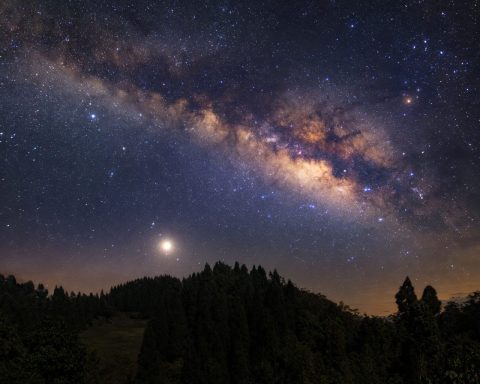
Jupiter: the brightest “star” of the night
Jupiter is the planet most casual stargazers will notice immediately once it’s up: it’s brilliant and climbs higher as the evening progresses.
Sky & Telescope’s weekly observing outlook notes Jupiter shining around magnitude –2.6, rising into view after dark and becoming a strong late-night target—on track for opposition on January 10, 2026, when it will be visible all night and at its most prominent. Sky Telescope+1
Quick tip: Even small binoculars can show Jupiter as a disk-like point and may reveal its brightest moons as tiny nearby dots, depending on conditions. (A small telescope makes this easy.) Sky Telescope
Saturn: your early-evening planet
Saturn is still part of the evening sky, but it’s better treated as an early-night target—something to catch soon after twilight before it sinks lower. EarthSky’s December night-sky guide lists Jupiter and Saturn as the current evening planets. EarthSky
What about Venus and Mars?
If you’re wondering why they’re missing: EarthSky reports Venus and Mars are essentially behind the Sun right now (lost in solar glare), making them poor or impossible targets this week. EarthSky
Mercury: a pre-dawn niche target
Mercury’s visibility comes and goes quickly. Sky & Telescope’s mid-December notes placed Mercury as a low pre-dawn object earlier in the month, and EarthSky’s December guide emphasizes that inner-planet viewing windows are short and timing-sensitive. For most readers, tonight’s main planet priorities remain Jupiter and Saturn. Sky Telescope+1
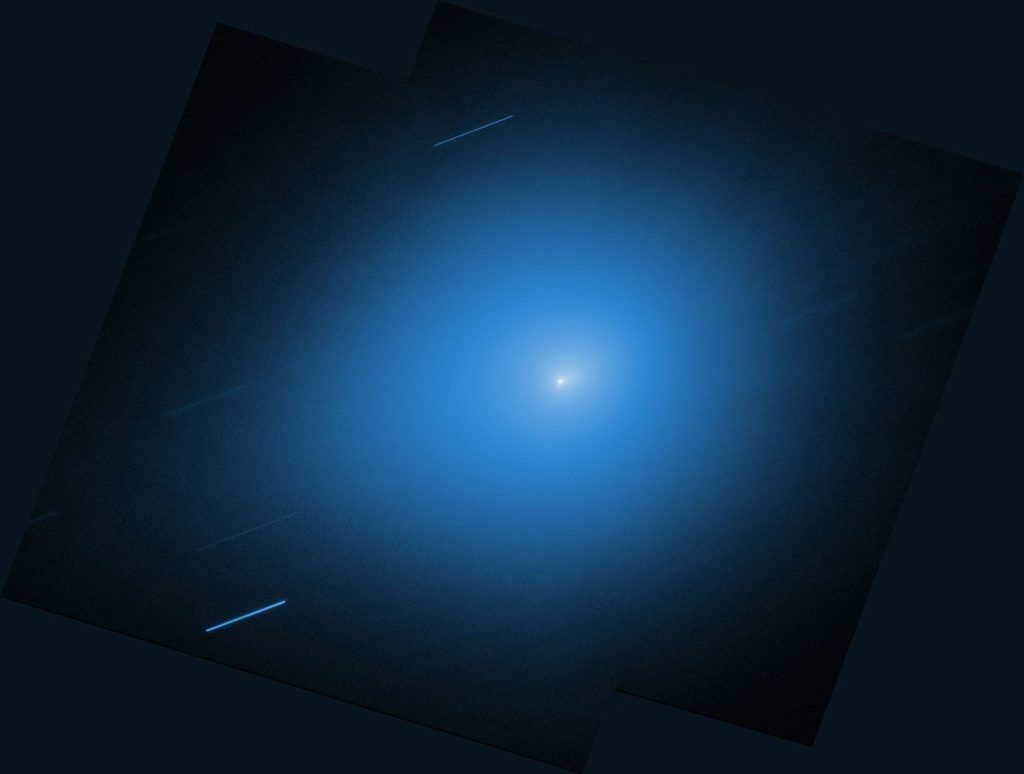
The rare visitor: interstellar comet 3I/ATLAS is still a headline (and still observable with the right telescope)
Even if you never chase comets, 3I/ATLAS is the kind of object that pushes into mainstream news for a reason: it’s one of only three confirmed interstellar objects ever observed passing through our solar system, according to NASA. NASA Science+2NASA Science+2
Where things stand as of Dec. 21
- NASA’s December skywatching guide says Comet 3I/ATLAS made its closest approach to Earth on Dec. 19, at roughly 170 million miles away, and emphasizes it poses no threat. NASA Science+1
- Timeanddate’s Comet Watch report also puts the close approach at about 270 million km (170 million miles) and notes it will be too faint for naked-eye viewing. Time and Date
- The Associated Press similarly reported the close pass and stressed that backyard astronomers would need a telescope to catch it. AP News
How to try to see it
NASA’s guidance is straightforward but demanding: you’ll likely need a telescope with at least a 30 cm (about 12-inch) aperture, and you should search the east to northeast pre-dawn sky near Regulus (Leo’s bright star) around the close-approach timeframe. NASA Science+2Smithsonian Magazine+2
Realistically, this is a target for experienced observers, observatory events, or well-equipped backyard astronomers. If you don’t have access to a large scope, the more “everybody can do it” highlights tonight are still the meteors, Jupiter, and the winter constellations.
Why scientists are excited right now
A major science update from this week: Space.com reports that astronomers captured X-ray views of 3I/ATLAS using ESA’s XMM-Newton and XRISM, detecting an X-ray glow extending roughly 250,000 miles (400,000 km)—a signature of the comet’s gases interacting with the solar wind. Space
NASA also published a December 19 update noting that Parker Solar Probe observed 3I/ATLAS from Oct. 18 to Nov. 5, capturing around 10 images per day during a period when the comet was difficult to observe from Earth due to its proximity to the Sun in our sky. NASA Science
Aurora forecast: quiet tonight, but geomagnetic activity builds Dec. 22–23
For aurora hunters, tonight’s story is about what’s coming next.
NOAA’s Space Weather Prediction Center issued a 3‑Day Forecast at 12:30 UTC on Dec. 21, reporting the highest observed Kp in the last 24 hours was 4, and forecasting a maximum expected Kp of 5.00 (G1 / Minor geomagnetic storm) during Dec. 21–23. NOAA’s rationale points to coronal hole high-speed stream influences, with G1 storming likely on Dec. 22–23. NOAA SWPC Services
Alaska’s Geophysical Institute aurora outlook aligns with that pattern, showing lower activity (Kp ~2) on Dec. 21 with higher Kp values forecast beginning Dec. 22. Geophysical Institute
Bottom line: If you’re at high latitudes (or watching alerts closely), tonight may be a warm-up; Monday and Tuesday nights could be more interesting for aurora potential, assuming skies cooperate locally. NOAA SWPC Services+1
Winter sky analysis: why the next few weeks are peak season for “wow” constellations
Beyond the headline events, tonight kicks off the stretch when many people rediscover how dramatic the winter sky is—especially in the Northern Hemisphere, where nights are long and the brightest stars dominate.
A winter-sky viewing guide published today notes that the season ahead features standout stars like Sirius and the classic winter patterning around Orion, plus bright-planet milestones later in the season. The Washington Post
Sky & Telescope’s mid-December observing notes similarly emphasize winter showpieces: Sirius rising in the evening, the Pleiades and Aldebaran high in the sky, and Jupiter shining among bright-star lineups—perfect “no telescope required” viewing if clouds stay away. Sky Telescope
How to get the best night-sky view tonight (quick checklist)
- Choose your mission first: meteors (wide sky), planets (steady viewing), or comet hunting (telescope + patience). EarthSky+1
- Go darker than you think you need: the Ursids are modest; city light will erase most of them. EarthSky+1
- Give your eyes 20–30 minutes to adjust to darkness (no phone glare). TIME
- Dress for longer than you plan to stay: solstice nights are cold, and meteor watching is mostly sitting still. EarthSky+1
- For Jupiter: observe later in the evening when it’s higher—less atmosphere, sharper detail. Sky Telescope
- For 3I/ATLAS: consider a local observatory or organized skywatch—NASA explicitly suggests local events, and the aperture requirements are steep. NASA Science+1
What’s next after Dec. 21?
- Ursids remain active for several days, but the best focus is still the overnight window into Dec. 22. EarthSky+1
- The Moon brightens each night; First Quarter arrives Dec. 27, bringing a half-lit Moon that starts to cut into deep-dark observing. Time and Date+1
- Jupiter continues building toward opposition in early January 2026, making it the season’s most reliable bright-planet target. Sky Telescope+1
Tonight, the sky is doing what it does best on the solstice: reminding you that darkness can be an event in itself. If clouds cooperate, you’ve got a rare combination of a long winter night, a near-moonless meteor peak, a bright outer planet, and a headline-making interstellar comet still in the conversation. The Sky Live+3Time and Date+3EarthSky+3