
- First big nor’easter of the season: A powerful mid-October nor’easter surged up the Eastern Seaboard over the weekend, drenching the Carolinas through New England with heavy rain (up to 3–4 inches in spots) and battering coastal areas with 50–60 mph wind gusts and 15–18 foot waves abcnews.go.com turnto10.com. Coastal flood watches stretched from North Carolina to New York as 21+ million people were placed under warnings abcnews.go.com.
- States of emergency: New Jersey’s acting governor Tahesha Way declared a state of emergency for all 21 counties ahead of the storm 6abc.com. New York Governor Kathy Hochul also issued an emergency for eight southern New York counties, while other states (CT, RI, MA) readied their agencies. sheltonherald.com 6abc.com. Officials urged people to avoid beaches and unnecessary travel as high tides and onshore winds threatened significant flooding.
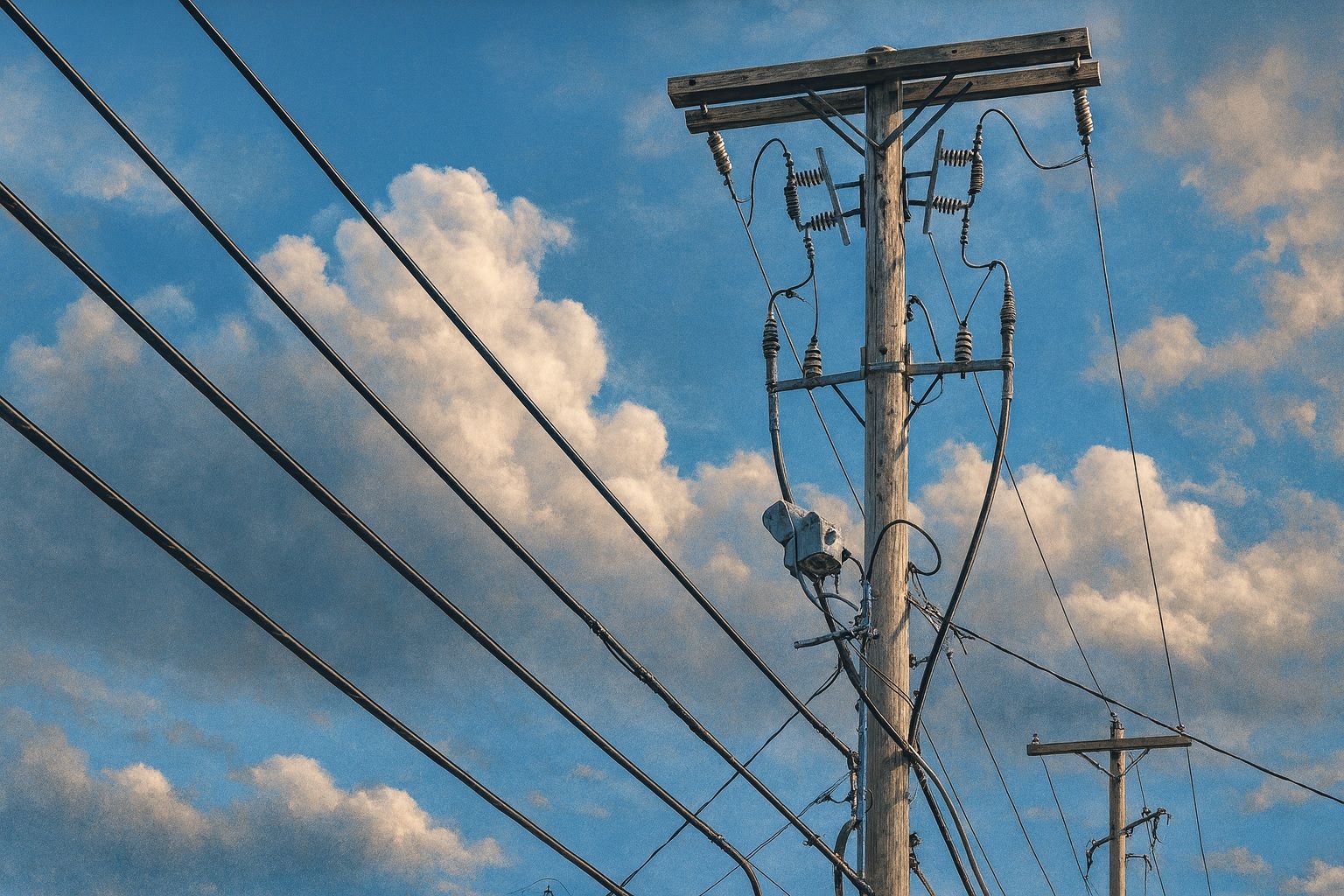
- Widespread outages: Tens of thousands of homes lost power across New England. Massachusetts saw 5,000+ outages late Sunday, mostly along the coast (Quincy, Falmouth, Scituate hardest hit) cbsnews.com. Connecticut’s grid was similarly affected: by early Monday morning Eversource reported 5,091 outages statewide (with UI Light & Power adding another ~300) ctinsider.com. Rhode Island reported dozens of scattered outages. (Virginia and the Carolinas also saw outages, but those states had fewer customers impacted so far.) Utility crews remained on high alert; Massachusetts Eversource warned, “The heavy rain and strong winds in the forecast could bring down trees or tree limbs onto electric lines and equipment…we’re taking all appropriate steps to ensure our crews are ready” cbsnews.com. RI Energy’s chief Greg Cornett likewise said crews were “ready across the state, from Woonsocket to Westerly to everywhere in between,” mobilizing 100+ repair crews and hundreds of contractors turnto10.com.
- Major coastal flooding expected: Forecasters warned of moderate to major coastal flooding during high tides. The slow-moving storm’s persistent onshore winds were pushing seawater into bays and inlets. New York’s weather office cautioned that coastal flood impacts would continue through Monday afternoon weather.gov. By Sunday evening, large breaking waves and erosion were already reported from the Jersey Shore through Cape Cod. ABC News noted that even as rain begins to taper Monday, gusty winds and elevated tides will linger, so flood-prone areas should stay vigilant abcnews.go.com abcnews.go.com.
- Experts stress caution: Emergency officials from Boston to Providence warned residents to brace for the storm. MEMA (Mass. Emergency Management Agency) reported all outages immediately after the storm hit, then helped Eversource map and restore customers rapidly cbsnews.com. Authorities urged people to stay away from flooded or downed power lines and to avoid travel if possible. (Rhode Island police echoed this – on Sunday they urged motorists to stay off the roads as 15–18 foot waves crashed ashore turnto10.com.) The National Weather Service had placed the region under wind and flood advisories; it even warned of large airport delays from Boston to Washington, D.C. due to the storm nbcnewyork.com.
National Flood Watch: From Carolinas to New England
Meteorologists traced the storm’s origins to a low-pressure system off the southeast U.S. coast that intensified as it drifted north. By Sunday afternoon it was dragging an Atlantic feeder band up into New England, prompting flood and wind advisories in many states. The Weather Channel and ABC News reported 1–3 inches of rain inland (with 4+ inches along the coast) and noted “significant coastal flooding, along with significant beach erosion and high surf” from Virginia through Long Island abcnews.go.com. Overnight Sunday, moderate coastal flooding struck parts of North Carolina and New Jersey on a spring high tide, confirming forecasts. The focus of the storm then shifted to New England: as of Monday morning the weather service recorded gusts up to 47 mph in Bridgeport and Stamford, CT sheltonherald.com, and 50–60 mph along eastern Long Island. High wind warnings remained in effect for Long Island, where major flooding was predicted in bay areas, and wind advisories from New York City to Cape Cod.
Power Outages and Repairs
By midnight Sunday, utilities reported extensive but localized outages. Massachusetts Energy and Environmental Affairs (MEMA) showed 5,000+ customers without power (down to ~2,000 by 5 AM Monday) cbsnews.com. Almost all were near the coast in communities like Quincy, Scituate and Falmouth. Connecticut’s Eversource and UI had about 5,400 total outages (Eversource 5,091; UI ~300) early Monday ctinsider.com – nearly the same 10,000ish number that Massachusetts had. Many outages were blamed on fallen tree limbs, as the storm hit ground already saturated from earlier rain ctinsider.com. Rhode Island Energy reported only a few dozen outages but noted “widespread impacts” along the shore. Utility spokesmen uniformly stressed that crews were beefed up: in Massachusetts Eversource said it doubled staffing levels and urged caution around downed wires cbsnews.com, and in Rhode Island Cornett said crews would be “doubling our size in the morning” with contractors turnto10.com.
In summary, crews worked through the night to clear lines. By Monday afternoon most customers should have power back. (MEMA’s outage map and local news showed numbers dropping rapidly.) Some long-duration outages were possible in rural or heavily wooded areas if more trees came down in evening winds. Officials reminded anyone without service to report it via the utility’s website or hotline and to steer clear of any downed wires.
Climate and Technology Context
This storm comes amid growing concern over severe coastal storms. Climate scientists note that while average storm frequency hasn’t clearly changed, the strongest nor’easters have become more intense. A July 2025 study reported that peak winds in the worst East Coast nor’easters have increased about 6% over the last 80 years as the planet warms livescience.com. Such storms bring “profound implications” for heavily populated coasts, said climate expert Michael Mann, because they produce extreme winds, rain, snow or flooding. Moreover, rising sea levels (measured in real time by satellites) mean storm surges now ride on higher baselines. Satellites literally serve as an “early warning system” for the oceans, continuously measuring sea level and surface conditions, TS2.tech notes, and making clear “our seas are rising and warming” – information crucial for coastal defenses ts2.tech.
Modern forecasts also rely on cutting-edge space technology. For example, the U.S. and international weather satellite fleet kept tabs on this storm from formation to landfall. TS2.tech explains that geostationary satellites (like NOAA’s GOES) provide a constant “movie” of the storm over one hemisphere, while polar-orbiting satellites fill in global details two to four times per day ts2.tech ts2.tech. Together they “ensure no major weather system goes unobserved,” aiding 3–7 day forecasts with detailed data on atmospheric moisture, winds and sea temperatures ts2.tech ts2.tech. Instruments like lightning mappers aboard GOES can even detect storm intensification via flashes long before severe weather strikes ts2.tech. This high-tech monitoring gave forecasters and utilities maximum lead time to prepare, route crews, and warn the public.
Economic and Market Notes
On the economic front, utilities stocks have remained relatively steady even as this storm hit. Energy analysts note that investors tend to view power companies as defensive. For instance, the Utilities Select Sector ETF (XLU) was up about 20% year-to-date by Oct. 10, 2025 markets.financialcontent.com, reflecting strong demand for essential power services amid market volatility. Locally, key utilities held ground: Eversource Energy (serving CT/MA) was trading around $72.35/share on Oct. 10 stockanalysis.com. Weaker storms generally have minimal impact on utility stock prices because rate-regulated utilities can often recoup repair costs through bills. Nonetheless, heavy storm seasons do put pressure on company costs, and analysts say utilities are increasingly investing in “smarter” grid resilience (not just stronger poles) to handle more frequent outages renewableenergyworld.com renewableenergyworld.com.
In related markets, London’s National Grid saw little immediate effect. Natural gas and heating oil futures have ticked up slightly as customers prepare for possible power use spikes. Energy insurers may face rising claims after this storm, as flooding and wind damage triggers coverage. Agricultural and retail analysts will watch for any crop, fuel or logistics disruptions from coastal flooding. However, most business and infrastructure are expected to rebound quickly once power returns and waters recede by midweek.
What’s Next: Forecast and Precautions
The nor’easter is forecast to gradually move offshore by Tuesday. Monday will still be blustery across New England, with scattered showers and wind advisories remaining in force abcnews.go.com abcnews.go.com. High tide cycles Monday morning and night could bring more street flooding along vulnerable coasts, so officials advise caution. By Tuesday conditions should improve markedly, with only leftover showers along the Maine coast abcnews.go.com.
Residents should remain alert to official updates. The National Weather Service will likely continue coastal flood warnings through Monday afternoon weather.gov. If winds re-enter the 40–50 mph range on Monday, additional treefall outages could occur; everyone should report downed lines and holes in roads promptly. Importantly, the storms on the horizon make clear that coastal communities must stay prepared. As one Texas A&M grid expert recently put it, utility operators need “operational flexibility” to reroute power in real time during big storms renewableenergyworld.com. The Northeast’s aging infrastructure will face pressure tests this season, but advances in forecasting (via satellites and models) give decision-makers the tools they need to keep people safe and the lights on.
Sources: News and forecasts from Oct. 11–13, 2025 (CBS Boston cbsnews.com, NBC10/RI turnto10.com, CT Insider ctinsider.com, Weather Channel/ABC abcnews.go.com abcnews.go.com, NWS briefings weather.gov) and expert analyses (LiveScience livescience.com, TS2.tech ts2.tech ts2.tech). Public official statements from Rhode Island Energy and Eversource cbsnews.com turnto10.com and government press releases 6abc.com sheltonherald.com are cited above, along with market data (stock price courtesy StockAnalysis stockanalysis.com, sector outlook markets.financialcontent.com).