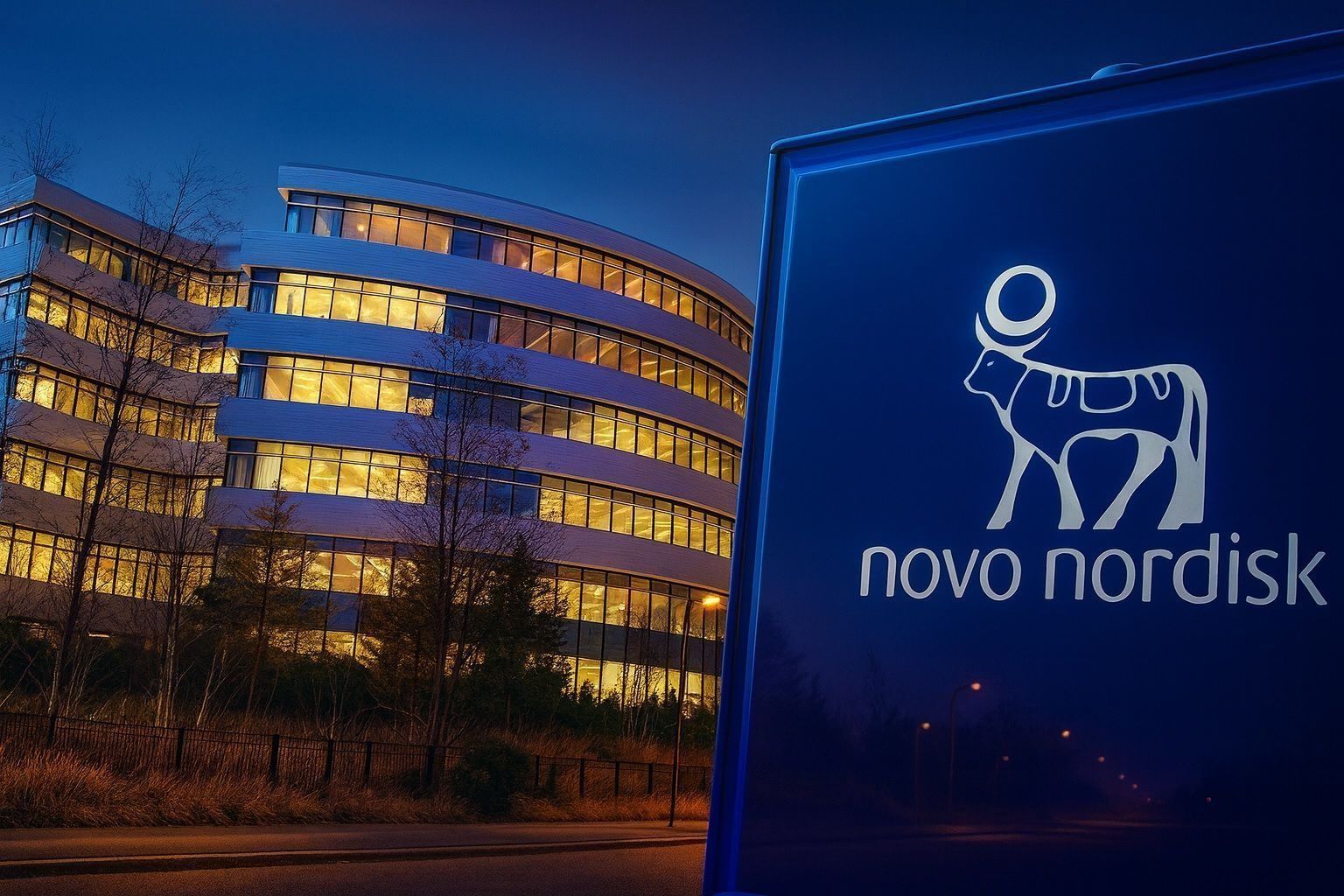
Danish pharma giant Novo Nordisk is under intense pressure today after its high‑profile Alzheimer’s trials for semaglutide failed, sending the stock to multi‑year lows and capping a brutal year for NVO shareholders.
Novo Nordisk stock today: how far has NVO fallen?
Novo Nordisk’s Alzheimer’s setback is hitting the share price hard on Monday, 24 November 2025:
- In Copenhagen, Novo Nordisk’s B‑shares (ticker NOVO_B) slid around 9% to their lowest level since July 2021, putting the stock at the bottom of the STOXX 600 index and extending a year‑to‑date decline of more than 50%. TradingView+1
- On U.S. markets, the NVO ADR closed Friday at about $47.6 per share. In pre‑market / extended-hours trading today, indications dropped to roughly $43.1, a fall of about 9.6% from that close. MarketBeat+1
- Short‑term bounce aside, Novo Nordisk’s one‑year total shareholder return is running at roughly –54%, with a 52‑week range around $45–$112 for the ADR. Simply Wall St+1
Despite the sell‑off, Novo Nordisk still carries a market capitalisation in the $210–215 billion range, according to multiple data providers — down sharply from its 2024 peak, but still firmly in “mega‑cap” territory. Companies Market Cap+2MacroTrends+2
For investors, today’s move is less about short‑term volatility and more about what the failed trial says about Novo Nordisk’s growth story beyond diabetes and obesity.
What happened in the EVOKE and EVOKE+ Alzheimer’s trials?
The immediate catalyst for today’s slide is Novo Nordisk’s announcement that its EVOKE and EVOKE+ phase 3 trials in early Alzheimer’s disease failed to meet their primary endpoint:
- The two studies enrolled 3,808 adults (ages 55–85) with mild cognitive impairment or mild dementia due to Alzheimer’s disease.
- Patients received oral semaglutide 14 mg once daily (the same active ingredient as Ozempic/Wegovy/Rybelsus) or placebo on top of standard of care. GlobeNewswire
- The goal was to show that semaglutide could slow disease progression, measured by the Clinical Dementia Rating – Sum of Boxes (CDR‑SB) score over 104 weeks.
- Result: the trials “did not confirm superiority of semaglutide versus placebo” in reducing progression of Alzheimer’s, even though some Alzheimer’s‑related biomarkers improved. GlobeNewswire+2TradingView+2
- Novo Nordisk will terminate the planned 1‑year extension in both studies and present the top‑line data at the CTAD conference on 3 December 2025, with full results to follow at the AD/PD 2026 meeting. GlobeNewswire
In its company announcement, Novo Nordisk stressed that semaglutide remains well‑tolerated and continues to deliver meaningful benefits in type 2 diabetes and obesity, but acknowledged that it failed to slow clinical Alzheimer’s progression in these phase 3 trials. GlobeNewswire+1
Why this Alzheimer’s setback matters for Novo Nordisk stock
The investment impact is bigger than a single indication:
- Lost optionality in a huge new market
Alzheimer’s disease affects more than 55 million people worldwide, with few effective disease‑modifying therapies. Reuters+1- Wall Street analysts had framed EVOKE/EVOKE+ as a “lottery ticket”: a low‑probability, high‑reward bet that could open a multi‑billion‑dollar market for GLP‑1 drugs in neurology. Reuters+1
- UBS, for example, had reportedly assigned only around 10% probability of success to the program, but the upside, if positive, could have materially extended Novo’s GLP‑1 growth story. Reuters+1
- Signals about GLP‑1 “beyond weight loss”
GLP‑1s like semaglutide are already reshaping obesity and diabetes treatment. There’s intense interest in whether they can also help in cardiovascular disease, fatty liver disease, kidney disease, and neurodegeneration.- Today’s data don’t challenge semaglutide’s metabolic benefits, but they do push back on hopes that the same drug could easily become a major Alzheimer’s therapy. GlobeNewswire+1
- Reinforces perception of rising risk and slowing momentum
After multiple guidance cuts, intensifying competition, and political pressure on drug prices, the Alzheimer’s failure is being read as “one more headwind” in an already difficult year. Reuters+1
Put simply: the core Wegovy/Ozempic story is intact, but one of the most exciting “next leg” growth optionalities just disappeared — and the market is repricing Novo Nordisk accordingly.
2025 has turned into Novo Nordisk’s hardest year in a decade
The Alzheimer’s news lands on top of a long list of 2025 challenges:
- Repeated guidance cuts: On 5 November, Novo Nordisk trimmed its full‑year 2025 outlook again.
- Sales growth guidance was cut to 8–11% (from 8–14%).
- Operating profit growth at constant currencies is now 4–7%, down from 4–10%. Reuters+2Reuters+2
- Slowing Wegovy/Ozempic growth: Third‑quarter sales and operating profit missed expectations, with growth slowing as Eli Lilly’s Zepbound and a wave of compounded GLP‑1 copycats eat into Wegovy’s momentum. Reuters
- Market share pressure: Analysts quoted by Reuters bluntly note that “Lilly is winning quite meaningfully at the moment”, underscoring concerns that Novo is losing ground in the very obesity market it helped create. Reuters+1
- Strategic upheaval:
- A new CEO, Mike (Maziar) Doustdar, took over in August and is now driving a turnaround plan.
- Novo is fighting on multiple fronts: pricing, generics/compounders, capacity expansion, and a bidding war with Pfizer for obesity‑drug developer Metsera, where Novo has reportedly offered around $10 billion. Reuters+1
From a valuation perspective, the market has already punished the stock:
- Various data providers show Novo Nordisk’s market cap down roughly 40–60% over the past 12 months, depending on the reference point. StockAnalysis+2GuruFocus+2
- Trading platforms and analysis sites flag year‑to‑date declines of around 50%+ for both the Copenhagen listing and the NVO ADR. TradingView+2TradingView+2
Today’s Alzheimer’s disappointment slots into this bigger narrative: a once‑unstoppable GLP‑1 champion facing a much tougher, more competitive reality.
Competition from Eli Lilly and mounting GLP‑1 pricing pressure
While Novo Nordisk stock is sliding, Eli Lilly is celebrating a historic milestone:
- On Friday, 21 November 2025, Lilly briefly hit a $1 trillion market value, becoming the first drugmaker in history to join the trillion‑dollar club, powered by surging demand for its GLP‑1 drugs Mounjaro and Zepbound. Reuters+1
At the same time, Novo is being forced to adjust its commercial strategy:
- Aggressive price cuts: Over the weekend, Motley Fool‑linked coverage highlighted that Novo Nordisk “just took a big swing, slashing its GLP‑1 drug prices” in the U.S., a move aimed at improving access and hopefully shoring up market share against Lilly. The Motley Fool+1
- Medicare and political scrutiny: Reuters reported that Novo has agreed on a Medicare price for semaglutide under the U.S. Inflation Reduction Act, with the implied hit to revenue described as “better than feared” but still material over time. Reuters
- Broader policy deals: Parallel reporting in medical journals notes that U.S. authorities are negotiating with both Novo Nordisk and Eli Lilly to make lower‑dose weight‑loss drugs more affordable, particularly for lower‑income populations — a trend that may expand volume but cap long‑term pricing power. BMJ
- Over‑marketing risk: Bloomberg highlighted how telehealth companies are now aggressively pitching GLP‑1 drugs like Ozempic to people who are not clinically obese, framing them as cosmetic quick fixes. That kind of marketing raises reputational and regulatory risk for the entire GLP‑1 class. Bloomberg
In short, Novo Nordisk is being squeezed from both ends: premium pricing is under pressure, and its most formidable rival just reached a valuation milestone that underscores the market’s view that Lilly currently has the upper hand in obesity and diabetes.
What Wall Street is saying about Novo Nordisk today
Despite the grim headlines, analyst views on NVO stock remain nuanced rather than outright bearish:
- Consensus rating: “Hold”
MarketBeat data show that, over the last 12 months, 20 Wall Street analysts covering Novo Nordisk have a consensus rating of “Hold”:- 3 Sell
- 9 Hold
- 6 Buy
- 2 Strong Buy MarketBeat
- Price targets still above today’s level
The same dataset puts the average 12‑month price target at about $59.20, implying roughly 24% upside from a reference price near $47.7 — with individual targets ranging from $47 at the low end to $70 at the high end. MarketBeat - Premarket shock already visible in extended trading quotes
MarketBeat’s real‑time extended‑hours data show NVO changing hands around $43.09 in pre‑market trading this morning, down 9.6% from Friday’s close, aligning with reports from Seeking Alpha and Investing.com that NVO fell around 9–10% on the Alzheimer’s news in early U.S. trading. MarketBeat+2Seeking Alpha+2 - Fundamental valuation calls
Equity‑research platform Simply Wall St published an article today arguing that Novo Nordisk’s ADR appears deeply undervalued on long‑term fundamentals:- It estimates a fair value of roughly $120–121 per ADR.
- It notes that the stock’s normalized P/E is about 13x, compared with a five‑year average around 25–30x.
- It highlights a one‑year TSR of –53.8%, framing the current price as potentially a long‑term “value” entry point if Novo can stabilise growth. Simply Wall St
Not all analysts agree, of course. Some see the Alzheimer’s failure, pricing pressure, and Lilly’s lead as reasons to stay cautious. But the mix of Sell, Hold, and Buy ratings shows a market still debating whether Novo Nordisk is a value trap or a turnaround opportunity.
Key risks NVO investors should weigh after the sell-off
For anyone considering Novo Nordisk stock today, several risk factors stand out:
- GLP‑1 concentration risk
Novo’s fortunes are heavily tied to semaglutide and the broader GLP‑1 franchise. If competition, pricing pressure, or safety concerns hit this class, earnings could be significantly affected. - Pricing and policy uncertainty
- U.S. Medicare price negotiations under the Inflation Reduction Act, plus potential additional deals with government payers, could compress margins over time. Reuters+1
- Aggressive discounting to defend market share — like the recent GLP‑1 price cuts — may boost volume but cap profit growth. The Motley Fool+1
- Copycats and compounding
Novo is fighting a large “gray market” for compounded semaglutide products in the U.S., where some patients get cheaper versions produced by compounding pharmacies. Lawsuits have been filed, but the company itself admits the practice remains widespread and continues to sap Wegovy sales. Reuters - Pipeline execution
The Alzheimer’s miss shows that not every big trial will hit. Future catalysts — from next‑generation obesity combos to cardiovascular and liver‑disease indications — carry their own binary risk. - Governance and strategic change
With a new CEO, recent board changes, and a large M&A bid in play, execution risk is elevated. Some shareholders have already voiced concerns about governance and strategic direction. Reuters+1
Potential reasons some investors still see upside
Balanced against those risks, bulls point to several reasons not to count Novo Nordisk out:
- A still‑dominant position in a massive, expanding market
The global obesity drug market is projected to be worth $100–150+ billion annually in the 2030s, and analysts expect room for multiple winners. Novo remains one of only a handful of companies with commercially proven GLP‑1 products at scale. Reuters+1 - Pipeline depth beyond semaglutide
- New GLP‑1–based combinations such as CagriSema are showing promising effects on blood pressure, inflammation, and cardiovascular risk markers in recent analyses presented at ObesityWeek®. Barchart.com+1
- The Metsera bid and other deals are designed to broaden the obesity pipeline and reduce reliance on any single molecule. Reuters
- Still‑solid profitability and cash generation
Even after the guidance cut, Novo Nordisk remains highly profitable with strong free‑cash‑flow generation, allowing continued R&D, capacity expansion, dividends, and buybacks (subject to board decisions). Novo Nordisk+1 - Valuation reset to “normal” multiples
With the P/E ratio now closer to the low‑teens rather than the mid‑30s seen at the height of GLP‑1 euphoria, some long‑term investors argue that expectations are finally realistic again, leaving room for upside if execution improves. Simply Wall St+1
The core bullish thesis is that GLP‑1 demand will remain structurally high for years, and that today’s headwinds — though real — are largely about how profits are split between Novo, Lilly, generic players, and payers, rather than whether GLP‑1 medicines themselves will fade away.
Catalysts to watch for Novo Nordisk stock in the weeks ahead
If you follow NVO, here are the next key dates and catalysts to keep on your radar:
- CTAD 2025 (3 December 2025)
Novo will present top‑line EVOKE/EVOKE+ Alzheimer’s data at the Clinical Trials on Alzheimer’s Disease (CTAD) meeting. While the main conclusion is already known, details on subgroups, biomarkers, and safety could still shape sentiment about GLP‑1s in neurology. GlobeNewswire+1 - Full EVOKE/EVOKE+ data in 2026
Complete results are planned for the AD/PD 2026 conference. Investors will be looking for any scientific insights that could influence future central‑nervous‑system R&D strategies. GlobeNewswire - Updates on pricing and access
- Further clarity on semaglutide Medicare pricing, potential U.S. administration price deals, and European reimbursement decisions. Reuters+1
- The real‑world impact of Novo’s GLP‑1 price cuts on prescriptions, margins, and competitor response. The Motley Fool+1
- Progress of obesity pipeline and Metsera bid
Any new clinical data on CagriSema or other pipeline drugs, plus developments in the Metsera acquisition battle with Pfizer, will be closely watched as indicators of Novo’s long‑term innovation capacity. Reuters+1 - Q4 2025 and full‑year 2025 results
Novo’s next earnings release — expected before the opening of Nasdaq Copenhagen on its usual timetable — will reveal how much of the GLP‑1 pricing, competition, and copycat pressure is flowing through to the P&L. Novo Nordisk+1
Key takeaways for NVO shareholders on 24 November 2025
- Today’s sell‑off is driven by a clear, negative catalyst: semaglutide failed to slow Alzheimer’s progression in the large EVOKE/EVOKE+ trials, removing a high‑potential, low‑probability growth option. GlobeNewswire+2TradingView+2
- The share price reaction is severe but fits a broader pattern: Novo Nordisk stock is now down roughly 50–60% over 12 months, reflecting guidance cuts, competitive pressure from Lilly, political scrutiny, and now a pipeline setback. StockAnalysis+3TradingView+3Reuters+3
- Core GLP‑1 franchises remain intact, but the debate has shifted from “how high can this go?” to “what is a reasonable, durable earnings level in a competitive, regulated market?”
- Analysts are split, not panicked: the consensus rating is Hold, with price targets implying moderate upside from current levels, while some fundamental research platforms argue the stock is materially undervalued on a multi‑year view. MarketBeat+1
- The Novo vs. Lilly story is now central: with Lilly hitting $1 trillion in market cap and pushing hard into oral GLP‑1s, Novo Nordisk must execute flawlessly on pricing, capacity, and pipeline innovation to close the gap. Reuters+2CoinCentral+2
Important note:
This article is for informational and news purposes only. It is not investment advice or a recommendation to buy or sell any security. Stock prices and fundamentals can change quickly; always do your own research and consider speaking to a qualified financial adviser before making investment decisions.