
New York, June 19, 2026, 12:07 EDT
- NuScale Power rose 13.54% to finish Thursday at $11.74, with U.S. markets closing for Juneteenth.
- Paragon is set to finish design work for NuScale’s module reactor protection and monitoring systems.
- NuScale has development risk, with just $565,000 in revenue for the first quarter and an accumulated deficit now at $776.9 million.
NuScale Power is quiet as U.S. markets pause for the holiday. The New York-listed small modular reactor developer jumped during the last full session this week after landing a new safety-systems contract connected to its nuclear module.
Why now? It’s straightforward. The stock hasn’t really tracked near-term earnings lately, but instead has moved on whether NuScale can turn its design work into real deployment. There’s no trading Friday since the NYSE is shut for Juneteenth. Monday is the next shot for price action.
NuScale finished Thursday at $11.74, rising 13.54%. The stock swung from $10.46 to $11.80 during the session. Shares climbed roughly 19% for the short week, measured from last Wednesday’s close at $9.89. Trading picked up Wednesday and Thursday.
Stocks traded higher Thursday. The S&P 500 added 1.1%, Nasdaq was up 1.9%, and the Russell 2000 jumped 2.1%, AP reported. NuScale’s gain still stood out—it soared much more than the rest.
Paragon, which is part of Mirion Technologies, landed a contract with NuScale to finish designing the Highly Integrated Protection System for the NuScale Power Module. The project includes protection, accident monitoring, and control-room habitability systems. “These systems are essential to safe and reliable plant operations,” said NuScale CEO John Hopkins. Paragon CEO Doug VanTassell called the platform “at the heart of the NPM’s protection systems.” NuScale Power
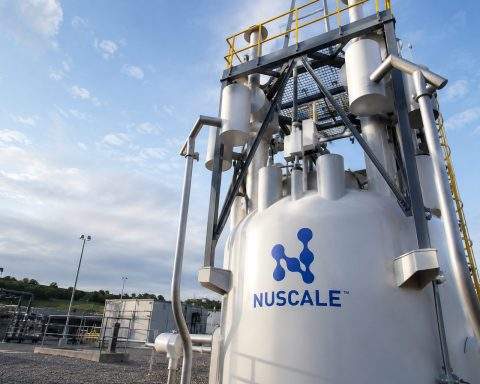
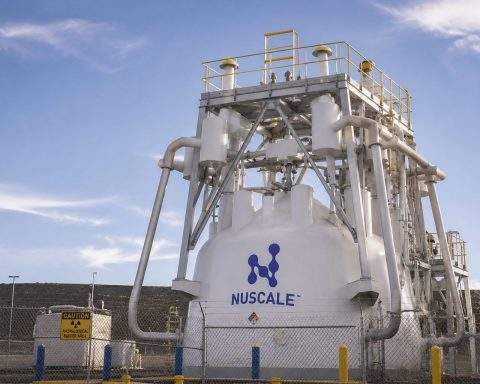
Small modular reactors, or SMRs, are smaller nuclear plants that can be built in factories and transported to their final location. NuScale has a design rated at 77 megawatts of electric output. The U.S. Nuclear Regulatory Commission finished reviewing the company’s US460 standard design approval in May 2025.
NuScale is trying to make 2026 more about getting ready than just talking up its outlook. In May, Hopkins said “the demand for reliable, carbon-free power has never been greater.” NuScale reported it finished the first quarter with $1 billion in liquidity, covering cash and investments available for operations. The company also pointed to work with ENTRA1 and the Tennessee Valley Authority as it plans for up to 6 gigawatts of NuScale SMR capacity. NuScale Power
NuScale’s Q1 numbers show a narrow picture. Revenue for the quarter came in at $565,000, a fall from $13.4 million the previous year. The company reported $341.1 million in cash and cash equivalents as of March 31, with short-term investments at $549.0 million and no debt. NuScale also still has $962.1 million of stock it can sell through its 2026 at-the-market program, which allows it to issue shares into the market over time.
Competition is picking up. Sweden’s Vattenfall this week picked Rolls-Royce SMR instead of GE Vernova for a nuclear project. That’s a sign government reactor contracts are attracting more bidders. The NRC still has GE Vernova Hitachi’s BWRX-300 SMR in pre-application review, the regulator said.
Risks look big here. Paragon is just a design-development contract—not a plant sale, not guaranteed revenue. NuScale’s own filings mention risks like project delays, limited supply chains, the need for customer funding, rivals pitching different reactors, and getting diluted in the future by share sales. There’s a downside if the stock jumps on progress hints but loses ground later if real customer deals, money, or manufacturing don’t show up when the market wants them to.
Durability is the main question this week. Traders are watching to see if Thursday’s high-volume move sticks once U.S. markets open again. Investors are still weighing supplier and safety-system news as signs of progress for now. NuScale finished the week with momentum around its execution story. The core issue—speed and cost for building its reactors—remains unsettled.
Related articles: NYSE:SMR