
NEW YORK, June 2, 2026, 04:15 EDT
Nvidia’s push to put artificial intelligence directly inside Windows laptops and desktops put the chipmaker back at the center of Wall Street’s AI trade, after its shares closed Monday up 6.26% at $224.36. The latest market data put Nvidia’s value around $5.47 trillion.
The move mattered beyond one stock. Nvidia’s rally helped lift the Nasdaq Composite and the S&P 500 to record closing highs on Monday, while the Philadelphia SE Semiconductor Index rose 1.1%, a sign that investors were again willing to pay for companies tied to AI computing.
The regular Nasdaq session had not opened at the dateline time. Nasdaq lists regular trading from 9:30 a.m. to 4:00 p.m. Eastern time, with extended trading around that window, and June 2 is not listed as a 2026 market holiday. S&P 500 e-mini futures were down 0.4% in early global trade as broader markets weighed U.S.-Iran risks.
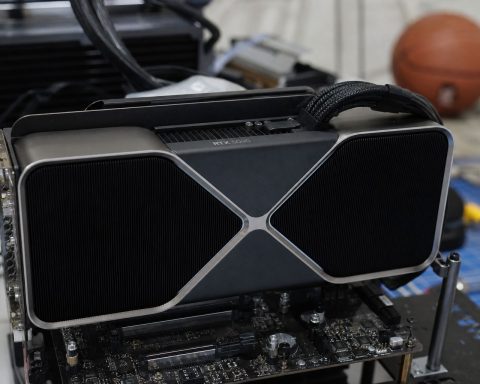
Nvidia and Microsoft unveiled RTX Spark, a 1-petaflop chip platform for Windows PCs aimed at “personal agents,” or AI software that can carry out tasks across files, apps and the web with less reliance on remote cloud servers. Nvidia said the systems will be available this fall from makers including Asus, Dell, HP, Lenovo, Microsoft Surface and MSI. NVIDIA Newsroom
“The PC is being reinvented,” Nvidia CEO Jensen Huang said in the company’s release. “With RTX Spark and Microsoft Windows, you ask — and the PC does the work.” NVIDIA Newsroom
The product also shifts Nvidia further into territory long defended by Intel and Advanced Micro Devices. Reuters reported that the new chip would pit Nvidia against AMD, Intel and Apple, while Microsoft shares rose 2.3% Monday on the partnership. Qualcomm fell 8.8% and Intel lost 4.7%, showing the market was already marking winners and losers around the announcement.
The competitive point is not only PCs. Huang also talked up Vera, Nvidia’s central processing unit, or CPU — the general-purpose chip that handles core computing tasks — as a bigger future growth driver. Nvidia’s better-known graphics processing units, or GPUs, are chips that run many calculations in parallel and power most large AI systems.
Supply remains the near-term constraint. “We’ve secured supply for very robust growth of all of those systems,” Huang told reporters in Taipei. “We have supply for very, very robust growth, but we’re still supply constrained.” Reuters
That line cut both ways. It confirmed demand remains strong, but it also reminded investors that Nvidia’s revenue path still depends on the ability of Taiwan-based suppliers, chip foundries, assemblers and server makers to keep scaling. Huang said Nvidia was “the largest purchaser” in Taiwan’s technology ecosystem. Reuters
Nvidia separately said its Vera Rubin platform is ramping into full production for “AI factories,” its term for data centers built to train and run AI models at industrial scale. Huang called agentic AI “a new kind of workload” and said Vera Rubin was built to deliver “intelligence at scale.” NVIDIA Newsroom
Microsoft gave the PC announcement weight. “Our goal is to deliver unmetered intelligence to every home and every desk with Windows,” Microsoft CEO Satya Nadella said in Nvidia’s release. “RTX Spark marks a real breakthrough towards that vision.” NVIDIA Newsroom
But the trade is not one-way. Thomas Martin, senior portfolio manager at GLOBALT, told Reuters of the broader geopolitical backdrop: “We don’t really know where things stand.” A renewed oil shock, a hot jobs report that raises rate worries, weak product adoption or further supply bottlenecks could hit high-valuation AI stocks first; Nvidia’s own release also cited reliance on third-party manufacturing and market acceptance as risks. Reuters
Investors now have a short checklist for Tuesday: whether Nvidia can hold Monday’s gain in regular trading, whether the semiconductor rally spreads beyond a few leaders, and whether Broadcom’s results and Friday’s U.S. jobs report confirm or cool the AI-and-growth trade. For now, Nvidia has given the market a fresh reason to price the company as more than a data-center GPU supplier.
Related articles: NASDAQ:NVDA