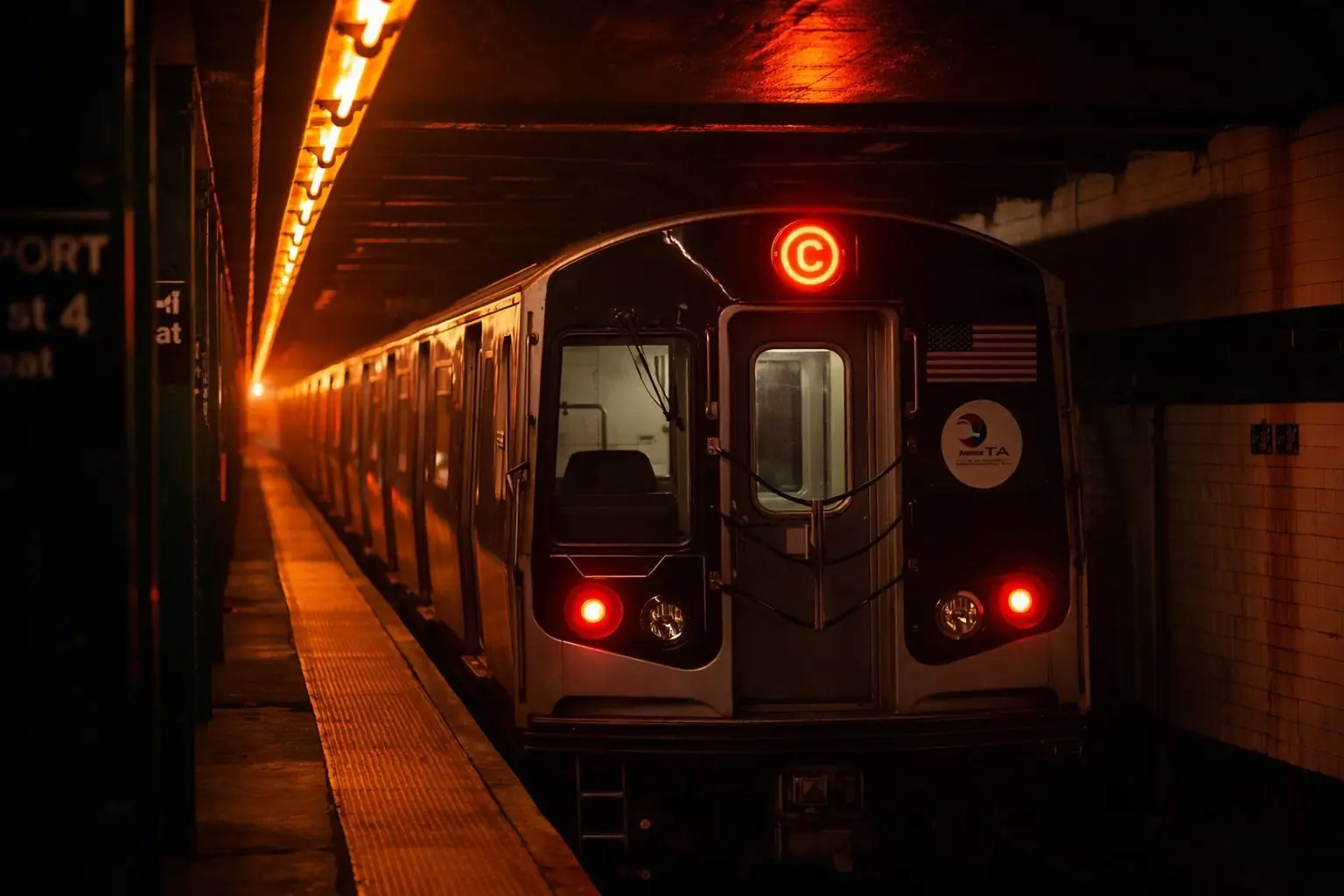
New York City subway riders are getting their first real look at the MTA’s next-generation fare gates—and the early days have been equal parts futuristic, controversial, and, in at least one widely shared clip, chaotic.
This week, a new set of Cubic-designed gates began rolling out at Brooklyn’s Atlantic Avenue–Barclays Center station, introducing quieter doors paired with cameras and AI-powered detection. Spectrum News NY1 At the same time, the MTA’s first pilot gates—installed earlier at Manhattan’s Broadway–Lafayette/Bleecker Street station and the Third Avenue–138th Street station in the Bronx—have drawn attention for a loud, foghorn-like alarm that sounds during suspected fare evasion attempts. amNewYork+1
The debate over whether the new barriers are a smart investment or an expensive annoyance is intensifying as the city approaches a major fare milestone: the base subway and local bus fare is set to rise from $2.90 to $3.00 on January 4, 2026, under MTA board-approved changes. MTA+1
Below is what’s changing, where the new gates are appearing, what the MTA says the technology can (and can’t) do, and what independent watchdogs and transit advocates argue must accompany any hardware upgrade.
What’s happening at Atlantic Avenue–Barclays Center: Cubic gates add cameras and AI
At Atlantic Avenue–Barclays Center, Spectrum News NY1 reports that new fare gates from Cubic—the company behind OMNY—started rolling out early on December 24. Spectrum News NY1
Riders who’ve used the station recently may notice three key differences from the older turnstile-and-emergency-gate setup:
- Quieter operation: NY1 describes the Cubic gates as quieter than the model installed earlier by Conduent. Spectrum News NY1
- Cameras and AI detection: The gates include cameras and AI that can detect wheelchairs, luggage, children, and fare evasion behaviors. Spectrum News NY1
- A smaller gap at the bottom: Riders in the NY1 report noted the gap underneath the gate is much smaller than the Conduent model, and the doors are reinforced with metal—an attempt to reduce “go under” evasions. Spectrum News NY1
NY1 captured the split in rider expectations. One rider said the system won’t change anything because “everybody’s going to find a way to get around.” Another hoped it would finally make evasion harder: “They can’t jump this way.” Spectrum News NY1
What riders saw first: the blaring-alarm “clear door” gates at Broadway–Lafayette and 3 Av–138 St
Before the Atlantic–Barclays rollout, the MTA’s first pilot deployment landed at Broadway–Lafayette/Bleecker Street (Manhattan) and Third Avenue–138th Street (Bronx), featuring clear, swinging “paddle door” gates that open after a tap and can trigger a loud alarm when the system detects a suspected unpaid entry. Spectrum News NY1+1
MTA Construction & Development President Jamie Torres-Springer described the concept plainly in NY1’s coverage: riders will hear “a very loud noise” when there is an attempt at fare evasion, and then the agency can “act on that.” Spectrum News NY1
The MTA also emphasizes accessibility as a core goal. MTA Chief Accessibility Officer Quemuel Arroyo said turnstiles have historically “left so many people behind,” including wheelchair users and parents with strollers, calling the new setup “what true access looks like.” Spectrum News NY1+1
That framing matters because—according to the MTA—one of the biggest vulnerabilities isn’t the turnstile itself, but the emergency exit door. NY1 reports the MTA calls the emergency gate the “superhighway of fare evasion,” and says the new wide-aisle gates are meant to eliminate the need for that separate emergency exit gate while still supporting evacuation and accessibility. Spectrum News NY1+1
The viral Broadway–Lafayette video: what’s known and what the MTA said
Public skepticism spiked after a widely circulated video appeared to show a woman stuck between the new doors at Broadway–Lafayette—an incident reported as a suspected “tailgating” attempt (entering closely behind someone else who paid). New York Post
According to the reporting summarized from the New York Post, technicians said the sensors are designed to detect multiple bodies entering, which can cause the doors to close. The same report says an MTA worker helped free the woman, and that the NYPD reported no official record of the incident. New York Post
The MTA told the Post that the clip was from the first hours of the pilot and that the equipment is being monitored as part of the trial. New York Post
Separately, amNewYork noted that social media videos also emerged showing riders getting backpacks stuck in the swinging doors—another early sign that the learning curve (and sensor tuning) may be part of this rollout. amNewYork
Do these gates actually stop fare evasion? Even officials say nothing is 100%
The MTA is not promising a perfect lockout.
As amNewYork reports, Torres-Springer acknowledged that “no system is going to be 100% immune” to fare evasion, but argued the new technology can “vastly” reduce it. amNewYork
That’s consistent with what NY1 reported during the initial debut: the gates are one part of a broader strategy, and they also generate data that can help the MTA understand where evasion is concentrated. Spectrum News NY1
Still, local reporting suggests determined evaders will test any barrier. amNewYork said a reporter visiting Broadway–Lafayette observed people “slither underneath” and “double up,” and even saw someone climb over the doors—without being stopped. amNewYork
Why the MTA is pushing harder now: fare evasion is a nine-figure problem
The financial stakes are huge—and multiple sources point to a problem hovering near (or above) $1 billion a year.
The Citizens Budget Commission (CBC), a nonpartisan watchdog, estimates fare and toll evasion cost the MTA $1 billion in 2024, including roughly $568 million in unpaid bus fares and $350 million in unpaid subway fares, plus losses on commuter rail and tolls. Citizens Budget Commission+1
CBC’s report also argues fare and toll evasion “is not victimless,” warning it shifts the burden of running the system onto paying riders, drivers, and taxpayers. Citizens Budget Commission
And this isn’t just a “subway turnstile” story. NY1’s coverage of the CBC analysis notes the losses complicate efforts to close an approximately $800 million structural operating budget gap, and quotes MTA CFO Jai Patel calling fare evasion an “existential” issue. Spectrum News NY1
The MTA has also said publicly that recent interventions have reduced evasion: minutes from an MTA Board meeting quote Chair and CEO Janno Lieber saying a mix of physical interventions, gate guards, and delayed egress helped cut subway fare evasion by 30% in one year. MTA
The fare is going to $3 in January 2026—and OMNY-only payment is central to the plan
One reason the timing feels especially urgent is that New York City Transit’s base fare is set to rise to $3.00 on January 4, 2026, alongside other fare policy changes the MTA says are designed to prioritize affordability for frequent riders (including permanent 7-day rolling fare capping). MTA+1
The MTA explicitly tied the timing of the fare increase to the systemwide rollout of “tap-and-ride” (OMNY), delaying an earlier assumed increase to align with full deployment. MTA
That connection matters for fare gates: if the MTA wants gates that validate taps quickly and reliably—especially at the busiest hubs—the hardware and software must work smoothly together.
Modern fare gates: what the pilot is, where they’re going, and the timeline to 2029
The MTA describes the effort as a systemwide modernization program, beginning with a pilot and followed by a longer buildout funded through the 2025–2029 Capital Plan. MTA
On the MTA’s project page, the agency says it is piloting new gates to improve:
- fare compliance,
- accessibility,
- passenger flow,
- and operational planning through better data. MTA
The agency’s stated timeline includes:
- 2025: pilot three modern fare gate designs at 20 stations. MTA
- 2026 and beyond: install modern fare gates at 150 stations, selected based on ridership, fare evasion rates, accessibility needs, and whether the station is a major hub. MTA
NY1 separately reports the pilot is being funded by private companies (vendors), meaning the MTA is not covering the cost at the pilot stations. Spectrum News NY1+1
On funding scale, local reporting places the planned investment around $1.1 billion through the capital plan. Spectrum News NY1+1
Experts say gates alone won’t solve evasion: enforcement, equity, and affordability still matter
Even pro-gate voices often stress that fare evasion isn’t a single-cause problem—and the policy response shouldn’t be single-track either.
The Blue-Ribbon Panel’s framework: “Four E’s,” not just enforcement
The MTA’s Blue-Ribbon Panel on Fare and Toll Evasion urged a comprehensive approach, emphasizing Education, Equity, Environment, and Enforcement. MTA+1
The panel’s 2023 report put the magnitude in stark terms: $690 million in fare and toll evasion losses in 2022, with recommendations ranging from modernizing fare gates to expanding discounted fare access and revisiting enforcement models. MTA+1
CBC: “effective, fair enforcement” plus transparency
CBC’s analysis argues enforcement matters, but also pushes the MTA to publish more comprehensive data on progress, evaluate cost-effectiveness, and accelerate fare-gate and proof-of-payment strategies. Citizens Budget Commission
CBC President Andrew Rein also framed the issue as a legitimacy problem in a CBS New York interview, describing the feeling many paying riders have when they see rule-breaking go unaddressed. CBS News
Transit advocates: expanding Fair Fares could reduce pressure and evasion incentives
The Permanent Citizens Advisory Committee to the MTA (PCAC) has argued that affordability tools like Fair Fares can be part of solving evasion—especially as the MTA begins testing new gate designs. PCAC
What riders should expect next—and what to watch in 2026
The rollout is still in its early chapters. Here are the most practical things to watch if you ride regularly:
- More pilot installations: The MTA says the 2025 pilot includes 20 stations, with installations taking roughly one to two weeks per entrance in many cases. MTA
- Design changes based on feedback: MTA officials and local reporting describe these gates as prototypes under review—meaning sensor sensitivity, timing windows, and accessibility behaviors may be adjusted. amNewYork+1
- A bigger enforcement-tech push: Beyond gates, the MTA has signaled a move toward more technology-enabled fare validation—especially as tap-and-ride becomes universal. CBS News+1
How to use the new gates without triggering alarms or getting stuck
Early reports suggest many of the “problems” riders experience come from speed, spacing, and bulky items—exactly what the sensors are attempting to interpret.
A few practical habits can reduce headaches:
- Don’t tailgate. The gates are designed to detect two people moving through on one payment and may react by closing or sounding an alarm. New York Post+1
- Use the wider, accessible lane if you have luggage, a stroller, a wheelchair, or bulky items. The MTA says accessibility is a key reason for the new wide-aisle design. Spectrum News NY1+1
- Move through promptly after you tap. The system is built around controlled openings, not lingering between doors. (This is especially important if you’re carrying a backpack that could catch on doors.) amNewYork
- If something goes wrong, step back and ask station staff. NY1 notes the new gates can open for emergency situations and can also be opened remotely during certain incidents—suggesting the system is meant to fail safe, but may require human intervention. Spectrum News NY1
Bottom line: a hardware fix for a social—and financial—problem
The early verdict on New York City’s modern fare gates depends on what you think the core problem is.
If fare evasion is primarily a physical-access weakness, gates that eliminate the “superhighway” emergency exit and shrink crawl-under gaps could deliver real gains—especially at high-traffic hubs like Atlantic–Barclays. Spectrum News NY1+1
If the problem is also affordability, norm-setting, and uneven enforcement, then gates may reduce some evasion while raising new questions about safety, usability, noise, surveillance, and whether the city is investing enough in the human side of compliance. Citizens Budget Commission+1
Either way, the stakes are no longer theoretical. With watchdog estimates putting 2024 evasion losses at around $1 billion and the base fare set to reach $3 in January 2026, the MTA’s “modern gate” experiment is rapidly becoming one of the most closely watched infrastructure rollouts in the system. Citizens Budget Commission+1
Sources and experts cited
- Spectrum News NY1 reporting on Atlantic–Barclays rollout and Cubic gate features Spectrum News NY1
- Spectrum News NY1 reporting on the first Conduent pilot gates and accessibility claims Spectrum News NY1
- amNewYork reporting and on-site observations at Broadway–Lafayette, including quotes from Jamie Torres-Springer and Quemuel Arroyo amNewYork
- MTA project page detailing the modern fare gate pilot and timeline MTA
- MTA official fare-change announcement confirming the $3 base fare starting January 4, 2026 MTA+1
- Citizens Budget Commission analysis estimating $1B in fare and toll evasion losses in 2024 Citizens Budget Commission
- NY1 coverage of the CBC analysis, including MTA CFO Jai Patel’s statement Spectrum News NY1
- ABC7 interview including CBC’s Ana Champeny and MTA response figures ABC7 New York
- CBS New York interview including CBC President Andrew Rein and MTA Chair Janno Lieber CBS News
- MTA Board meeting minutes quoting Chair Lieber on a one-year 30% subway evasion reduction MTA
- Blue-Ribbon Panel report and NYU McSilver summary describing the “Four E’s” framework MTA+1
- New York Post reporting summary on the Broadway–Lafayette gate incident video New York Post