
NEW YORK, June 19, 2026, 12:04 EDT
- Tanker shipments picking up in the Strait of Hormuz after a U.S.-Iran interim deal, but crossings haven’t come back to usual levels. The waterway still faces safety advisories.
- Oil prices slid sharply this week, bringing some relief for fuel costs and stocks. But analysts warn that traders could be pricing in an easier restart than reality.
- About 20% of the world’s oil and LNG usually passes through the Strait of Hormuz, so the situation is still tense.
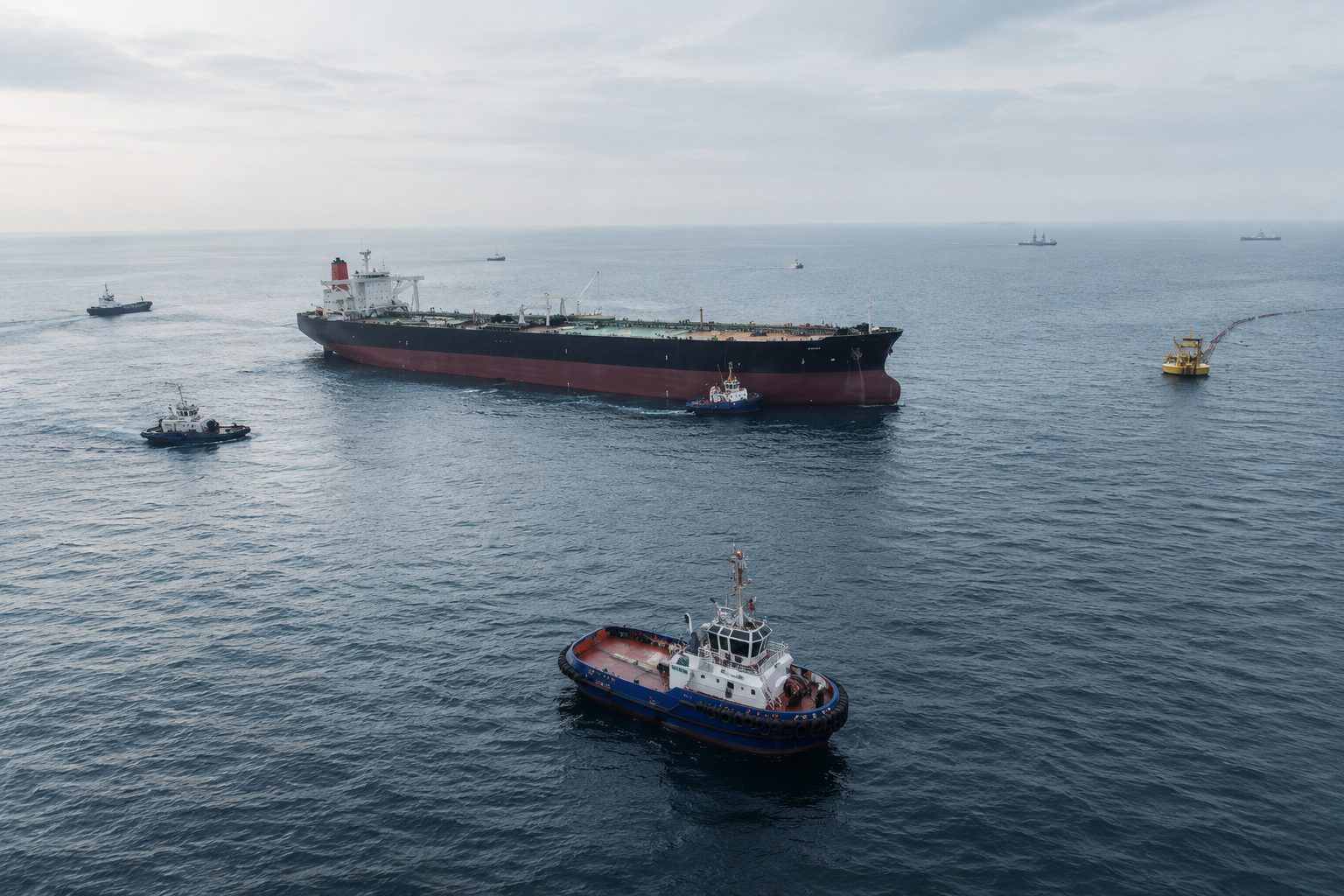
Oil cargoes are moving again through the Strait of Hormuz after the U.S. and Iran agreed to an interim ceasefire on Friday. For energy markets, it’s the first strong signal that the long-running bottleneck is starting to clear. Flows are resuming, but traffic isn’t back to normal.
That point is getting more attention as markets have moved quickly. WTI, the U.S. crude benchmark, closed at $76.60 a barrel on Thursday, down nearly 10% for the week. U.S. gasoline slipped below $4 a gallon for the first time since March. U.S. stocks hovered near record levels, CNN said. David Oxley, chief commodities and climate economist at Capital Economics, said traders were “pricing in perfection” and warned they might have gone “a little bit too far.” News Channel 3-12
Nasdaq gained 1.9% Thursday, and U.S. stocks ended the shortened week higher as crude fell back to pre-Iran-war levels. Markets shut on Friday for Juneteenth, making Thursday’s action the last read for Wall Street after the deal.
At least four tankers loaded with crude, oil products and LPG moved into the Strait of Hormuz on Friday headed for Iraqi Gulf ports, according to MarineTraffic data reported by Reuters. A Japanese-owned crude tanker cleared the chokepoint after earlier war delays. Indian-flagged supertankers Desh Vibhor and Desh Vaibhav were both tracking toward India.
Ship traffic is moving, but the backup remains heavy. The Washington Post, pulling from Kpler and Lloyd’s List, said 25 vessels moved through on Thursday, the best daily count in over two weeks. But around 550 big commercial ships, including 160 tankers, were still waiting to exit the area.
Brent crude traded up 20 cents at $80.05 a barrel late Friday morning, holding above $80 but still heading for an 8% drop this week. Phil Flynn at Price Futures Group said more supply could come through Hormuz soon and backs up could ease faster than expected. “The ship backlog ‘can move quicker than some people think,’” Flynn said. Reuters
Gulf producers are putting that theory to the test. Abu Dhabi National Oil Company came out with its fourth tender this month, offering Upper Zakum, Umm Lulu and Das grades for June through August loading. Buyers can bid for as much as 2 million barrels and pick up cargo inside the Strait of Hormuz or at Fujairah, further out. Kuwait Petroleum Corp put out a tender as well. ADNOC and Iraq’s SOMO have told some Asian clients to send ships inside Hormuz to take crude, say traders, according to Reuters.
Supertanker traffic could flood the market if shipping lanes hold. Kpler’s Muyu Xu said reopening Hormuz may free up around 93 million barrels of non-Iranian crude, and looser U.S. rules on Iranian shipments could add another 72 million barrels. Vortexa counted 54 supertankers with about 87 million barrels still inside the Gulf as of Thursday.
Reopening the route comes with issues. The U.S. navy-led Joint Maritime Information Center told mariners to watch for mines and keep away from the main lane. An advisory from an Iranian authority seen by Reuters told ships to get passage permits and said Iran can charge insurance fees. Intertanko Managing Director Tim Wilkins said owners are waiting for more clarity before going ahead with transits.
Economic relief is limited for now. The Wall Street Journal said reopening Hormuz has helped calm some worries about a long energy shortage. Clearing mines, fixing oil facilities, restocking inventories and inflation still leave disruption costs on the table.
Central banks aren’t ready to declare victory just yet. The Federal Reserve and Bank of England still see room for more rate hikes, Reuters said, even as the European Central Bank and Bank of Japan have already lifted rates. Policymakers are watching energy-market normalization, which could last through next year. “The idea that the rate-hiking cycle is already over ‘looks wrong,’” said Dario Perkins at TS Lombard. Reuters
Markets are pricing in two things now: the 60-day window turns into a lasting deal, and Iran doesn’t start charging permits or fees. Reuters Open Interest said Friday’s planned U.S.-Iran talks in Switzerland were canceled, adding Iran might keep some grip over Hormuz after the 60 days. That could mean oil stays volatile as supply comes back.
First ships through Hormuz shifted the price signal, but risk stays. The market no longer trades on scarcity panic—it’s now about execution risk. That’s still a tight path.
Related articles: Stock Market