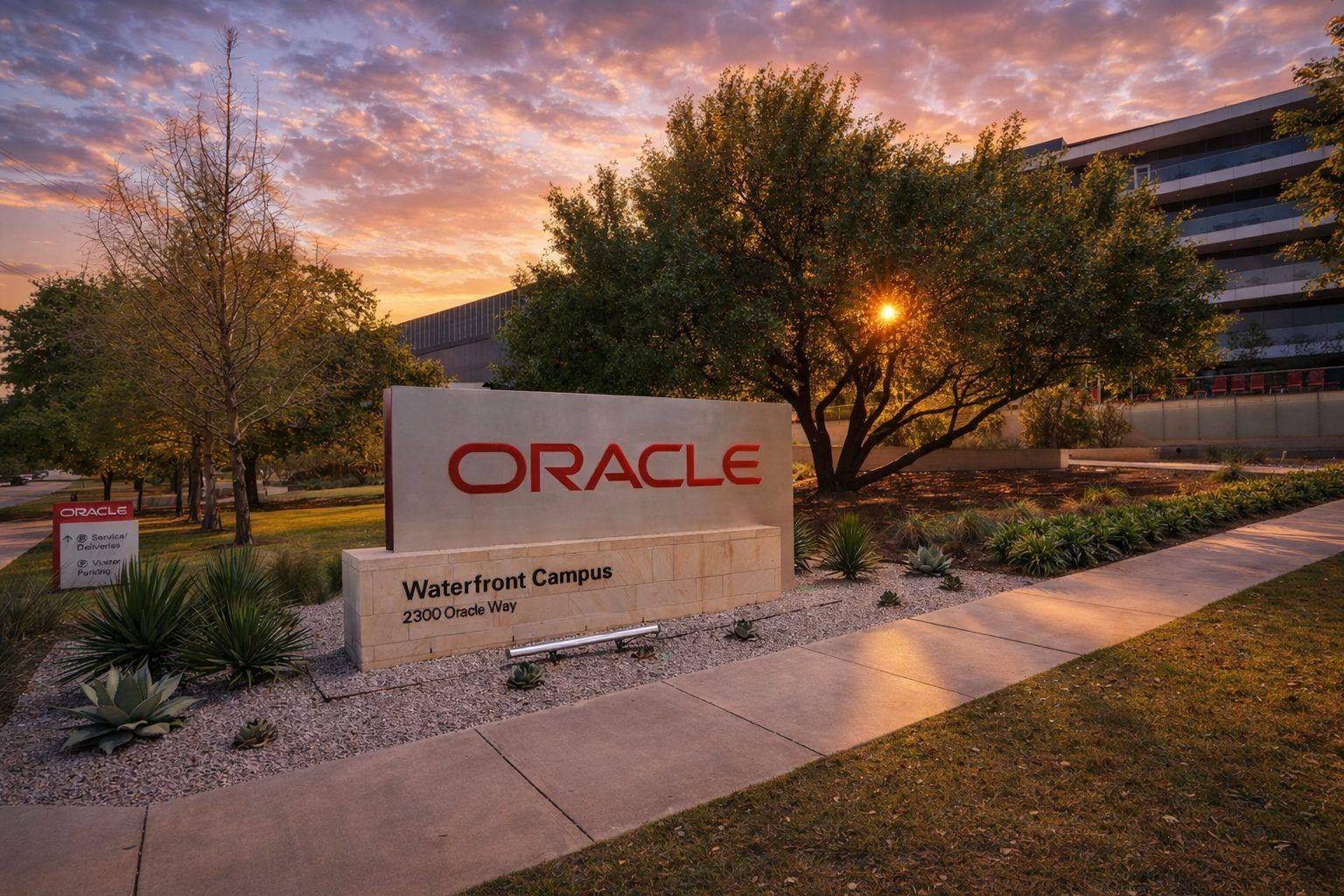

December 22, 2025 — Oracle Corporation (NYSE: ORCL) stock is sharply higher on Monday, with shares trading around $192 and up roughly 6–7% in the latest session, as investors digest a fresh catalyst tied to TikTok—while continuing to debate the bigger, longer-running story: Oracle’s massive AI cloud buildout and the financing required to deliver it.
Below is a full, up-to-date breakdown of the key headlines and analysis shaping Oracle stock on 22.12.2025, plus the most important forecasts, price targets, and risks now in focus.
Why Oracle stock is rising today: TikTok’s U.S. joint venture becomes “real” (and Oracle is central)
The immediate driver behind Oracle stock’s move is new confirmation that TikTok’s owner, ByteDance, has signed binding agreements to hand control of TikTok’s U.S. operations to a new structure designed to meet U.S. national security requirements—an effort to avoid a potential U.S. ban and end years of uncertainty. In the deal, Oracle is one of the major investors and is positioned to play a highly visible operational role.
The structure: who owns what, and when it could close
Reporting and an internal memo described a new entity, TikTok USDS Joint Venture LLC, with ownership split among:
- A consortium of new investors (50%), including Oracle, Silver Lake, and MGX (each with 15%)
- ByteDance retaining 19.9%
- Affiliates of certain existing ByteDance investors holding 30.1%
- A seven-member, majority-American board, per the memo AP News+2The Verge+2
The targeted closing date cited in reporting is January 22, 2026.
Oracle’s role: “trusted security partner” and a big cloud tenant relationship
The reason markets care about this development for Oracle stock is not just the equity stake—it’s the operational positioning.
According to Reuters and the memo, Oracle is expected to serve as the “trusted security partner” responsible for auditing and validating compliance, and U.S. user data is to be stored in a U.S.-based cloud environment run by Oracle. Reuters+2The Verge+2
In other words: TikTok’s U.S. structure is being explicitly linked to Oracle’s cloud infrastructure, reinforcing the view that TikTok remains (or becomes) a meaningful OCI (Oracle Cloud Infrastructure) workload and revenue source.
The biggest unanswered question: TikTok’s algorithm and China-related uncertainty
Even with agreements signed, markets are also weighing the uncertainty around TikTok’s recommendation algorithm—frequently described as the platform’s “crown jewel”—and what is actually transferred, licensed, or controlled under the new arrangement.
Reuters notes ongoing questions about whether the algorithm is transferred or still ultimately owned/controlled from China, and highlights that China’s export rules (updated in 2020) can add complexity around exporting algorithms and source code.
For Oracle investors, that uncertainty matters because:
- The durability of the U.S. structure (and how regulators view it) affects TikTok’s ability to keep operating uninterrupted in the U.S.
- The more durable the structure, the more likely OCI can treat TikTok as a long-lived tenant tied to compliance and data residency requirements.
Zooming out: TikTok headlines hit as Oracle’s “AI capex vs. payoff” debate is still raging
Today’s TikTok-driven pop is landing in the middle of a much larger investor argument that has dominated Oracle stock for months:
Can Oracle turn enormous AI cloud demand and contract backlog into profitable growth fast enough—without creating balance-sheet stress?
That debate intensified after Oracle’s latest quarterly update and forward guidance.
Oracle’s latest quarterly results: strong cloud growth, but guidance and spending spooked the Street
On December 10, 2025, Oracle reported fiscal 2026 Q2 results. In its official release, Oracle reported:
- Total revenue: $16.1B, up 14% (USD)
- Cloud revenue (IaaS + SaaS): $8.0B, up 34%
- Cloud Infrastructure (IaaS): $4.1B, up 68%
- Remaining Performance Obligations (RPO): $523B, up 438% year-over-year (USD)
- Non-GAAP EPS: $2.26 (with GAAP EPS also higher year-over-year) Oracle Investor Relations
However, Reuters reported that Oracle’s fiscal Q3 outlook came in below consensus expectations and—crucially—management raised the expected capital expenditure path again:
- Adjusted EPS guidance:$1.64 to $1.68 vs $1.72 estimate (LSEG)
- Revenue growth guidance:16% to 18% vs 19.4% estimate (LSEG)
- Fiscal 2026 capex expected $15B higher than the $35B figure discussed in September (implying roughly $50B) Reuters+2Reuters+2
Reuters also noted investor anxiety around financing, quoting Visible Alpha’s research lead describing how higher capex and unclear debt needs were creating uncertainty.
One-time factors and the “chip neutrality” message
Reuters highlighted that Oracle’s profit was boosted by a one-time pretax gain tied to the sale of its stake in Ampere Computing, and also reported Larry Ellison’s framing that Oracle wants to remain neutral across chip options for its data centers—prepared to deploy what customers want (while continuing to buy leading chips, including Nvidia).
This matters for Oracle stock because it reinforces a key market narrative:
- Oracle is positioning OCI as an “AI infrastructure platform” flexible enough to support customer-preferred hardware
- But that flexibility doesn’t eliminate the near-term reality of extremely heavy infrastructure spending
Data-center financing headlines: Blue Owl steps back from a Michigan project (Oracle says it’s on track)
Another pressure point for Oracle shares this month has been scrutiny around whether funding partners will continue to support Oracle’s next wave of data-center buildouts.
On December 17, Reuters reported that a more-than-1-gigawatt Michigan data center project tied to the broader Stargate AI infrastructure push was hit by reports that financing partner Blue Owl Capital was not part of the equity deal—though Oracle said talks remain on schedule and that its development partner selected a different equity partner.
Investor’s Business Daily also summarized the same controversy, noting shares fell after reporting suggested the project’s financing could be at risk, while Oracle disputed that characterization.
Why this matters for ORCL stock: the market increasingly treats Oracle as an AI infrastructure name—and infrastructure is capital intensive. Any hint of friction in financing partnerships tends to hit sentiment quickly.
Analyst forecasts and price targets: Wall Street is split, but “upside” calls are getting louder after the selloff
Oracle stock has been volatile, and analyst opinions now span a wide range—from cautious takes focused on leverage and execution risk, to bullish calls arguing the selloff has created an opportunity.
Wells Fargo: Overweight / $280 target (AI “super-cycle” thesis)
Wells Fargo initiated coverage in early December with an Overweight rating and a $280 price target, framing Oracle as a potential major winner in AI infrastructure.
On Dec. 22, commentary circulating in markets again pointed to Wells Fargo’s view that the pullback could be an opportunity—particularly if Oracle continues converting AI bookings into revenue while managing financing risk.
Recent target changes: RBC, BMO, Barclays, Mizuho (and more)
Several firms adjusted their targets around Oracle’s earnings and spending reset:
- RBC Capital Markets cut its target to $250 (while keeping an Outperform rating) Investing.com
- BMO Capital Markets cut to $270 (maintaining Market Perform) Investing.com
- Barclays adjusted its view with a $310 target (noting execution and profitability questions tied to OCI capex) TipRanks
- Mizuho reiterated a bullish stance with a $400 target (Outperform) Investing.com
Meanwhile, a MarketBeat summary on Dec. 22 put “consensus” at Moderate Buy with an average target around $307.72 (note: consensus figures can vary by data provider and update frequently). MarketBeat
Morningstar perspective (via an ETF-focused analysis)
A notable Dec. 22 analysis of ETF exposures cited a Morningstar fair value estimate of $277, while stressing that outcomes could vary widely given the scale and uncertainty of Oracle’s data-center buildout.
Bottom line on forecasts: Oracle’s price-target range remains unusually wide for a mega-cap tech stock, reflecting how much of the ORCL bull case depends on multi-year execution and financing conditions.
The long-term “Oracle bull case”: management’s 2030 targets are enormous
Beyond near-term headlines, Oracle has also been pushing an ambitious multi-year narrative. In October, Reuters reported that Oracle told analysts it expects:
- Cloud infrastructure revenue of $166B in fiscal 2030 (nearly 75% of total sales)
- Total revenue of $225B in fiscal 2030
- Adjusted profit of $21 per share in fiscal 2030
- And it discussed margin expectations for AI infrastructure deliveries Reuters
Investors who remain bullish on Oracle stock tend to anchor on those targets—essentially treating current capex pain as the entry fee for an OCI-led profit model later in the decade.
Skeptics, meanwhile, argue the path from today to those targets is exactly where the risk lies.
Another current catalyst: Oracle and the U.S. Department of Energy announce AI collaboration
Oracle also put out a U.S.-government-facing AI headline last week: on December 18, Oracle announced a collaboration with the U.S. Department of Energy aimed at accelerating DOE AI and advanced computing initiatives (including the Genesis Mission).
This isn’t necessarily a direct “moves the stock tomorrow” driver, but it supports Oracle’s positioning as a serious player in high-security, high-compliance environments—an important theme for cloud growth.
Why Larry Ellison is in the headlines (and why ORCL investors still notice)
Separate from Oracle’s operations, Oracle co-founder Larry Ellison was also in major business news on Dec. 22, with Reuters reporting he provided a $40.4B personal equity guarantee connected to a Paramount Skydance bid for Warner Bros. Discovery.
This isn’t an Oracle corporate event—but markets often pay attention when Ellison-related headlines intensify, given his prominence and the symbolic link to Oracle’s broader “big bets” era.
Key risks for Oracle stock right now
Here are the risk themes that continue to show up across news coverage, analyst notes, and investor debates:
- Capex and free cash flow pressure: Oracle has effectively told the market to expect much higher spending to deliver AI cloud capacity.
- Financing and execution risk: The Michigan data center financing headlines show how quickly sentiment can swing when partners or project terms come into question.
- Concentration and timing risk: Much of Oracle’s perceived upside is tied to very large AI customers and long-dated commitments—while spending happens sooner.
- TikTok regulatory durability: Even with agreements signed, questions remain about algorithm control and how regulators interpret the structure.
- Competition in cloud infrastructure: Oracle is still fighting hyperscalers for AI workloads; execution and pricing discipline will matter for margins over time.
What to watch next for ORCL on and after Dec. 22, 2025
If you’re tracking Oracle stock closely, these are the near-term events and “tell me more” moments that could move the narrative:
- More TikTok deal details: any clarification on revenue sharing, governance, and what “trusted security partner” means in practice for OCI economics. Reuters+1
- Progress toward the Jan. 22, 2026 closing date: confirmation that the timeline holds and that the structure satisfies U.S. requirements.
- Signals on data-center financing models: “bring your own chips” and alternative vendor rental models could reduce capex intensity if they scale. Reuters+1
- Follow-through on OCI growth vs. profitability: the market is likely to demand evidence that today’s spending translates into expanding operating leverage over time.
The takeaway: TikTok gives Oracle stock a new catalyst, but the “AI buildout” story still dominates the valuation debate
Oracle stock’s jump on Dec. 22, 2025 reflects a market that is highly sensitive to credible catalysts—especially ones that reinforce Oracle Cloud Infrastructure as a long-lived, high-volume platform for strategic tenants like TikTok.
But for longer-term investors, TikTok is still a chapter inside the bigger Oracle narrative: huge AI demand, a staggering contract backlog, and a capex wave that must be financed and executed without breaking confidence in the business model.