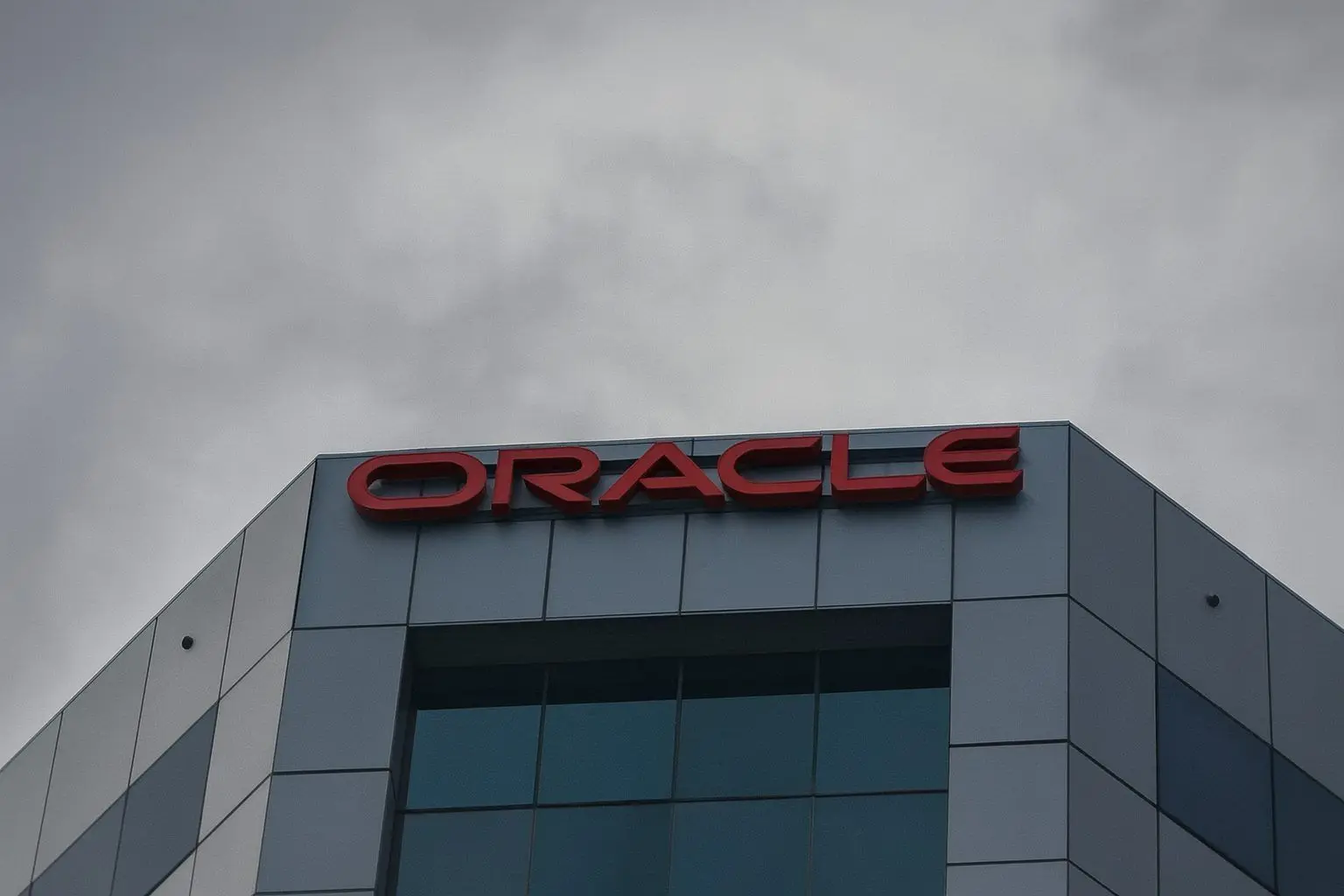
Oracle Corporation (NYSE: ORCL) goes into its next earnings report as one of the most controversial names in big tech: a company sitting on a massive AI cloud backlog and multi‑hundred‑billion‑dollar contracts, but also rising debt, negative free cash flow and growing skepticism in credit and options markets.
As of mid‑day on December 9, 2025, Oracle shares trade around $221, up roughly 1–1.5% on the day and more than 35% below their September peak near $346.IG Q2 fiscal 2026 earnings arrive after the close on Wednesday, December 10, with a conference call at 4 p.m. Central Time, according to Oracle’s investor relations site.Oracle Investor Relations
Below is a detailed look at today’s most important Oracle stock news, forecasts and analyses dated December 9, 2025, and how they fit together for investors watching ORCL on Google News and Discover.
Oracle Stock Price Snapshot: From AI Euphoria to 36% Correction
- Current price: about $220–221 per share.StockAnalysis
- September 2025 high: roughly $346, following a blockbuster Q1 FY 2026 earnings reaction.IG+1
- Drawdown: a decline of about 36–37% from that peak, effectively erasing most of the post‑September surge.IG+1
A CoinCentral piece published today characterizes the move as a 37% slide to around $217, blaming the sell‑off on worries about heavy AI infrastructure capex and debt burden ahead of Q2 earnings.CoinCentral IG’s earnings preview notes a similar ~37% drop since September, underscoring just how quickly sentiment has flipped.IG
Why Oracle’s Q2 FY 2026 Earnings Matter So Much
Earnings timing and Wall Street consensus
Oracle confirmed it will release Q2 FY 2026 results on December 10, 2025 after market close, with a webcast later that afternoon.Oracle Investor Relations+1
Across multiple research houses, expectations are remarkably consistent:
- Revenue: about $16.2 billion, up roughly 15% year‑on‑year.Saxo Bank+1
- Adjusted EPS: about $1.64, implying 11–12% growth versus last year.TipRanks+1
TipRanks notes that options markets are pricing an approximately 10.8% move in either direction around the print, highlighting just how binary traders think the event could be.TipRanks
The Q1 setup: huge AI backlog, modest top‑line miss
The stakes are high because Q1 FY 2026 in September reset the entire Oracle narrative:
- Revenue: about $14.9B, a slight miss versus consensus.
- Adjusted EPS:$1.47, also marginally under expectations.IG
- Cloud Infrastructure (OCI) revenue:+55% YoY to $3.3B.
- Total cloud revenue:+28% YoY to $7.2B.IG+1
- Remaining performance obligations (RPO / backlog): a staggering $455B, up 359% year‑over‑year, driven by a handful of multi‑billion‑dollar AI deals.IG+1
That backlog — linked heavily to generative‑AI customers such as OpenAI — sent Oracle’s shares up roughly 30–36% in a single session, marking their biggest one‑day gain since the late 1990s and pushing the stock to fresh all‑time highs.IG+1
Today’s key question: Does Q2 show that this backlog is actually turning into cash – without breaking the balance sheet?
The Bull Case: A Once‑in‑a‑Decade AI Re‑Rating?
A widely shared analysis on TradingKey this morning argues that focusing only on whether Oracle “beats or misses by a penny” is the wrong lens. Instead, it frames the company as undergoing a “once‑in‑a‑decade value re‑rating” tied to its AI cloud transformation.tradingkey.com
1. OCI as a specialized AI super‑cloud
TradingKey and Saxo both highlight that Oracle Cloud Infrastructure (OCI) isn’t trying to copy‑paste AWS or Azure; instead it targets the highest‑value niche: large‑scale AI training and inference.tradingkey.com+1
- OCI’s bare‑metal architecture and ultra‑low‑latency network are designed to link tens of thousands of GPUs like “one brain,” making it particularly attractive for giant model training.tradingkey.com
- Management has guided for ~77% OCI revenue growth to about $18B in FY 2026, potentially scaling to $144B by FY 2030, assuming backlog conversion holds.IG
Trefis echoes this, describing an “OCI & AI explosion” with OCI projected to grow more than 70% in FY 2026, underpinned by a $455B AI‑driven backlog including OpenAI.Trefis
2. High‑stickiness SaaS and applications
Above that infrastructure layer, Oracle’s Fusion and NetSuite ERP suites, along with Oracle Health, embed generative AI into financials, supply chain, HR and industry workflows.tradingkey.com+1
TradingKey argues that as AI agents start making core business recommendations (cash‑flow forecasts, route optimization, pricing suggestions), switching costs skyrocket; ripping out Oracle would mean replacing infrastructure, database and applications all at once – like changing an airplane’s engine and cockpit mid‑flight.tradingkey.com
This is the essence of the bull case: AI‑driven lock‑in + a massive backlog + rising cloud mix could turn legacy database “toll booths” into a diversified, recurring‑revenue AI platform.
3. Oracle Health and Healthcare Cloud AI
Healthcare is also emerging as a second structural pillar:
- Trefis notes Oracle Health’s launch of a new AI‑integrated, cloud‑native EHR in 2025 aimed at regaining share with a modern, interoperable platform.Trefis
- A recent AI CERTS report highlights Oracle Healthcare Cloud AI, with early pilots claiming 20–60% performance improvements after moving workloads to OCI and roughly 30% reductions in documentation time for clinicians using Oracle’s Clinical AI Agent.AICERTs – Empower with AI Certifications
If those productivity numbers scale in real‑world deployments, Oracle could evolve into a meaningful challenger to incumbents like Epic and Microsoft’s Nuance in ambient clinical AI.AICERTs – Empower with AI Certifications
The Bear Case: Debt‑Fueled AI Arms Race and Negative Free Cash Flow
If bulls see a structural AI re‑rating, bears see something closer to a leveraged bet on a still‑unproven revenue stream.
1. Free cash flow has turned negative
IG’s earnings preview underscores a key inflection: Oracle’s free cash flow turned negative from fiscal Q4 2025 onward, as AI data‑center capex surged.IG
To fund this:
- Oracle is pursuing roughly $38B of additional debt financing, on top of about $105B of existing debt as of August 2025.IG
- FY 2026 capex is projected around $35B, up about 65% and far above historic levels.IG
A MarketWatch/Dow Jones column today casts Oracle as the “canary in the coal mine” for Big Tech’s debt‑driven AI infrastructure binge, pointing out that the company has already sold around $18B of bonds, is running negative free cash flow, and now faces sharply higher credit‑default‑swap (CDS) pricing.MarketWatch+1
2. Credit‑rating pressure and junk‑status risk
IG notes that Moody’s and S&P have shifted Oracle to a negative outlook, warning that leverage could exceed 4x debt‑to‑EBITDA by 2027–2028 if debt accumulation outruns earnings growth.IG
Both IG and MarketWatch warn that if capex and borrowing keep rising without a turn in free cash flow, an eventual downgrade toward high‑yield (“junk”) territory is a real risk.IG+1
That’s a crucial difference vs. mega‑cap peers like Alphabet and Meta, which are also plowing money into AI but from net‑cash, investment‑grade balance sheets.
3. Concentration risk: the OpenAI mega‑deal
Oracle’s AI backlog is impressive — but also highly concentrated:
- IG reports that Oracle is a key infrastructure provider in the $500B “Stargate” AI super‑computing project, and that it has secured a five‑year contract with OpenAI estimated around $300B.IG
- That one deal could represent a very large share of Oracle’s revenue by 2028, raising the stakes if OpenAI’s own economics or regulatory environment shift.IG+1
Analysts quoted in IG and MarketWatch question whether OpenAI can reliably deliver tens of billions per year in payments, and point to antitrust and contractual‑enforceability questions around such large, multi‑party deals.IG+1
In short: Oracle’s AI growth engine rests heavily on a small number of counterparties, just as regulators and competitors are scrutinizing hyperscale AI alliances.
Analyst Ratings and Price Targets: Mostly Bullish, but Diverging
Despite the volatility and credit concerns, Wall Street remains broadly positive on ORCL — though with a wide spread of views.
Consensus views
- MarketBeat:
- 44 analysts over the past 12 months
- Consensus rating: “Moderate Buy”
- Rating mix: 4 Strong Buy, 27 Buy, 11 Hold, 2 Sell
- Average 12‑month price target:$320.84, implying about 45% upside from around $220.5.MarketBeat
- StockAnalysis.com:
- 31 covering analysts
- Consensus rating: “Buy”
- Average target:$336.77, or ~53% upside; range $175–$400.StockAnalysis
These numbers line up with IG’s summary that the average target around $337 sits roughly 55% above current levels, despite recent downward revisions.IG
Notable recent calls
Recent individual price‑target updates skew bullish:
- Citigroup (Dec 4): maintains Strong Buy, trimming its target from $415 to $375, still implying about 70% upside.StockAnalysis+1
- Deutsche Bank (Nov 26): reiterates Strong Buy with a $375 target.StockAnalysis
- Jefferies (Oct 17): maintains Strong Buy, raising target to $400.StockAnalysis
- Baird (Nov 18): Buy, with a $315 target (~43% upside).StockAnalysis
An Investing.com note yesterday highlights Bernstein SocGen’s Outperform rating and $364 target, arguing that the recent ~10% three‑month share decline contrasts with more than $300B in incremental business Oracle has announced in the same period.Investing.com
Today’s TipRanks feature goes even further, stating that top‑rated analysts collectively see “almost 60% upside” for ORCL from current levels and view the recent pullback as an attractive entry point ahead of earnings.TipRanks
Short‑Term Sentiment: Options Traders and Retail Turn Cautious
While Wall Street analysts lean bullish, options traders and some retail investors are notably more skeptical.
A 24/7 Wall St. article from November 5 — still widely circulated in today’s commentary — described how Oracle dropped 11% in a week to $245.01, with shares down 29% from their 52‑week high, just as sentiment in Reddit’s options communities swung from optimistic to bearish.24/7 Wall St.
Key points from that analysis:
- Oracle was trading at close to a 60x P/E, leaving little room for disappointment.
- Quarterly earnings growth had dipped to about –1.9% YoY, stirring concerns about margin pressure.
- The RSI slid to around 35, nearing technical oversold territory.24/7 Wall St.
TipRanks’ options‑flow article adds that derivatives markets are currently pricing a ±10.84% post‑earnings move, reflecting substantial uncertainty over whether Oracle can address questions on debt, free cash flow and backlog quality in one call.TipRanks+1
In other words: Wall Street’s spreadsheet models are bullish, but trader positioning is hedged and jumpy.
Institutional Flows: Big Money Still Buying
Contrasting with the cautious options activity, long‑only institutions continue to build positions.
A new MarketBeat report published today shows:
- State Street Corp increased its Oracle stake by 1.7% in Q2, buying an additional ~1.25M shares.
- State Street now owns about 73.46M shares, or 2.62% of Oracle, valued around $16.1B, making ORCL its 24th‑largest position.MarketBeat
The same filing notes a series of smaller firms also raising exposure, suggesting that large, benchmark‑oriented investors still view Oracle as a core AI‑and‑cloud holding, despite volatility.MarketBeat
What to Watch in Tomorrow’s Earnings: A Checklist for ORCL Investors
Saxo’s “Cloud, debt and AI promises” note and IG’s preview both point to a similar framework for reading the Q2 release.Saxo Bank+1
Here are the key lines that will likely drive the stock:
- OCI growth rate
- Can OCI stay near or above 50%+ year‑on‑year growth, consistent with management’s full‑year targets?
- A material slowdown would add fuel to the bear case that the AI boom is already decelerating.
- Backlog and customer diversification
- Does RPO (backlog) grow again from the already massive $455B base?
- Do management comments show broader customer contribution beyond a few mega‑deals like OpenAI?
- Capex, leverage and free cash flow
- How fast are depreciation and interest costs rising?
- Is there a credible path back to positive free cash flow while still funding AI capacity?
- Any guidance about debt issuance and ratings will be scrutinized.
- OpenAI and large‑contract disclosures
- Investors will look for more detail on contract structures, phasing and minimums for the Stargate/OpenAI commitments.IG+1
- Even small hints of renegotiation or delay could move the stock sharply.
- Technical setup
- IG notes that ORCL is testing support around its 200‑day moving average and long‑term uptrend line. A positive surprise could see shares rebound toward $250, while a disappointment might reopen a path toward the $185 area.IG
Put simply, Oracle doesn’t just need to hit the numbers — it needs to prove that AI backlog, debt and cash flow can coexist without blowing up the balance sheet.
Balanced Takeaway: Is Oracle Stock a Dip or a Value Trap?
Putting today’s news and analysis together:
Why bulls like ORCL here
- Massive AI backlog ($455B RPO) and 70%+ OCI growth ambitions provide rare long‑term visibility if contracts hold.IG+1
- Oracle’s integrated stack (OCI + database + SaaS + Oracle Health + Healthcare Cloud AI) creates high switching costs and sticky, recurring revenue.tradingkey.com+1
- Analyst consensus still calls the stock a Buy / Moderate Buy, with average 12‑month targets around $320–337, implying 45–50%+ upside.MarketBeat+1
- Large institutions like State Street are increasing positions, suggesting that many long‑term investors see the recent 36% pullback as a strategic entry point.MarketBeat+1
Why bears are worried
- Free cash flow is currently negative, and Oracle is layering tens of billions of new debt onto an already large balance sheet.IG+1
- Credit metrics are deteriorating; rating agencies hold negative outlooks, and CDS spreads are at their highest since the financial crisis.IG+1
- AI revenue is heavily concentrated in a few mega‑customers, especially OpenAI, just as that ecosystem faces regulatory, competitive and monetization risks.IG+1
- Options traders and some retail communities are treating Oracle more as a short‑term trading vehicle than a high‑conviction long‑term position, with implied volatility signaling a possible double‑digit move on earnings.24/7 Wall St.+1
For now, Oracle sits on a knife‑edge: the same AI investments that could justify a much higher valuation are also the reason its balance sheet is under pressure.
Practical Notes for Investors
- Short‑term traders will likely focus on tomorrow’s headline beats/misses, options positioning and whether the stock holds technical support around current levels.IG+1
- Long‑term investors may find more value in watching multi‑quarter trends: OCI growth trajectory, RPO conversion, debt and capex discipline, and the real‑world ramp of Oracle Health and Healthcare Cloud AI.Saxo Bank+1
As always, this article is for informational purposes only and does not constitute investment advice. Oracle is now a high‑beta bet on the AI infrastructure cycle as much as on traditional enterprise software. Anyone considering ORCL should weigh both the upside of a successful AI transition and the downside if the company cannot convert backlog into sustainable, cash‑generating growth.