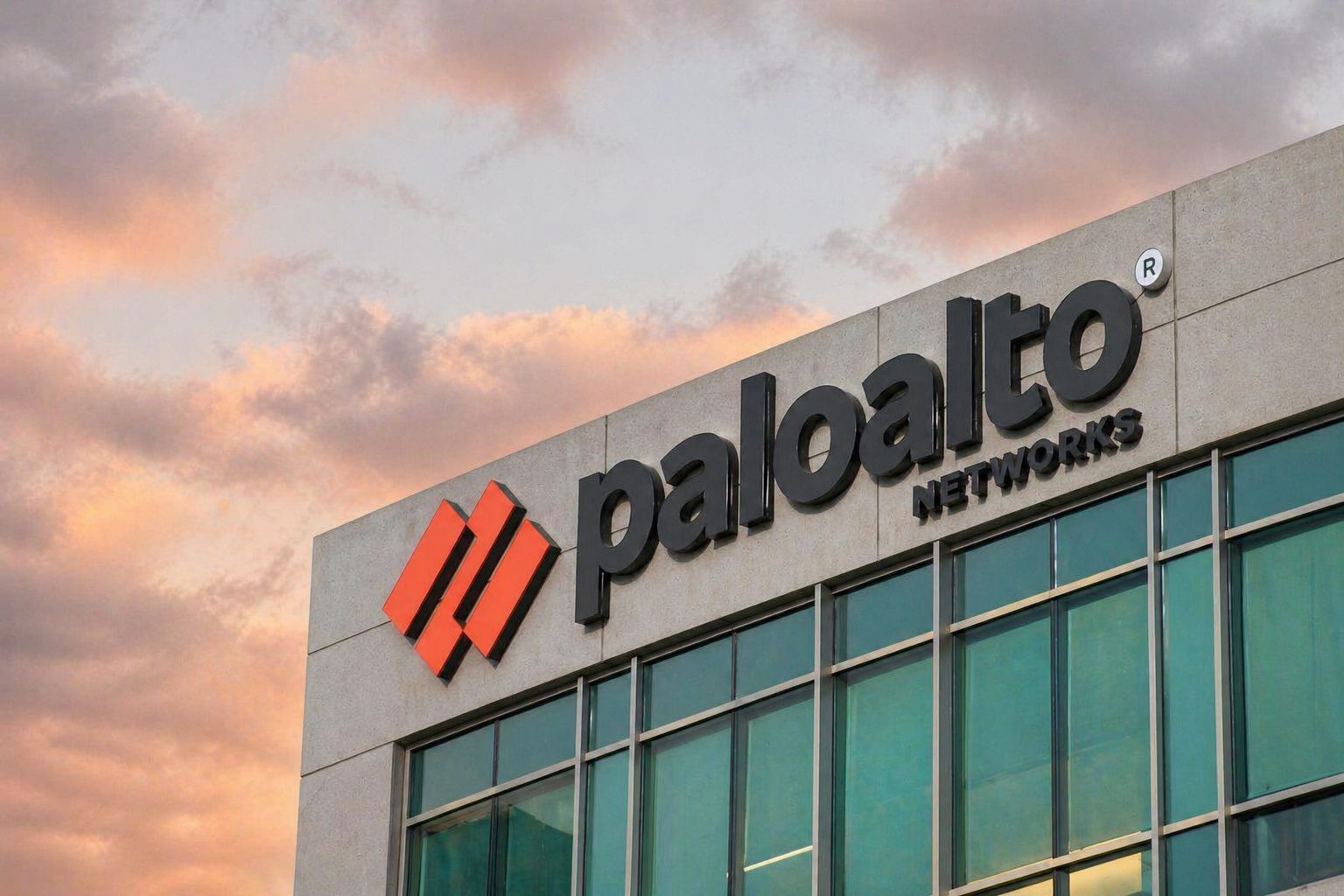

SANTA CLARA, California, April 25, 2026, 12:05 PDT
- Palo Alto Networks finished Friday up 3.08% at $178.54, clawing back some of Thursday’s losses.
- Regulators and banks are zeroing in on AI tools designed to outpace standard defenses by spotting software flaws more quickly—that’s what prompted the move.
- Turning concern into actual demand is the company’s aim here, though acquisition costs and the ever-present integration risk still hang over the story.
Palo Alto Networks climbed 3.08% Friday to finish at $178.54, after hitting an intraday high of $179.10. Investors continued to grapple with worries about AI-powered cyber threats even as the company pours money into expanding its security platform. That’s per investor data from Palo Alto Networks.
Timing is key here. On Friday, Japan announced plans to launch a financial-sector cybersecurity task force, following anxieties tied to Anthropic’s Mythos AI model—a restricted tool designed for identifying software flaws. Finance Minister Satsuki Katayama described the situation as “a crisis that is already at hand,” warning that a cyberattack could ripple through markets. Reuters
Palo Alto is targeting big enterprise and government clients—organizations anxious that hackers will outpace their patching cycles. Anthropic counts Palo Alto Networks, CrowdStrike, and Cisco among the first partners in Project Glasswing, which hands a group of vetted defenders early access to Claude Mythos Preview for cybersecurity tasks. A “zero-day” is a vulnerability the software vendor hasn’t seen before someone else discovers or exploits it. Anthropic
This week, Chief Executive Nikesh Arora challenged the notion that AI spells doom for cybersecurity software firms. Referencing comments highlighted by the Times of India, Arora said investors need to look at which kinds of software lose out to AI, and which actually get a boost. He also suggested that a “paranoid reaction” from the market could hand opportunities to more discerning buyers. The Times of India
Palo Alto’s market value hovered around $126.9 billion in recent trading. The stock’s Friday action set it apart from rivals. CrowdStrike finished 0.62% higher, Check Point added 0.63%, and Fortinet advanced 1.89%.
Palo Alto has spent the last year making its case: customers want to deal with fewer security vendors and prefer integrated tools. Back in February, the company posted fiscal Q2 revenue of $2.6 billion, a 15% gain, while annual recurring revenue from its next-generation security products jumped 33% to $6.3 billion. “Customers were keen to both modernize and normalize their cybersecurity stack,” Arora said. Palo Alto Networks
The CyberArk acquisition sits at the heart of the story. Palo Alto wrapped up the purchase in February, outlining plans to make identity security a pillar of its platform—spanning human, machine, and AI-agent identities. “The emerging wave of AI agents will require us to secure every identity,” Arora commented at the time. Palo Alto Networks
The AI narrative isn’t all upside. Earlier this week, Reuters said that unauthorized users managed to tap into Anthropic’s Mythos model using a third-party vendor’s setup, but the activity didn’t appear to be tied to cybersecurity efforts. Anthropic confirmed it’s looking into the incident.
Regulators aren’t brushing this off as a minor problem. Authorities in Australia are collaborating with software companies—Anthropic among them—after Mythos uncovered “thousands” of significant vulnerabilities spanning web browsers and operating systems. The chief concern: AI might dramatically shorten the gap between someone finding a flaw and someone exploiting it. Reuters
Palo Alto faces an execution challenge. Back in February, Reuters noted the company trimmed its fiscal 2026 adjusted profit outlook—down to $3.65 to $3.70 per share, a drop from the earlier $3.80 to $3.90, as costs from deals like CyberArk and Chronosphere added up. The revenue forecast moved higher, but the question lingers: just how much margin are investors prepared to sacrifice for more growth? Reuters
Palo Alto finds itself in a clearer, but more challenging position. Demand is picking up, and concerns over AI-driven attacks have already prompted government involvement. The question now is if the company can turn that momentum into long-lasting subscriptions—before expenses from deals, integration headaches, and agile AI competition cut deeper.
![US Stock Market Today 08/28/2026 [UPDATE: 00:10 EDT] [Marvell Holds 7.8% Loss Despite Raised Revenue Targets]](https://ts2.tech/wp-content/uploads/2026/08/US-market-dashboard-2026-08-28-0009-480x384.jpg "US Stock Market Today 08/28/2026 [UPDATE: 00:10 EDT] [Marvell Holds 7.8% Loss Despite Raised Revenue Targets]")



![Australia Stock Market Today 28/08/2026 [UPDATE: 13:36 AEST] [Banks and BHP Lift ASX as WAM, PEXA Sink 18%]](https://ts2.tech/wp-content/uploads/2026/08/AU-market-dashboard-2026-08-28-1334-480x384.jpg "Australia Stock Market Today 28/08/2026 [UPDATE: 13:36 AEST] [Banks and BHP Lift ASX as WAM, PEXA Sink 18%]")