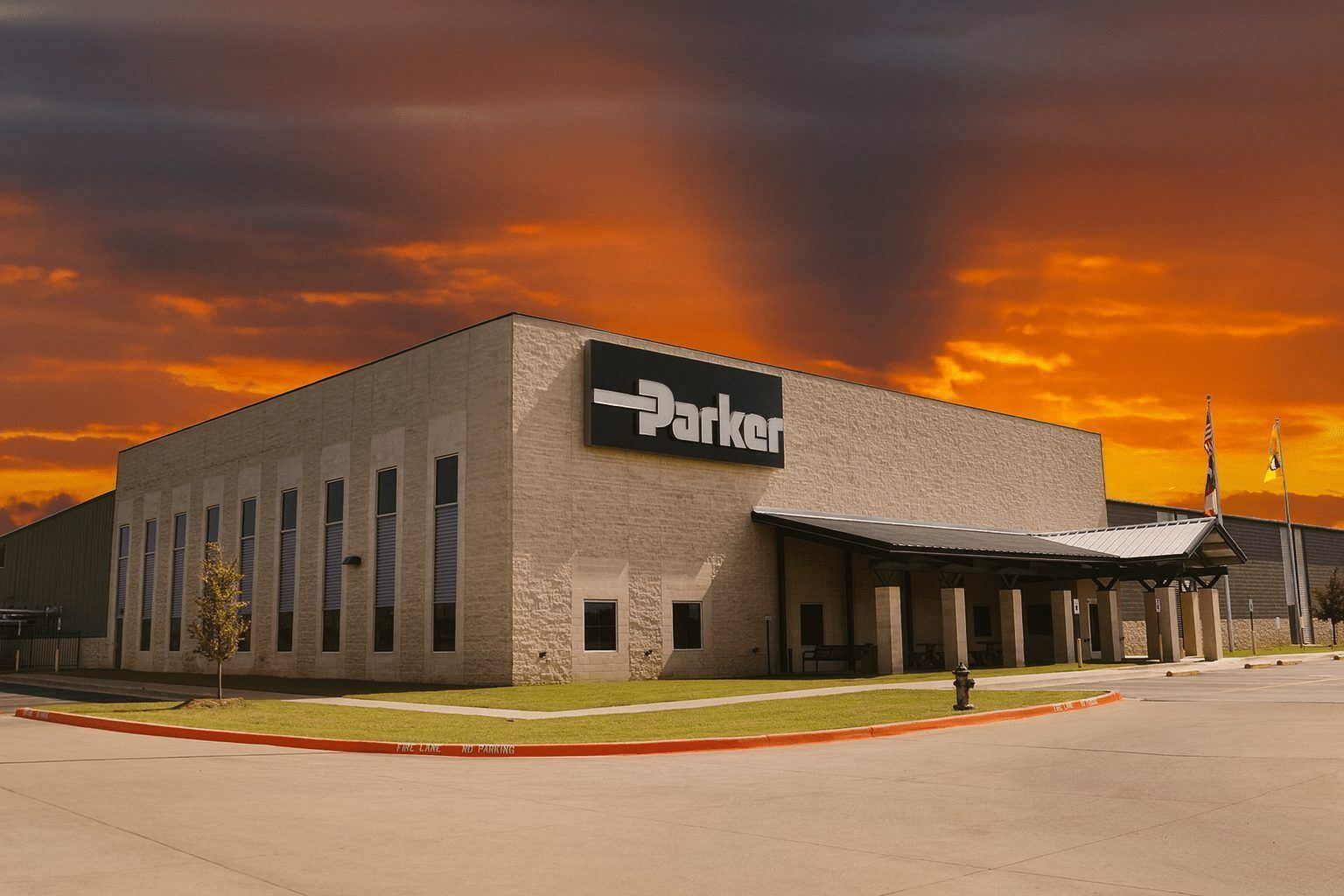
Parker-Hannifin Corporation (NYSE: PH) heads into Monday’s session near fresh highs after a powerful run in recent weeks—driven by strong aerospace demand, raised full-year guidance, and a blockbuster acquisition plan that would significantly expand its filtration and aftermarket footprint.
Going into the US market open on Monday, Dec. 15, 2025, here’s what investors and traders should have on their radar.
Key takeaways before the bell
- PH closed Friday at $884.87, down 1.59%, after setting a new 52-week high of $901.31 on Thursday. MarketWatch+1
- The Filtration Group acquisition remains the biggest strategic catalyst: $9.25 billion cash purchase price, with $220 million targeted cost synergies by year three. Parker-Hannifin Corporation+1
- Parker filed a new 8-K on Dec. 10 disclosing two delayed-draw term loan facilities totaling $7.75 billion to help finance the Filtration Group deal (if drawn). Parker-Hannifin Corporation+1
- The company’s most recent earnings update delivered record quarterly sales, record adjusted EPS, and raised FY26 guidance. Parker-Hannifin Corporation+1
- The stock’s valuation has moved higher as Wall Street leans into Parker’s “compounder” narrative—especially after the Filtration Group announcement. Barron’s
Where Parker-Hannifin stock stands heading into Monday
PH ended Friday, Dec. 12 at $884.87, after a modest pullback that snapped a short winning streak. MarketWatch The bigger picture: the shares have been pressing higher and recently made new highs—including a 52-week high of $901.31 on Dec. 11. MarketWatch
Friday’s volume was also below the 50-day average, which can matter to short-term traders watching whether a move is being confirmed by heavy participation. MarketWatch
If you’re looking at market cap context: using the company’s reported 126,186,699 shares outstanding and Friday’s closing price, Parker’s equity value is roughly $112 billion (a rounded calculation based on those figures). Parker-Hannifin Corporation+1
The biggest catalyst: Filtration Group acquisition and what changes for PH
Deal snapshot
Parker announced it has entered into a definitive agreement to acquire Filtration Group Corporation for a $9.25 billion cash purchase price (cash-free, debt-free). Parker-Hannifin Corporation
Management positioned the deal as a major expansion of Parker’s filtration offering and its aftermarket-heavy revenue base. The company highlighted several points that matter for how investors model the business post-close:
- $2 billion in expected calendar 2025 sales for Filtration Group Parker-Hannifin Corporation+1
- About 85% of sales generated in the aftermarket, supporting recurring revenue and margin resilience Parker-Hannifin Corporation+1
- Targeted ~$220 million of pre-tax cost synergies by the end of year three Parker-Hannifin Corporation+1
- The purchase multiple: 19.6x Filtration Group’s estimated CY2025 adjusted EBITDA, or 13.4x including expected cost synergies Parker-Hannifin Corporation+1
- Expected closing timeline: six to twelve months, subject to regulatory approvals and other customary conditions Parker-Hannifin Corporation+1
Reuters framed the strategic intent bluntly: Parker is leaning further into higher-margin, recurring aftermarket economics, noting Filtration Group’s heavy aftermarket mix and Parker’s push for stability and profitability through that model. Reuters
Why financing just became a near-term storyline
On Dec. 10, 2025, Parker filed an 8-K disclosing it entered into:
- a $5.25 billion delayed-draw 364-day term loan facility, and
- a $2.50 billion delayed-draw three-year term loan facility,
with proceeds (if drawn) intended to finance a portion of the Filtration Group acquisition consideration. Parker-Hannifin Corporation+1
A few details investors will focus on:
- These facilities are senior unsecured and delayed draw (not automatically borrowed). Parker-Hannifin Corporation+1
- The loans price off SOFR plus a ratings-based margin, tying borrowing costs to Parker’s credit profile. Parker-Hannifin Corporation+1
- The agreements include customary covenants, including a debt-to-capitalization ratio covenant. Parker-Hannifin Corporation+1
- As of Dec. 10, the company disclosed it had not borrowed under the facilities. Parker-Hannifin Corporation+1
This matters because the deal is large even for Parker—so the “how will it be financed and what does leverage look like after close?” debate is likely to remain active into 2026.
Credit markets’ early read
Fitch published a note indicating it affirmed Parker-Hannifin at “A-” with a Stable Outlook following the announced acquisition. Fitch Ratings
That doesn’t eliminate leverage risk, but it’s a sign that at least one major rating agency did not treat the announcement as an immediate credit break.
Fundamentals: the latest quarter, raised outlook, and what it implies for 2026
Parker’s most recent quarterly report (fiscal 2026 first quarter, ended Sept. 30, 2025) delivered exactly what long-term holders want to see in an industrial “compounder” story: higher sales, higher margins, higher earnings, and higher guidance.
Highlights from the last report
In its earnings release, Parker reported:
- Record sales of about $5.1 billion and 5% organic sales growth Parker-Hannifin Corporation+1
- Record adjusted EPS of $7.22 (with diluted EPS of $6.29 as reported) Parker-Hannifin Corporation+1
- CEO Jenny Parmentier pointed to “higher order rates” and explicitly said the company increased its outlook after the quarter. Parker-Hannifin Corporation+1
Parker also reported that order rates increased 8% overall, with Aerospace Systems order rates up 15%, and that total company backlog rose to a record $11.3 billion. Parker-Hannifin Corporation+1
Updated FY26 guidance (a key “forecast” investors should anchor to)
In the same release, Parker said guidance for the fiscal year ending June 30, 2026 was increased and now includes the Curtis acquisition, with:
- Total sales growth: 4.0% to 7.0%
- Adjusted EPS: $29.60 to $30.40
- Adjusted segment operating margin: 26.8% to 27.2% Parker-Hannifin Corporation
For many investors, that guidance range is the baseline “forecast” for the next several quarters—until the company updates it again.
Aerospace strength remains a core bull case
Parker’s aerospace exposure has been a major tailwind—and it continues to show up in both growth and backlog.
In the quarter, Parker reported Aerospace Systems segment sales of $1.641 billion versus $1.448 billion a year earlier. Parker-Hannifin Corporation
And in its quarterly filing, Parker reported Aerospace Systems segment backlog of $7.716 billion as of Sept. 30, 2025 (up from $6.852 billion a year earlier in the same disclosure table), and it described backlog as increasing due to orders exceeding shipments across market segments—especially commercial OEM and aftermarket. Parker-Hannifin Corporation
This is important because aerospace backlogs can act like a multi-quarter demand “buffer,” helping offset softer pockets elsewhere in the industrial cycle.
Capital returns: dividends and buybacks are still part of the story
Parker continues to pair growth and M&A with shareholder returns:
- The company said it repurchased $475 million of shares in the quarter it just reported. Parker-Hannifin Corporation+1
- In its quarterly filing, Parker disclosed it repurchased 0.6 million shares for $475 million during the three months ended Sept. 30, 2025, and that 19.4 million shares remained available under authorization as of Sept. 30, 2025. Parker-Hannifin Corporation
- On dividends, Parker disclosed it declared a $1.80 per share quarterly cash dividend on Oct. 22, 2025 (payable Dec. 5, 2025), and noted dividends have been paid for 301 consecutive quarters, with 69 consecutive fiscal years of annual dividend increases. Parker-Hannifin Corporation
Those facts matter because the Filtration Group deal is large enough that some investors will ask whether buybacks slow down. The company’s stated deal rationale leans heavily on synergy capture and cash generation, but markets will likely keep score quarter by quarter.
Analyst sentiment: bullish targets, but valuation is no longer “cheap”
Wall Street’s tone has generally been constructive around Parker, especially after the Filtration Group announcement.
Barron’s reported that BofA Securities’ analyst Andrew Obin maintained a Buy rating and a $950 price target, and that the average Wall Street price target rose to around $910 (per FactSet, as cited by Barron’s). Barron’s
The same Barron’s piece also flagged the other side of the trade: the market is paying up for the story, with Parker trading at higher multiples than it did a year earlier, according to the FactSet-based valuation references in the article. Barron’s
What that means heading into Monday: PH may be more sensitive to “small disappointments”—a cautious commentary line, a slower-than-expected industrial patch, or any hint that integration costs are tracking above plan—because the stock is already priced like a high-quality operator.
Insider activity: what a Form 144 filing does (and doesn’t) mean
One headline that can spook traders is “insider selling,” but the details matter.
A Form 144 filed for Parker-Hannifin shows Andrew Ross (listed as an officer) filed a notice of proposed sale for 2,488 shares, with an aggregate market value listed around $2.226 million, and the form indicates “SAR exercise and sell” as the nature of the acquisition transaction. Parker-Hannifin Corporation+1
Two important points for readers:
- Form 144 is notice of an intention/proposal to sell, not proof a sale has already occurred.
- “Exercise and sell” activity can be routine—often tied to compensation mechanics and tax planning—though markets still watch it at extremes.
What to watch next: catalysts into late December and early 2026
1) Deal progress and regulatory timing
The Filtration Group acquisition is expected to close within six to twelve months, subject to regulatory approvals and customary conditions. Parker-Hannifin Corporation+1 Any updates on timing, remedies, or integration planning could move the stock—especially with shares near highs.
2) Financing choices
The new $7.75 billion delayed-draw term loan facilities are a real signal that Parker is preparing financing flexibility for the acquisition. Parker-Hannifin Corporation+1 Investors will look for clues about whether Parker ultimately uses these facilities, issues bonds, draws commercial paper, or leans more heavily on cash.
3) Next earnings date (estimated)
Parker has not confirmed the next earnings publication date in some market data listings, but several services estimate it around Jan. 29, 2026. MarketBeat+1
Treat that as a planning placeholder—not a company announcement—until Parker posts an official release date.
Bottom line for Monday’s open
Parker-Hannifin stock heads into Dec. 15 with momentum and high expectations:
- The market is rewarding raised guidance, record backlog, and aerospace strength. Parker-Hannifin Corporation+1
- The Filtration Group acquisition is the defining narrative—potentially enhancing Parker’s aftermarket mix and filtration scale, but also introducing integration and leverage questions the stock will have to “earn” over time. Parker-Hannifin Corporation+1
- With shares hovering near recent highs, investors may see bigger reactions to incremental news—good or bad—because the valuation already reflects confidence in execution. Barron’s+1