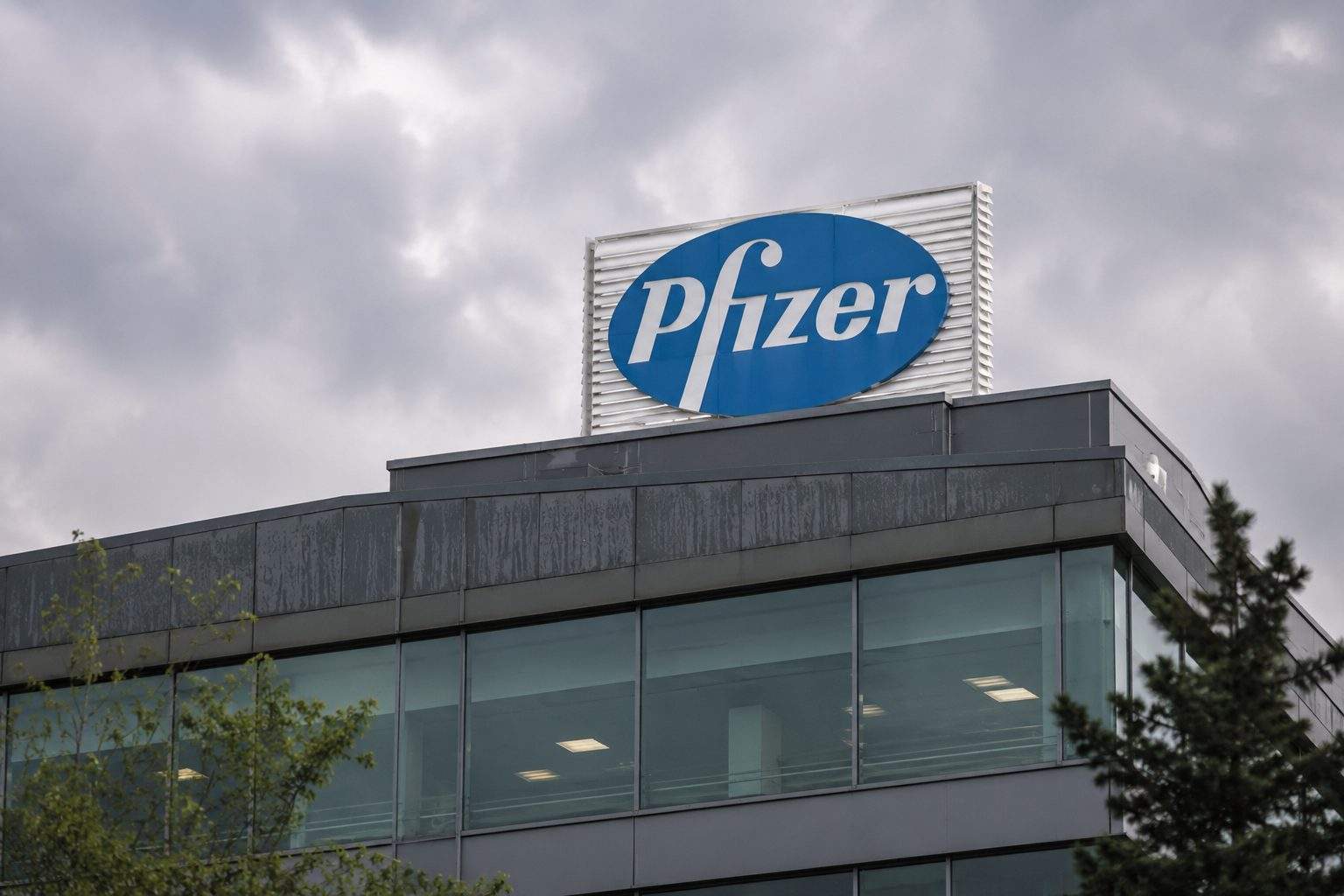

New York, May 11, 2026, 11:13 EDT
- Pfizer shares picked up in late-morning action Monday. Still, investors are left wrestling with a bigger issue—can upcoming cancer and obesity treatments really make up for patent expirations on the horizon? Reuters
- Pfizer’s first-quarter numbers beat expectations, but the 2026 outlook held steady. Still, a lot of weekend chatter zeroed in on its hefty dividend and the company’s slumped valuation.
- Eli Lilly and Novo Nordisk remain out in front in the weight-loss market, so Pfizer’s $10 billion move for Metsera looks more like a long-game play than any quick solution.
Pfizer stock picked up 1.5% to hit $26.07 as of 10:58 a.m. EDT on Monday, bringing the company’s market value to roughly $149 billion. Investors seem willing to revisit the name after a steep drop from its COVID-era highs, with attention zeroing in on three main issues: looming patent expirations, a late-stage push into the GLP-1 weight-loss drug market, and whether Pfizer has enough cash to keep its dividend intact.
Pfizer’s situation is back in focus after a Yahoo Finance piece, picked up from The Motley Fool over the weekend, painted the stock as a battered healthcare play that could pay off for yield hunters—if a recovery materializes. The article points out Pfizer’s slide of more than 50% from its 2021 peak and highlights the roughly 6.5% dividend yield. It also flags the same persistent issues that have left many investors skeptical.
Pfizer turned in first-quarter revenue of $14.45 billion, with adjusted earnings hitting 75 cents a share—both beating what analysts were looking for. The company stuck to its full-year 2026 revenue target of $59.5 billion to $62.5 billion. Still, the overhang lingers: net income dropped year-over-year, and sales of COVID products continue to sag.
It comes down to the patent cliff—loss of exclusivity opens the door to cheaper generics, squeezing sales. For Pfizer, that risk looms over big-name products like Eliquis (co-marketed with Bristol Myers Squibb) and cancer drug Ibrance. On heart drug Vyndamax, a recent settlement delays U.S. generics until June 2031, though that’s still tangled in additional legal disputes.
Chief Executive Albert Bourla told investors that resolving the Vyndamax case and a positive European court ruling on COVID vaccine contracts have boosted Pfizer’s growth prospects beyond 2028. Looking ahead, he said the company is projecting a “five-year period of high single-digit revenue CAGR” from 2029—CAGR referring to compound annual growth rate. Q4 Capital
Chief Financial Officer David Denton called out launched and acquired products as the key short-term driver. He said he was “particularly pleased” with 22% year-over-year operational revenue growth. Pfizer also reported a 7% operational revenue increase for the quarter, excluding Comirnaty and Paxlovid. Pfizer Investors
The obesity play is further out. GLP-1 drugs—key for both diabetes and obesity, targeting appetite and blood-sugar regulation—are fueling a fiercely competitive space. Eli Lilly and Novo Nordisk currently dominate. Pfizer’s initial obesity candidate, acquired through its Metsera deal, isn’t expected to reach shelves before 2028, assuming the trial phase goes well, Reuters said.
Pfizer insists its commercial muscle remains intact. Chief U.S. Commercial Officer Aamir Malik pointed out that Pfizer’s sales reps already engage with nearly 60% of the physicians most likely to write prescriptions for obesity meds. CEO Albert Bourla noted the overseas cash-pay market for such drugs is shaping up to be bigger than anticipated—a revelation that followed Lilly’s latest update.
Pfizer’s oncology business just picked up a fresh angle. On May 1, Arvinas and Pfizer announced that the FDA had cleared Veppanu, their pill targeting adults with ESR1-mutated advanced or metastatic breast cancer. Arvinas highlighted Veppanu as the first PROTAC—protein-degrader therapy—to get the agency’s green light, though both firms still need to tap a third-party partner for commercialization.
Analyst caution hasn’t budged much. J.P. Morgan’s Chris Schott flagged the need for more clinical results and clearer risk reduction before investors warm up. Over at Citi, Geoff Meacham pointed to growth in Pfizer’s new and acquired drugs, arguing the portfolio has room to counter COVID losses. RBC Capital’s Trung Huynh dubbed Pfizer a “catalyst story”—not just about earnings this time. Reuters
The dividend pulls in buyers—and draws a close look, too. Pfizer set its second-quarter payout at 43 cents a share, payable June 12 to stockholders recorded by May 8, marking the 350th straight quarterly dividend. Based on Monday’s share price, the $1.72 annualized dividend lands the yield near 6.6%.
The recovery story isn’t locked in. Comirnaty, Pfizer’s COVID vaccine, saw first-quarter sales slide 59%, while Paxlovid tumbled 62%, according to Reuters. The obesity pipeline might not deliver either, leaving more room for rivals Lilly and Novo to widen the gap. Older blockbusters could also face generic competitors before new launches gain traction. That’s the risk that comes with the yield.
Pfizer has managed to buy itself some breathing room, but not certainty. The future path for the stock looks tied more to how oncology rollouts, Metsera trial results, and ongoing Vyndamax cash flow stack up—these are what could get the company through the patent crunch looming from 2026 to 2028 that investors have tracked for years, not just a quarterly earnings surprise.