Dec. 24, 2025 — Two seemingly unrelated stories dominating business headlines this Christmas Eve are both, at their core, about pressure: pressure on household budgets in the U.S., and pressure on governments to prove they can reform and finance struggling national assets.
In the United States, JPMorgan has turned more optimistic on Dollar General, arguing the discount chain could deliver steadier same-store sales growth and improving profitability as shoppers keep hunting for value. Investing.com
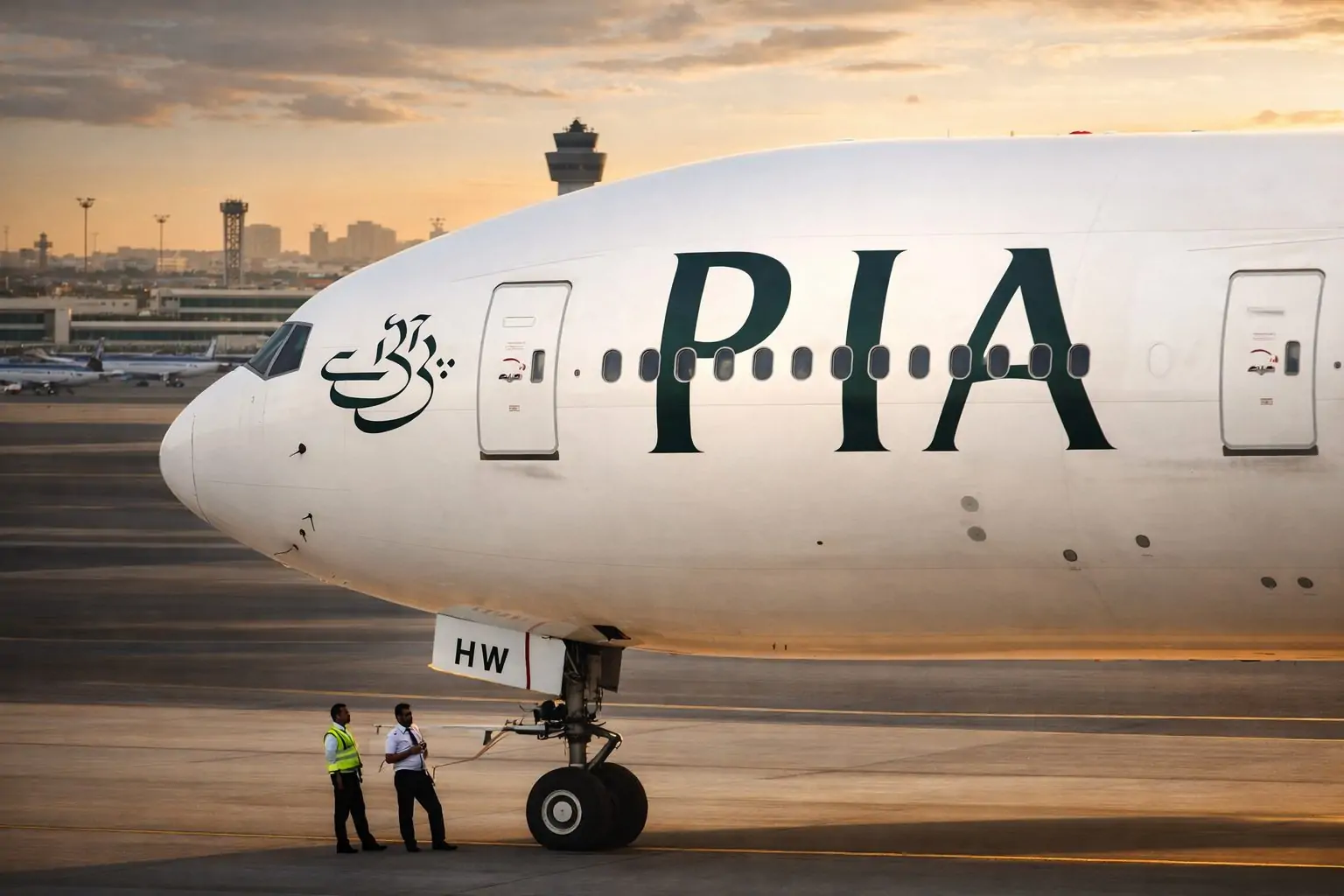
In Pakistan, the government’s long-delayed effort to privatize its national airline has finally produced a blockbuster outcome: an Arif Habib-led consortium has emerged as the top bidder for a controlling stake in Pakistan International Airlines (PIA) — a deal closely watched by the IMF and global investors as a test of the country’s reform credibility. Reuters+1
Pakistan sells 75% of Pakistan International Airlines in a $482 million breakthrough
Pakistan’s privatisation chief said on Wednesday that PIA is expected to be run by its new owners from April 2026, after approvals and regulatory steps are completed. Reuters
The winning bid in Tuesday’s live-televised auction was 135 billion Pakistani rupees (about $482 million) for a 75% stake, submitted by a consortium led by Arif Habib Corporation. Reuters+1 The bid exceeded the government’s reserve price of 100 billion rupees, and Reuters reported it also topped the 115 billion rupees base price at which the auction began. Reuters+1
What the deal includes: upfront cash, a retained government stake, and employee protections
According to Reuters, Pakistan’s privatisation adviser said the government expects final approvals from the Privatisation Commission board and the cabinet “within days,” with a contract signing likely within two weeks, followed by a financial close after a roughly 90‑day period to satisfy legal and regulatory conditions. Reuters
Key financial and structural points highlighted by Reuters include:
- The government is expected to receive about 10 billion rupees in cash upfront. Reuters
- Pakistan would retain a 25% stake, which the adviser valued at around 45 billion rupees. Reuters
- The transaction was structured to inject fresh capital into the airline, rather than simply change ownership. Reuters
- The buyer must retain all employees for 12 months after the transaction, with contracts unchanged, according to Reuters. Reuters
Reuters also reported the winning consortium includes Fatima (fertiliser), City Schools (private education) and Lake City Holdings (real estate) alongside the Arif Habib group. Reuters
Why April 2026 matters: turning a headline deal into an operational turnaround
The April 2026 handover target is significant because airlines don’t “fix themselves” with a ceremonial closing. Fleet plans, route economics, staffing productivity, and vendor contracts tend to move in multi-quarter cycles. Pakistan’s privatisation chief underscored that the structure aims to avoid a scenario where the government sells the airline and “the company still collapses.” Reuters
Reuters added that the buyer can add up to two partners, potentially including a foreign airline, if qualification criteria are met—an option designed to strengthen financing and potentially bring aviation operating expertise. Reuters
IMF reform pressure and PIA’s clean-up: what changed to get a winning bid
Pakistan’s PIA sale is not just an aviation story—it’s a credibility story.
Reuters described the privatisation as closely watched by the International Monetary Fund, which has pushed Pakistan to curb losses at state-owned enterprises. Reuters The Financial Times similarly framed the auction as a win in Pakistan’s long-running privatisation drive tied to commitments under a $7 billion IMF programme launched in July 2024. Financial Times
The FT also reported that to make PIA investable, the government took several steps ahead of the auction, including:
- restructuring Rs670bn of PIA’s roughly Rs800bn debt, Financial Times
- providing tax breaks for new aircraft, Financial Times
- and putting in place legal protections designed to reduce deal risk. Financial Times
In addition, the FT reported that most of the sale proceeds are expected to be reinvested into PIA, and that the airline posted an Rs11.5bn pre-tax profit in early 2025, which the FT said was largely linked to the government’s assumption of legacy debt. Financial Times
For broader context on why PIA’s reputation and international standing matter: the Associated Press noted the carrier had recently resumed direct flights to Europe after the European Union Aviation Safety Agency lifted a ban imposed in 2020. AP News
JPMorgan’s Dollar General call: why “same-store sales” is the metric investors can’t ignore
While Pakistan’s story is about sovereign reform and privatization mechanics, the U.S. story is about something more personal: how shoppers are behaving as the 2025 holiday season closes.
JPMorgan upgraded Dollar General to Overweight and raised its December 2026 price target to $166, arguing that management is “back on offense” after a recent roadshow and that sales trends and margins could improve. Investing.com
The bank’s core thesis is built around two levers that matter most in discount retail:
- Same-store sales growth (sales at existing stores, excluding the impact of new openings)
- Margin improvement, particularly through operational fixes such as reducing “shrink” (loss from theft/damage) and other avoidable costs
In its model, JPMorgan said its FY27 EPS estimate of $8.30 assumes roughly 2.5% same-store sales growth (the midpoint of management’s 2%–3% algorithm) plus margin expansion driven by lower shrink and damages. Investing.com
JPMorgan also argued that this setup supports around 12.5% annual EPS growth in FY26/FY27, and laid out “areas of incremental upside” that could push earnings power above $11 per share by FY28 (though that is not a forecast promise—more a scenario analysis tied to execution). Investing.com
The holiday spending backdrop: sales up ~4%, but shoppers stayed selective
JPMorgan’s Dollar General optimism is landing at a moment when the “how did holiday shopping actually go?” numbers are starting to come in.
Reuters reported that early data from Visa and Mastercard showed U.S. holiday retail sales rising about 4% in 2025. Reuters Visa reported 4.2% growth in retail spending from Nov. 1 to Dec. 21 (excluding autos, gasoline, and restaurants), while Mastercard reported 3.9% growth (including food service). Reuters
The details matter for value retail:
- Shoppers spent cautiously, but electronics and apparel were standouts. Reuters
- Reuters reported consumers increasingly used AI tools to compare prices and stretch budgets. Reuters
- Even with e-commerce convenience, in-store purchases still made up 73% of transactions, according to the Mastercard data cited by Reuters. Reuters
This is the environment in which discount chains try to win: not necessarily by getting customers to splurge, but by becoming the place shoppers trust for “good enough” essentials, quick trips, and small trade-down decisions that add up over months.
Markets on Dec. 24: risk appetite stays firm into the holiday break
The broader market mood on Dec. 24 also helps explain why investors are paying attention to both a privatization win in Pakistan and an analyst upgrade in U.S. retail.
Reuters reported that U.S. stocks ended the Christmas Eve session higher, with the Dow and S&P 500 notching record closing highs in a holiday-shortened day. Reuters
What to watch next
For Pakistan International Airlines and the PIA privatisation process
- Formal approvals by Pakistan’s privatisation bodies and cabinet, followed by contract signing and regulatory close. Reuters
- Whether the consortium adds strategic partners, including a potential foreign airline partner, which Reuters said is permitted under certain criteria. Reuters
- How quickly new capital is deployed into operations—especially decisions around fleet, reliability, and international route economics.
- Labour and productivity: the requirement to keep staff for 12 months may smooth the transition, but it also delays deeper restructuring. Reuters
For Dollar General and U.S. “trade-down” retail into 2026
- Whether same-store sales momentum holds after the holidays, and whether shrink reduction translates into margin recovery (the operational driver JPMorgan emphasized). Investing.com
- How 2026 consumer demand evolves if inflation, rates, and wage growth shift—particularly for the low- and middle-income segments that tend to drive traffic at value retailers.
- How quickly retailers turn holiday traffic into loyalty and repeat shopping, especially as consumers continue using AI-enabled price comparisons. Reuters
As 2025 closes, the common thread is clear: in both emerging-market reforms and U.S. retail strategy, the winners are being judged on execution, not just headlines—whether that’s turning a $482 million airline sale into a functioning turnaround, or turning a “same-store sales” thesis into measurable, repeatable growth. Reuters+1