
Sydney, Feb 19, 2026, 18:10 AEDT — Market closed
- PLS Group wrapped up Thursday’s session 0.9% lower at A$4.38, following a batch of company updates.
- Lithium producer reported a first-half profit but opted not to declare an interim dividend.
- PLS gave the green light for a July restart at its Ngungaju facility, also moving to acquire Calix’s share in their mid-stream demo plant joint venture.
PLS Group Limited slipped 0.9% to finish at A$4.38 on Thursday, giving back some ground after a 2.3% rally the previous session. The Australian lithium producer released its FY26 interim numbers and announced a pair of project updates aimed at reigniting growth.
Timing is key here. Investors want to see that elevated lithium prices are holding—and, crucially, that buyers are back in action, not just making noise.
PLS often sets the tone for Australia’s lithium trade. When it decides to idle capacity or boosts processing spend, those moves tend to ripple through pricing across the sector.
PLS posted revenue of A$624 million for the half-year through Dec. 31, with underlying EBITDA at A$253 million—up sharply from just A$74 million in the prior period. Net profit after tax landed at A$33 million, flipping from a A$69 million loss. Unit operating costs dropped 8% to A$563 a tonne, FOB, and cash closed out at A$954 million. No interim dividend, the board said. The company put its average realised pricing for spodumene concentrate at US$965 a tonne, CIF China, the material used in battery chemical production.
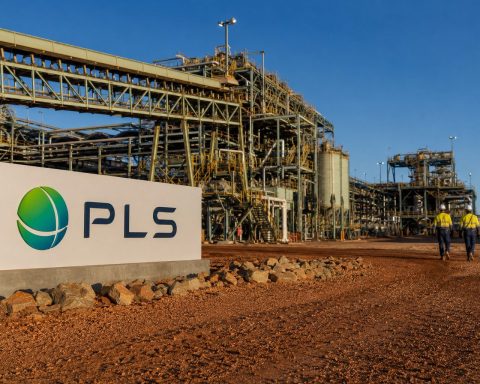
PLS got the board’s green light to bring its Ngungaju processing plant back online, aiming for early July 2026 to resume output from the roughly 200,000-tonne-a-year facility, which had been on care and maintenance. The miner left its FY26 unit cost and capex guidance where it was, though it’s now warning that costs will probably lean toward the upper end of its A$560–A$600 per tonne FOB band during the second half as restart activity intensifies. “The restart positions us to move quickly as conditions improved,” Henderson said. Company Announcements
PLS will shell out A$11.4 million to buy out Calix’s stake in their Mid-Stream Demonstration Plant joint venture, according to a separate release with Calix. That move hands PLS full ownership, as well as the reins over funding and operations. Under the deal, Calix grants PLS a perpetual, royalty-free licence for its calciner technology in primary lithium processing at any PLS-owned or JV plants. On royalties from third-party licences, PLS takes an 80% cut, Calix gets 20%. Calix CEO Phil Hodgson said the new arrangement is designed to “expedite the commissioning and operations” of the demo plant. Company Announcements
Calix is set to receive A$11.4 million in two parts, with the second payment due by July 31. The company flagged a one-off, non-cash impairment charge of A$30.2 million related to the restructuring. Half-year results land Feb. 24.
Backdrop’s unsettled. Lithium-linked stocks have been jerked by wild price moves and buyers toggling between spot deals and term contracts—sometimes at the last minute.
Still, risks linger. Should lithium prices slump or buyers pull back once more, Ngungaju’s ramp-up could lag, with costs piling up. Plus, there’s the mid-stream demo plant—it has yet to show it can operate steadily and scale up as intended.
Friday brings a test: traders eye the stock to see if it steadies post-results and project headlines. After that, attention sharpens on the early-July restart window — the question is whether PLS manages to boost tonnes while holding the cost line it’s been touting.