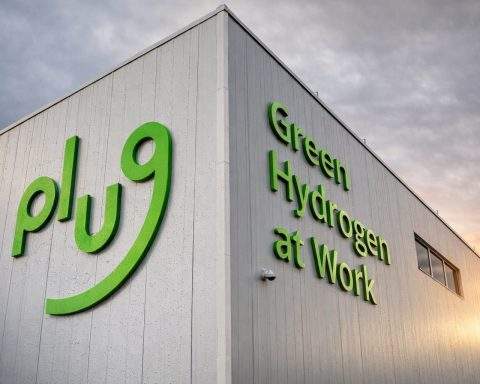
- Latest Price: Plug Power (NASDAQ: PLUG) traded around $2.85 per share by midday October 29, 2025, after falling nearly 6% to $2.79 in Tuesday’s session Benzinga. The stock is well off its early-October highs but remains far above its 52-week low (~$0.69).
- Rally and Pullback: PLUG shares skyrocketed ~170% from late summer into early October amid frenzied “hydrogen hype,” hitting a 52-week high near $4.58 ts2.tech. Since that peak, the stock has cooled off – by October 23 it slid back into the high-$2 range ts2.tech, still roughly double its summer lows.
- Wall St. Outlook: Analysts on average rate PLUG a “Hold,” but opinions vary widely. Price targets range from about $1.50 on the bearish side to $7.00 on the bullish end ts2.tech. The consensus 12-month target is around $2.5–$2.6 (near the current price) ts2.tech. Notably, HSBC recently upgraded Plug to “Strong Buy” with a $4.40 target ts2.tech, while a few firms maintain bearish targets near $1–$1.5.
- Big Deals & Projects: Plug Power has announced major commercial wins. It secured a 1 GW electrolyzer order from Fortescue Future Industries and delivered its first 10 MW electrolyzer unit to Galp Energia’s green hydrogen project in Portugal ts2.tech. The company also supplied 44.5 tons of green hydrogen to Germany’s new H2 storage site (with more tons contracted) ts2.tech, and deployed 77 hydrogen fuel-cell forklifts for Floor & Decor’s warehouse operations ts2.tech – replacing diesel units and underscoring growing demand for Plug’s solutions.
- Financing & Cash Runway: Earlier this month Plug raised ~$370 million in cash by inducing early exercise of warrants ts2.tech. The innovative deal could bring in up to $1.4 billion more if newly issued warrants (strike price $7.75) are exercised later ts2.tech. Analysts say this cash infusion “nearly eliminates” near-term funding uncertainty ts2.tech. Plug also secured a $525 million credit line and a $1.66 billion U.S. Department of Energy loan guarantee to help finance new hydrogen production plants ts2.tech.
- Leadership Change: Founder and CEO Andy Marsh (who led Plug for over 20 years) will step down in 2026. Company veteran José Luis Crespo (currently Chief Revenue Officer) has been named the next CEO, effective March 2026 ts2.tech. Marsh will become Executive Chairman, while Crespo – credited with building an $8 billion sales pipeline with major customers like Amazon and Walmart – is tasked with steering Plug’s next growth phase ts2.tech.
- Hydrogen Sector Tailwinds:Global hydrogen demand is around 100 million tons in 2024 and climbing ts2.tech. Government support is robust – Plug’s $1.66B DOE loan is part of the U.S. push for green hydrogen hubs, and the Inflation Reduction Act is rolling out lucrative tax credits for clean hydrogen production ts2.tech. These tailwinds are boosting investor optimism across the hydrogen stock sector.
- Volatility & Sentiment: PLUG remains highly volatile, with nearly 100 trading days of >5% swings in the past year ts2.tech. Heavy short interest (~30–40% of the float) helped fuel the recent rally via a short squeeze as bearish traders rushed to cover ts2.tech. While some investors are bullish on Plug’s long-term potential, others remain cautious given its ongoing losses and past dilution. Insider confidence is evident – Plug’s CFO personally bought 350,000 shares on the open market in mid-2025 (around $0.72/share) as a show of faith ts2.tech.
Roller-Coaster Stock Performance
Plug Power’s stock has been on a wild roller coaster in recent weeks. After languishing near $1.50 in late summer, PLUG launched into an eye-popping rally – surging roughly 170% in about three months to a new peak around $4.58 by early October ts2.tech. This hydrogen-fueled spike far outpaced the broader market and was amplified by a classic short squeeze: with roughly one-third of Plug’s float sold short, each burst of positive news forced bearish traders to buy shares to cover, turbocharging the uptrend ts2.tech. Explosive trading volumes accompanied the climb as momentum buyers piled in.
However, the rally hit a wall by mid-October. Profit-taking set in after the stock topped $4. For instance, PLUG jumped ~7% to ~$3.70 on Oct. 19, then slid about 4% to ~$3.25 by Oct. 21 ts2.tech. By late October, the stock had retraced into the high-$2s ts2.tech – still well above its summer lows, but down significantly from the early-month euphoria. This week, the slide continued: on Tuesday (Oct. 28) shares fell another 5–6% in a quiet session to about $2.79 Benzinga, with no new company news but lingering fallout from the recent financing deal. As of midday Oct. 29, PLUG was hovering near $2.85, leaving traders to debate whether the pullback is a healthy correction or a sign that the hydrogen hype overshot reality ts2.tech.
Notably, even after its steep pullback, Plug Power’s stock is dramatically up from where it started 2025. It remains roughly +65% year-to-date, and about double the levels of early September. The 52-week trading range (from about $0.69 to $4.58) highlights the extreme volatility investors have endured Benzinga. Such whipsaw action reflects shifting market sentiment on each new data point – a theme that continues to define PLUG’s journey.
Recent Developments: Dilution Fears and Hydrogen Wins
Behind the stock’s volatility are several major developments from Plug Power in recent days. On the financial front, the company moved aggressively to shore up its capital. In mid-October, Plug announced a creative funding deal, raising approximately $370 million cash by inducing an institutional investor to exercise a large batch of warrants early ts2.tech. In exchange, Plug issued new warrants with a $7.75 strike (a significant premium to the current price) that could bring in up to $1.4 billion down the road ts2.tech. While this maneuver boosts the balance sheet without an immediate dilutive equity offering at market lows, it effectively prices a chunk of new shares at $2.00 – news that sparked dilution concerns on Wall Street Benzinga. Indeed, PLUG stock plunged over 20% last week in the aftermath of the financing announcement, as investors fretted about the impact on existing shareholders despite the long-term cash benefit. The negative sentiment has largely persisted into this week, with the stock struggling to find a footing as the market digests the deal’s dilutive effects Benzinga.
At the same time, Plug Power has been touting operational wins that underscore its business momentum in the hydrogen economy. The company recently inked a partnership with Edgewood Renewables to deploy Plug’s electrolyzers and fuel cells in a new renewable fuels plant in Nevada Benzinga. The pilot project will convert waste biomass into sustainable aviation fuel and diesel, using green hydrogen in the process – an innovative expansion beyond Plug’s traditional offerings. “It builds on Plug’s foundation of large-scale project execution,” noted Plug’s president (and incoming CEO) José Crespo of the collaboration ts2.tech, highlighting that the company’s expertise can extend into emerging clean fuel markets.
Plug is also racking up milestones in hydrogen fuel delivery and storage. This month, it completed the first phase of hydrogen supply for Germany’s H2CAST program, a landmark project testing the storage of green H₂ in underground salt caverns. From April to August, Plug delivered 44.5 tons of green hydrogen to the site – on time and at scale – proving the viability of large-volume hydrogen logistics ts2.tech. On the back of that success, Plug secured a follow-on order for another 35 tons to H2CAST ts2.tech, cementing its role in Europe’s budding hydrogen infrastructure. Company executives noted that such achievements demonstrate that “hydrogen works, and is scalable for strategic national energy needs” ts2.tech – a strong validation of Plug’s technology as countries pursue cleaner energy solutions.
Meanwhile, Plug’s core business of hydrogen fuel cells for material handling continues to expand. The company recently deployed 77 hydrogen fuel-cell forklifts (along with on-site hydrogen storage and fueling systems) at a new Floor & Decor distribution center ts2.tech. This fleet replaced propane and diesel forklifts and is expected to eliminate ~400 metric tons of CO₂ emissions annually ts2.tech. Major retailers like Amazon and Walmart have long used Plug’s forklift fuel cells in their warehouses, so the addition of another big customer’s distribution hub further strengthens Plug’s leadership in this niche market.
Plug Power has also notched one of its largest sales to date on the electrolyzer side. The company secured a landmark order for 1 gigawatt (1,000 MW) of electrolyzer capacity from Fortescue Future Industries, an Australian green energy developer ts2.tech. (Electrolyzers are machines that produce hydrogen gas from water using electricity – a key technology for green hydrogen production.) A 1 GW order is enormous, capable of producing tens of thousands of tons of hydrogen annually, and ranks among the biggest deals in the industry so far. Plug additionally delivered its first 10 MW electrolyzer module to oil & gas firm Galp Energia for a 100 MW green hydrogen project at Galp’s Sines refinery in Portugal ts2.tech. This unit is Plug’s largest single electrolyzer deployment to date and will help Galp produce clean hydrogen for industrial use. Each of these project wins – whether in Europe, Asia-Pacific or the U.S. – adds to Plug’s credibility as a global player in the fast-growing hydrogen economy.
Analyst Commentary and Market Reaction
Wall Street’s view on Plug Power is sharply divided, mirroring the stock’s high-risk/high-reward profile. The current analyst consensus rating is effectively “Hold,” but that average masks a wide spectrum of opinions. According to MarketBeat data, coverage on PLUG includes everything from bullish Buy ratings to outright Sell ratings ts2.tech. Price targets span from as low as the mid-$1 range to as high as $7+, indicating uncertainty of several hundred percent in Plug’s future value ts2.tech. The mixed sentiment stems from Plug’s tantalizing long-term potential on one hand, and its ongoing challenges on the other.
Bulls argue that Plug Power is positioning itself to dominate a future hydrogen boom, and that the recent comeback in the stock could be “just the beginning.” As evidence, they point to the company’s accelerating revenue growth and marquee customer base. HSBC’s analysts, for example, upgraded PLUG to “Strong Buy” in October and more than doubled their price target – from $2.50 to $4.40 – citing increasing investor confidence in Plug’s execution and the breadth of its opportunities ts2.tech. Some see Plug’s beaten-down stock (which was flirting with penny-stock levels over the summer) as having multibagger upside if the company hits its growth milestones. A Motley Fool analysis on Oct. 25 even predicted “Plug Power stock could double by 2026,” highlighting surging demand for Plug’s electrolyzers and “blue chip clients betting big on the company’s green hydrogen future” ts2.tech. In this bullish view, Plug’s recent 170% rally may be a sign of more to come as the hydrogen economy gains traction.
Bears and skeptics, however, emphasize Plug’s persistent unprofitability, cash burn, and execution risks. The company has never posted a full-year profit in its decades-long history, and continues to lose money on each unit of hydrogen fuel and equipment it sells. One recent cautious take noted that after the initial spike, Plug’s stock quickly fell 13% in a week, arguing “now is not the time to buy” given the run-up’s potential overvaluation and the long road to consistent profits ahead ts2.tech. Several analysts maintain Sell/Underperform ratings with price targets in the $1 to $1.50 range, reflecting concerns that dilution and disappointing earnings could continue to pressure the stock ts2.tech. Indeed, the average earnings forecast still expects Plug to lose over $1.20 per share this year ts2.tech, and most projections don’t have the company reaching breakeven for a few more years. The stock’s massive October rally also attracted heavy short-selling — short interest recently swelled to roughly 30–40% of Plug’s float ts2.tech, an extremely high level, indicating many traders are betting on further share price declines. (Ironically, that heavy short interest set the stage for the sharp squeeze when positive news hit, as noted earlier.)
Overall, investor sentiment around Plug Power has become a tug-of-war between hydrogen optimists and financial realists. On one side, retail traders and clean-energy enthusiasts are cheering Plug’s moves, pointing to insider buying as a bullish signal (for instance, Plug’s CFO bought 350,000 shares on the open market around $0.72 in mid-2025 ts2.tech) and to the enormous addressable market for green hydrogen. On the other side, more cautious investors note that Plug has a history of boom-bust cycles and serial equity raises, and they urge watching actual financial execution closely before getting carried away. In fact, even as PLUG shares ripped higher in early October, some large investors took the opportunity to trim their stakes, locking in gains after the rebound – contributing to the subsequent pullback ts2.tech. The stock’s volatility means sentiment can turn on a dime: any hint of improved financial discipline or big new contracts tends to spark a rally, while any disappointments (or broader market sell-offs) can send PLUG sliding quickly again. It’s a high-beta story that continues to keep both its champions and critics on edge.
Outlook: Can Plug Power Recover or Slide Further?
Looking ahead, Plug Power sits at a crossroads between high hopes and high risks. The company’s trajectory over the next year will depend on its ability to execute on ambitious plans in an unforgiving market environment. Optimists believe that with its strengthened balance sheet and upcoming leadership transition, Plug is now better positioned to capitalize on the booming demand for clean hydrogen. Management has reiterated an aggressive goal of reaching about $700+ million in revenue in 2025, and analysts project sales could climb to roughly $969 million in 2025 (about +36% year-over-year) and $1.32 billion in 2026 ts2.tech – implying an acceleration of growth as hydrogen adoption ramps up. If achieved, that would be dramatic progress from just a few years ago (Plug’s annual revenue was only ~$260M in 2020), illustrating the rapid expansion of its business pipeline. The company is targeting significant gross margin improvements by the end of 2025 through a cost-reduction initiative dubbed “Project Quantum Leap,” which it says is key to eventually turning profitable ts2.tech. Executives have indicated that hitting these margin targets by year-end is critical – otherwise additional capital raises might be needed ts2.tech. Successfully meeting its goals could demonstrate a credible path to breakeven, which in turn might justify substantial upside in the stock. The sheer size of the potential hydrogen economy later this decade – powering sectors from trucking and warehousing to power generation and even aviation – means Plug’s addressable market could be enormous if hydrogen reaches scale ts2.tech. Delivery of the new hydrogen production plants funded by the DOE’s loan, continued large orders like the Fortescue deal, and deeper partnerships with “blue chip” customers would further validate Plug’s business model and revenue trajectory ts2.tech. In short, the bull case is that Plug Power can ride the green hydrogen wave to become a much larger, more profitable company in the next few years, rewarding those who got in at the recent lows.
However, risks abound on the road ahead. Plug Power must prove it can execute large-scale projects on time and on budget – any significant delays or cost overruns in building its new hydrogen plants, or in fulfilling that 1 GW electrolyzer order for Fortescue, could spook investors and strain its finances ts2.tech. The company’s business plan also depends heavily on supportive policies and subsidies (such as the hydrogen tax credits in the U.S. Inflation Reduction Act and government loan guarantees); a change in political winds or a rollback of incentives could undermine the economics of its projects ts2.tech. At the same time, competition is intensifying – Plug faces rivals in electrolyzers and fuel cells ranging from other pure-plays like Bloom Energy and Ballard Power to industrial giants and oil & gas companies investing in hydrogen ts2.tech. This could pressure margins and market share if competitors innovate faster or undercut on price. Furthermore, in the near term the stock’s extreme volatility and high short-interest mean it could continue to swing sharply with any rumor or macroeconomic jolt. If inflation and interest rates remain high, investors may stay cautious on unprofitable clean-tech names like Plug, making it harder for the stock to sustain a recovery. And while Plug’s recent cash raise and credit facilities give it breathing room, the company is still burning cash – any sign of faltering progress on cost improvements or revenue growth could rekindle fears of dilution, putting renewed downside pressure on the share price ts2.tech.
For now, Plug Power’s story in late 2025 is one of promise tempered by caution. The stock’s dramatic rebound from penny-stock levels reflects a rejuvenated optimism that the hydrogen economy’s time has come. Yet realizing that promise will require near-flawless execution by the company to turn booming demand into sustainable profits. The next major catalyst on the horizon is Plug’s Q3 2025 earnings report, expected in mid-November, where investors will look for concrete signs of improvement – notably, better gross margins and progress toward the full-year targets ts2.tech. Any updates on 2025 revenue guidance or cost reductions will likely move the stock, as will management’s commentary on the outlook for 2026. Additionally, the ongoing CEO transition will be watched closely; although Andy Marsh will remain at the helm through the report, incoming CEO José Crespo is already taking on a bigger role in strategy and will be responsible for delivering on Plug’s long-term vision Reuters Reuters.
In summary, Plug Power stands at a pivotal moment. It has clawed its way back from extreme lows with a fortified balance sheet and a slew of project wins, reaffirming its status as a leader in a hot clean-energy niche. The coming months will reveal whether it can build on this momentum or whether the recent rally was a hydrogen-fueled head fake. Many onlookers remain optimistic that green hydrogen will be a game-changer – but they are equally aware that the company must execute in reality, not just in narrative. As one industry expert quipped, “the hydrogen hype is real – but now Plug must deliver the substance.” ts2.tech In other words, the next phase of Plug Power’s journey will be determined by substance over hype, and it will likely keep both bulls and bears on their toes as the hydrogen story unfolds.
Sources: Plug Power investor materials; TechStock² analysis and market data ts2.tech ts2.tech; Reuters and Yahoo Finance news Reuters Benzinga; Benzinga market commentary Benzinga Benzinga; The Motley Fool via Sharewise ts2.tech; MarketBeat analyst surveys ts2.tech ts2.tech; Finimize and CityBiz financial insights ts2.tech ts2.tech; U.S. Department of Energy releases on hydrogen initiatives ts2.tech; and other industry reports.