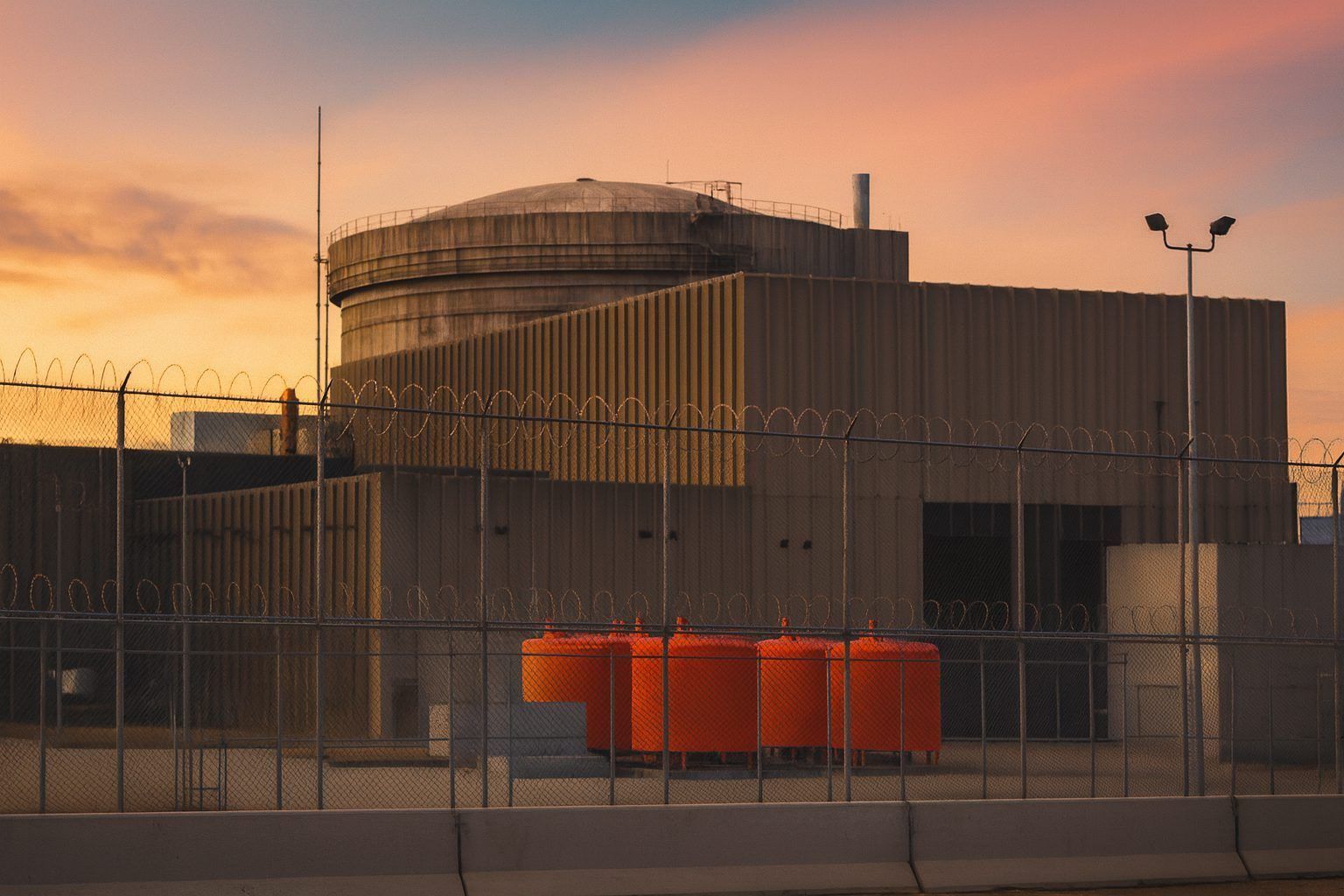
Fredericton and southeastern New Brunswick woke up to two converging energy storylines on December 15, 2025: the province’s only nuclear generating station is back after a long maintenance outage, while the political and local-government fight over a proposed 500-MW gas/diesel plant near Centre Village is escalating—now with Tantramar’s council formally urging the province to hit pause.
Together, the developments spotlight a familiar winter concern in Atlantic Canada: how to keep electricity reliable and affordable during peak demand, while also answering harder questions about climate commitments, community consent, and where new generation should—and shouldn’t—be built.
Point Lepreau is back online after a months-long outage
New Brunswick Power says the Point Lepreau Nuclear Generating Station returned to operation on December 14, 2025, after the “safe completion” of its planned maintenance work. NB Power
The return matters because Point Lepreau is a major anchor in the province’s supply mix. It had been offline since mid-July as part of a planned outage that NB Power previously said would involve an enormous list of tasks—work that local radio reporting described as roughly 23,000 planned jobs, with an expectation the plant would be offline until early December. Acadia News+1
But the run-up to winter wasn’t smooth. Reporting earlier this month said the restart process ran into an equipment issue during synchronization to the grid, delaying the station’s return beyond the early-December target. SSBCrack News+1
Now, with NB Power indicating the unit is back, the utility regains a large block of steady generation at a time when cold snaps can rapidly lift demand across the province. NB Power
Why the nuclear restart doesn’t end the capacity debate
Even with Point Lepreau operating again, the province’s longer-term supply planning remains a live—and politically charged—issue, especially with warnings that additional capacity may be needed later this decade.
That’s where the proposed Centre Village-area gas/diesel project enters the conversation: a plan tied to NB Power’s push for new firm generation that can run when demand is high or when imports and intermittent sources are constrained.
Tantramar Council flips course and asks Holt to oppose the gas plant
In a significant shift at the municipal level, Tantramar Council voted 5–2 to reverse its earlier posture and formally come out against the proposed 500-MW gas/diesel plant within town limits near Centre Village, according to NB Media Co-op reporting dated December 11, 2025. NB Media Co-op
The approved motion directs the town to:
- send a letter to Premier Susan Holt stating council is against the project,
- ask that the project be suspended until NB Power answers residents’ questions at a public meeting (with council’s climate advisory committee present),
- and request meetings with the premier and the provincial environment minister to discuss council’s concerns. NB Media Co-op
Speakers to council argued the project carries climate, environmental, health, and Indigenous-consent implications—points raised by community members and a retired physician during the meeting, according to the same report. NB Media Co-op
Holt and the siting question: “tried, but failed” to find an alternative location
The siting fight is also moving at the provincial political level. On December 15, 2025, the Telegraph-Journal’s provincial account posted that Premier Holt said the province has tried, but failed, to find a new site for a gas plant. X (formerly Twitter)
Even without full detail publicly accessible from that report, the statement underscores what many observers see as the dispute’s central fault line: is the Centre Village/Tantramar area the only viable option, or is it simply the option that best fits timelines and existing planning—at the cost of local opposition?
Regulatory clock: EUB hearings moved up, and a key agreement deadline looms
Separate reporting on the regulatory track indicates NB Power has been pushing to shorten the approval timeline.
In November, Wark Times reported that New Brunswick’s Energy and Utilities Board (EUB) agreed to schedule five days of hearings in February (Feb. 9–13) rather than March, in the context of an approval timeline NB Power says is getting tight. Wark Times
That same report says NB Power warned the EUB that its agreement with PROENERGY, signed July 2, 2025, is set to expire on April 2, 2026, and that the utility has been unable to secure an extension—raising the risk of delays in acquiring the generation it says is needed by 2028 to avoid reliability problems during peak demand. Wark Times
The EUB process has also attracted formal participation: Wark Times reported the board accepted the Protect the Chignecto Isthmus Coalition and the Conservation Council of New Brunswick as interveners with rights to present evidence and question witnesses. Wark Times
What happens next
As of December 15, 2025, New Brunswick’s energy story is no longer “either/or”—it’s “both/and”:
- Point Lepreau’s return eases immediate winter pressure and restores a large, steady supply source. NB Power+1
- The gas plant proposal faces rising local political resistance (including Tantramar’s letter request to the premier) even as the regulatory schedule tightens and provincial leadership signals difficulty finding alternative sites. NB Media Co-op+2X (formerly Twitter)+2
The next major markers to watch are Tantramar’s planned engagement with NB Power (referenced in the council debate), the EUB’s February hearing dates, and how the Holt government responds to mounting demands for broader public consultation and environmental scrutiny—before the April 2026 agreement deadline becomes the defining constraint. NB Media Co-op+1