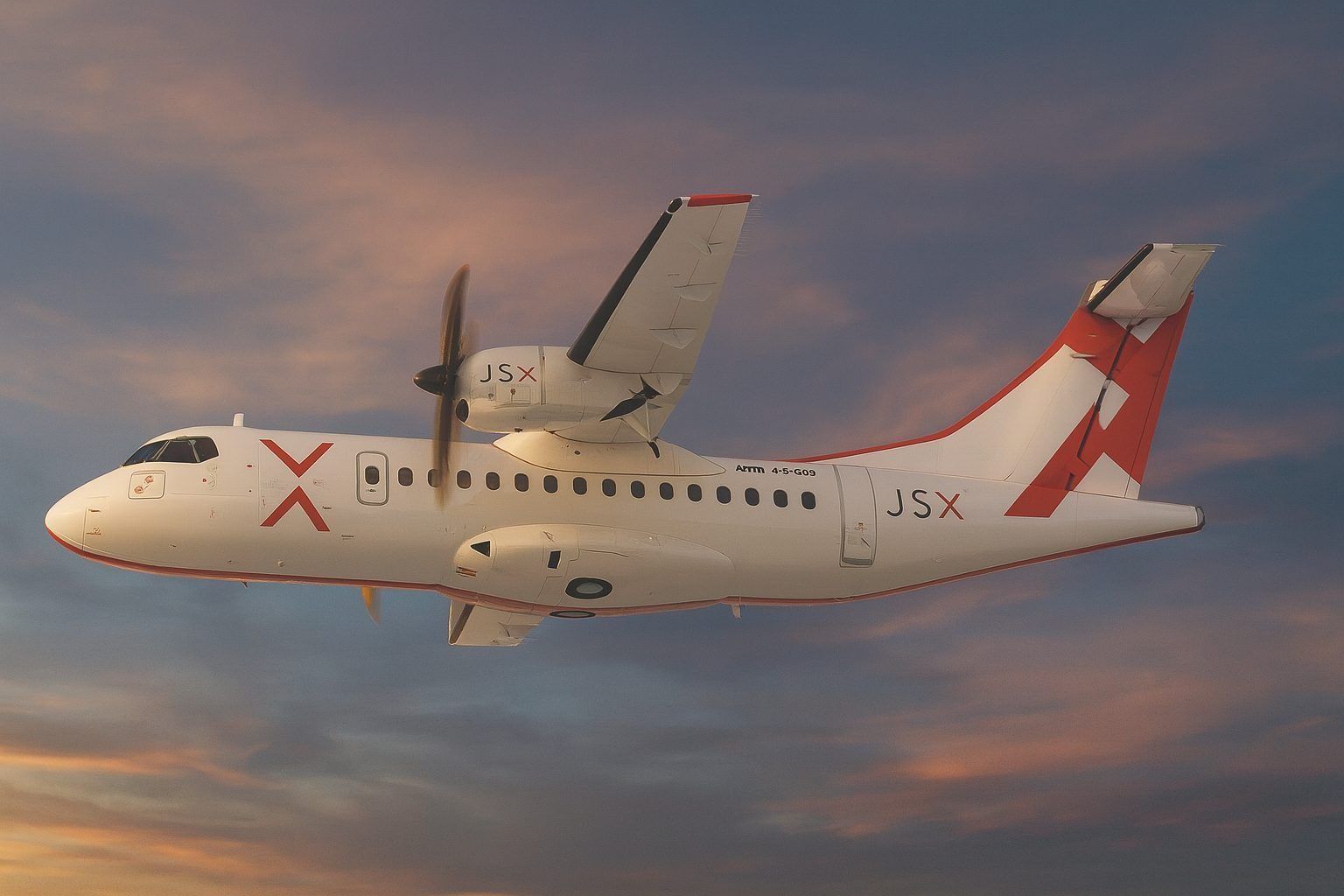
December 5, 2025 — Semi‑private carriers like JSX and Aero are bringing “private jet” perks to the mass‑affluent traveler, just as Santa Monica signs off on a controversial new lease that clears JSX to operate until the airport’s planned 2028 closure.
Semi‑private flying is booming — and getting cheaper
For years, private jets were the domain of CEOs and celebrities. Now a new tier of “semi‑private” airlines is selling individual seats on small jets and turboprops, letting passengers skip TSA, use private terminals and show up minutes before departure — often for less than a traditional first‑class ticket.
A New York Post feature published this week spotlights JSX and Aero as two of the most visible players in this niche. JSX advertises one‑way fares starting around $149–$199 on short hops and lets passengers arrive as little as 20 minutes before departure, boarding via private‑style terminals with leather seats, complimentary drinks and Starlink Wi‑Fi. New York Post+1
Aero, by contrast, positions itself as the ultra‑premium option. It flies just 12–16 passengers per jet, serves gourmet catering and runs from private terminals like Los Angeles’ Van Nuys Airport — but prices are often over $1,000 one way and can approach $2,000–$3,000 on some routes. Flight Global+1
Industry coverage from outlets like Condé Nast Traveler and Forbes has been calling this “semi‑private” tier one of the fastest‑growing corners of aviation, as affluent travelers decide that saving time and avoiding crowded terminals is worth paying a premium over economy — but far less than chartering an entire jet. Condé Nast Traveler+1
JSX: The Dallas‑based ‘hop‑on jet’ behind the Santa Monica push
JSX, headquartered near Dallas, operates a public‑charter model that sits between commercial airlines and private aviation. It charters 30‑seat Embraer regional jets and resells the seats individually under U.S. “public charter” rules (14 CFR Part 380), with flights operated under Part 135 rather than the mainline Part 121 rules used by big airlines. Wikipedia+2UpgradedPoints.com+2
Key facts about JSX today:
- Roughly 140 flights per day to about 28–29 destinations across the U.S. and Mexico
- A fleet of 51 Embraer ERJ‑135/145 jets, all reconfigured to 30 all‑business‑class seats
- A new ATR 42‑600 turboprop sub‑fleet configured with 30 seats in a spacious 1–2 layout
- Typical short‑haul fares starting in the $150–$250 range, sometimes lower on promos New York Post+2Red94+2
Because flights depart from private or FBO‑style terminals, passengers clear security via TSA‑approved background checks and simplified screening, not the standard baggage scanners and lines seen at LAX or other major hubs. UpgradedPoints.com+1
That same “skip the chaos” formula is exactly what JSX now wants to offer on the Westside of Los Angeles at Santa Monica Airport.
New Santa Monica–Las Vegas route starts December 19, 2025
Multiple aviation outlets — including World Airline News, AirlineGeeks and Santa Monica local media — confirm that JSX will launch daily public‑charter service between Santa Monica (SMO) and Las Vegas (LAS) on December 19, 2025. Surf Santa Monica+3World Airline News+3Air…
According to these reports and JSX’s own promotional materials: World Airline News+2Red94+2
- Frequency: 1x daily in each direction to start
- Aircraft: 30‑seat ATR 42‑600 turboprop (all‑business‑class layout, 1–2 seating)
- Launch date: Friday, December 19, 2025
- Intro fares: From $149 one way, with round‑trips under $300 advertised
- Baggage: Typically includes checked bags and a carry‑on in the fare
- Experience: Private‑terminal boarding at both ends; check‑in as little as 20 minutes before departure
World Airline News notes that the ATR 42‑600 was chosen specifically because it can operate comfortably on Santa Monica’s shortened 3,500‑foot runway while meeting local noise limits, and that fares start at $149 including two checked bags. World Airline News
What travelers should know about the SMO–LAS flights
For flyers on the Westside, this new route could be a game‑changer:
- Time savings vs. LAX: Instead of budgeting 60–90 minutes just for security and boarding at LAX, most JSX passengers arrive 20–30 minutes before departure at SMO. New York Post+1
- Door‑to‑door convenience: For travelers starting in Santa Monica, Venice, Brentwood or Pacific Palisades, the drive to SMO is far easier than battling freeway traffic to LAX or Burbank.
- Onboard product: Think of it as a small, all‑first‑class cabin: wide leather seats, generous legroom, free drinks and snacks, in‑seat power and forthcoming Starlink Wi‑Fi on the ATR fleet. World Airline News+2Red94+2
- Price vs. commercial first class: On the LA–Vegas corridor, standard carriers often charge $130+ one way for first or extra‑legroom economy. The New York Post notes that JSX’s semi‑private fares on similar routes can undercut premium cabin pricing by more than 30% while offering a far calmer airport experience. New York Post+1
Santa Monica signs a three‑year JSX lease — but still promises to close the airport
On December 2, 2025, the City of Santa Monica formally approved a Commercial Operations Permit (COP) and a three‑year lease allowing JetSuiteX (JSX) to operate at Santa Monica Airport through November 30, 2028. santamonica.gov+1
The city stresses that this approval is explicitly aligned with its long‑standing commitment — enshrined in a 2017 consent decree with the FAA — to permanently close the airport at midnight on December 31, 2028 and convert the land to park space. santamonica.gov+2santamonica.gov+2
In its official press release, Santa Monica highlights several points:
- Safety: FAA and DOT have certified JSX’s 30‑seat ATR 42‑600 to operate safely from SMO’s 3,500‑foot runway, with 300‑foot safety areas at each end and a city‑operated ARFF (Aircraft Rescue and Firefighting) vehicle on site. santamonica.gov
- Noise & environment: Noise modeling shows that Community Noise Equivalent Level (CNEL) contours remain inside the airport fence line, even in busier periods before the runway was shortened. JSX must comply with the existing 95 dBA single‑event noise limit, as well as regional air‑quality thresholds. santamonica.gov+1
- Legal obligations: Under the FAA consent decree, Santa Monica cannot deny access to qualifying aeronautical users during the airport’s remaining years. Allowing JSX under a limited‑term lease is, in the city’s view, necessary to preserve its legal right to shut down the airport in 2028. santamonica.gov+2santamonica.gov+2
“All Santa Monica Airport leases will expire, or be terminated by the City, before the closure date,” City Manager Oliver Chi reiterates, arguing that approving JSX now actually protects the city’s ability to close SMO on schedule. santamonica.gov+2santamonica.gov+2
Residents sue over JSX permit, citing CEQA and safety concerns
Not everyone is celebrating the arrival of semi‑private jets to Santa Monica.
On November 21, 2025, local group Measure LC Defense and two residents filed a lawsuit against the City of Santa Monica, alleging it violated the California Environmental Quality Act (CEQA) when approving JSX’s commercial operations permit. Santa Monica Daily Press+1
According to the complaint and the group’s public FAQ: Santa Monica Daily Press+1
- The city granted JSX’s permit on October 9, 2025, treating it as exempt from environmental review under several CEQA exemptions (ministerial, “common sense,” and negligible expansion of existing use).
- JSX is planning daily 30‑seat turboprop flights using the ATR 42‑600, the largest aircraft now operating from SMO’s shortened runway.
- Petitioners argue that introducing scheduled by‑the‑seat service represents a major change at a historically general‑aviation airport, potentially doubling monthly jet‑fuel use from about 30,000 to 66,000 gallons and increasing noise, traffic and air‑quality impacts on surrounding neighborhoods.
- They also highlight safety concerns: SMO is not a Part 139 certificated airport, meaning it isn’t required to maintain the same level of firefighting support as commercial airports, and its runway protection zones are shorter than FAA standards with homes located nearby.
The lawsuit asks a Los Angeles Superior Court judge to void the JSX permit and require a full environmental impact review before any scheduled passenger service is allowed. The city, in turn, maintains that its technical analysis shows no new CEQA review is required and that federal law leaves it limited discretion over qualified aviation users. santamonica.gov+2Santa Monica Daily Press+…
Measure LC Defense says CEQA litigation does not automatically halt projects, meaning JSX could theoretically start flying while the case proceeds — though whether that happens will depend on decisions by the court, the city and JSX itself. LCDefense
Today’s headline: JSX’s turboprops aim at 1,000 new airports
The local Santa Monica story lands just as JSX’s broader turboprop strategy gets splashy national coverage.
A new Red94 piece published December 5, 2025 reports that JSX is rolling out all‑business‑class ATR 42‑600 service from December 19 with fares as low as $149, starting on the Santa Monica–Las Vegas route. The article says JSX has signed a letter of intent for more than 25 ATRs, beginning with four delivered this year, and that CEO Alex Wilcox believes the type will open up 1,000+ additional airports that were previously out of reach for the carrier’s jets. Red94+1
Key points from that report: Red94
- ATR cabins will feature 30 all‑business‑class seats in a 1–2 layout with complimentary snacks, drinks and Starlink Wi‑Fi (planned from early 2026).
- JSX has already carried over 1 million passengers and currently runs around 140 daily flights to 28 destinations.
- Management is targeting $1 billion in annual revenue within five years, driven in part by serving underserved airports that major airlines have abandoned.
For Santa Monica, that means the city is effectively the launch pad for JSX’s new turboprop era, not just a one‑off boutique route.
Aero: JSX’s pricier, ultra‑luxury rival out of Van Nuys
While JSX targets the “wealthy but not ultra‑rich” flyer, Aero is unapologetically more high‑end.
FlightGlobal describes Aero as a Los Angeles‑based public‑charter operator flying ERJ‑135 jets reconfigured to just 16 seats, with fares typically ranging from $800–$1,000 per flight hour — often above first‑class pricing but competitive on routes like Aspen during peak demand. Flight Global
Recent moves show how far upmarket Aero is aiming:
- Van Nuys–Heber Valley (Park City) ski flights: For the 2026 ski season, Aero is shifting its Utah service from Salt Lake City to Heber Valley Airport, closer to Deer Valley, with Friday/Monday flights and one‑way fares starting at $1,400. Park Record
- Van Nuys–Maui “book‑by‑the‑seat” Gulfstream IV: Starting November 2025, Aero and Four Seasons Resort Maui at Wailea are operating a weekly Gulfstream IV shuttle between Van Nuys and Maui’s Kahului Airport. Seats start around $5,495 one way and include a private terminal, Erewhon‑catered meals, an open bar, Starlink Wi‑Fi and curated resort perks. LAmag
Consumer guides like Upgraded Points emphasize that while Aero and JSX are often mentioned in the same breath, Aero’s experience is closer to a traditional private jet, while JSX intentionally strips some luxury away to keep prices nearer to commercial business‑class levels. UpgradedPoints.com+1
For Westside travelers, that sets up a clear decision:
- JSX from Santa Monica: Shorter drive, “business‑class‑lite” cabin, from $149 each way.
- Aero from Van Nuys: Longer drive for most Santa Monica residents, but a far more opulent cabin and service — at several multiples of the price.
Regulatory clouds: FAA eyes the public‑charter model
The rise of JSX, Aero and similar operators has not gone unnoticed in Washington.
As FlightGlobal reports, the FAA has recently signaled plans to subject public‑charter carriers operating larger aircraft to rules closer to those used for scheduled airlines, a move strongly backed by major carriers and pilot unions who view the current framework as a “loophole.” Flight Global
Because JSX and Aero both operate under the public‑charter/Part 135 model with aircraft of 16–30 seats, any rule change could eventually require:
- Higher staffing and training standards
- More stringent maintenance and safety requirements
- Potential changes to how security screening is handled
For now, nothing has been finalized, and both companies are continuing to expand. But travelers should be aware that the semi‑private sweet spot may evolve over the next few years as regulators, airlines and communities negotiate where these services fit.
Is a $149 semi‑private flight from Santa Monica worth it?
For many Los Angeles and Santa Monica–area travelers, JSX’s new SMO–LAS route will come down to one question: Is my time and sanity worth an extra $20–$50 over a budget airline?
You’re likely to love JSX from SMO if:
- You live or work on the Westside and dread LAX security and traffic
- You value time as much as money — getting home an hour earlier from Vegas matters
- You’re comfortable paying more than basic economy but less than full private‑jet prices
- You travel with bags, kids or skis and want a calmer boarding process
You may want to stick with traditional airlines if:
- You’re hyper‑price‑sensitive and can routinely find ultra‑low‑cost fares
- You’re based closer to LAX, Burbank or Ontario than to Santa Monica
- You’re concerned about the legal uncertainty around the CEQA lawsuit and prefer to wait and see how the courts rule
The bottom line
Semi‑private flying is having a moment — and Santa Monica is suddenly at the center of it. JSX’s new $149 daily Santa Monica–Las Vegas route, backed by a three‑year lease that runs up to the airport’s planned 2028 closure, promises a sleek alternative to LAX for Westside flyers. At the same time, a CEQA lawsuit, neighborhood opposition and looming FAA rule changes show that the path to “private jet flights for the masses” is anything but turbulence‑free. New York Post+3santamonica.gov+3Santa Moni…