
LAKELAND, Florida, July 15, 2026, 18:04 (EDT)
- Publix shut eight supermarkets in Q1. Seven of those were already swapped out or will see new stores built on the same sites.
- Capital spending jumped 45% to $674 million. Comparable-store sales came in flat after 4% growth last year.
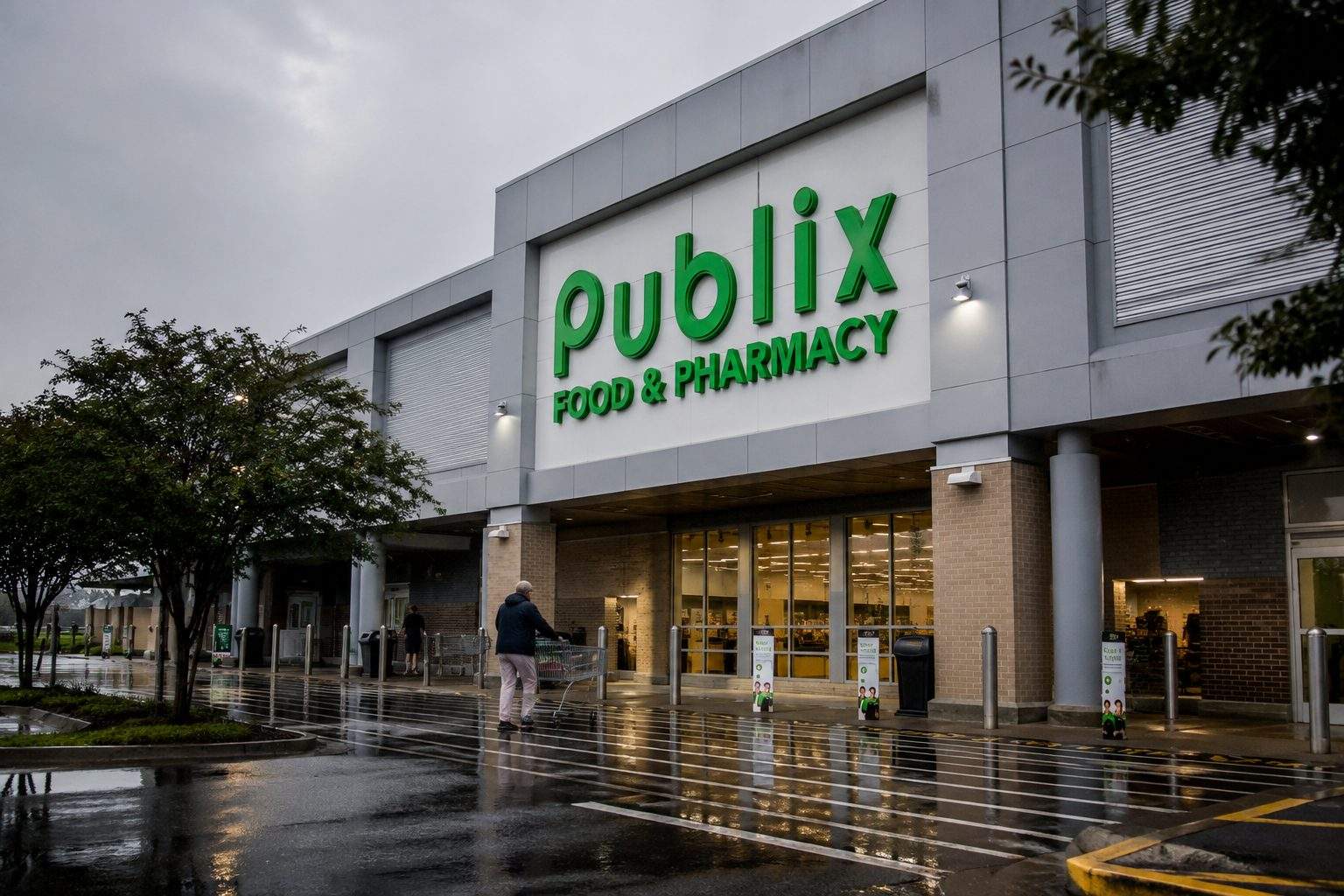
- Palm Bay lost a store that had been open almost 50 years when it closed on July 11 for redevelopment. That happened just five days before a 54,964-square-foot store was set to open in Winter Haven.
Publix Super Markets shuttered eight stores in the first quarter as capital spending jumped 45% to $674 million. Seven of the closed locations were either replaced during the quarter or set for replacement on the same sites, according to the employee-owned grocer.
That’s important as sales at older stores aren’t growing. Total sales edged up 2% to $16.1 billion, but comparable-store sales came in flat, after a 4% increase the year before. Publix said most of the gain was tied to openings of new stores. The chain’s expansion is what’s driving growth.
On the street, it’s more a property shuffle than a retreat. The Palm Bay Center store at 4711 Babcock Street, which ran for almost 50 years, closed July 11. Publix plans to demolish it and put up a new building. Wednesday reports also pointed to earlier announced 2026 closures in St. Petersburg and the Miami area.
Publix had 1,431 stores at the end of March, after opening seven new ones in the quarter and shutting eight, according to its official SEC filing. Three of the new stores replaced older locations. Nineteen stores were remodeled. One closure got an immediate replacement, six will reopen at the same sites, and one will stay closed. Publix doesn’t expect much impact from future closings.
| First-quarter network activity | Number | Replacement signal |
|---|---|---|
| Supermarkets opened | 7 | Three replaced old locations |
| Existing stores remodeled | 19 | Kept capital in same markets |
| Supermarkets closed | 8 | Seven had replacements |
| Stores without replacement plans | 1 | Makes up under 0.1% of total stores |
| Total supermarkets at March 28 | 1,431 | One fewer than at year-end 2025 |
Data comes from Publix regulatory filings. Store base percentages are based on the company’s reported figures.
There’s a direct financial impact here. Publix treats sales from a rebuilt store as new-store sales, since the old location usually closes for a year or a bit more. These rebuilds can help boost reported growth numbers once they reopen, even if spending at older stores stays the same.
| Metric | Q1 2026 | Q1 2025 | Change |
|---|---|---|---|
| Sales | $16.1 billion | $15.8 billion | +2.0% |
| Comparable-store sales | 0.0% | +4.0% | -400 basis points |
| Capital spending | $674 million | $465 million | +44.9% |
| Capital spending as a share of sales | 4.2% | 2.9% | +1.3 percentage points |
| Operating margin | 8.0% | 8.5% | -50 basis points |
| Net earnings excluding equity-market fair-value swings | $1.142 billion | $1.177 billion | -3.0% |
The percentage moves and spend ratios come from the numbers the company reported.
Capital spending was 4.2% of first-quarter sales, up from 2.9% last year. Publix is sticking with plans for about $2.4 billion in spending for 2026, similar to the $2.3 billion put to work in 2025. Money is also going to distribution, tech and shopping centers. It’s not a cheap way to protect growth.
A look at the near-term schedule makes the point clear. Five days after the Palm Bay location shuts down, Publix will open a 54,964-square-foot supermarket at Mariana Acres in Winter Haven on July 16. The two stores serve separate markets, so the new opening isn’t a replacement for the lost space in Palm Bay. But the close timing is a reminder that simple closure totals don’t tell the whole story.
Publix has enough money on hand for the program and isn’t looking to the public markets to raise cash. The company reported $17.9 billion in cash and investments as of March 28 and $2.2 billion in operating cash flow for the quarter. Executives plan to cover about $1.7 billion left in 2026 capital spending with cash from day-to-day operations or other liquid assets.
But there’s a catch to the strategy: Publix is upping spend as growth at stores slows. Operating and administrative costs climbed to 18.8% of sales from 18.3% due to more spending on staff and facilities, while operating margin slipped to 8.0%, down from 8.5%. Replacement projects leave sales holes that can drag on for up to 15 months, so the new locations have to bring in enough sales to support a higher cost structure.
Employee shareholders will be watching to see if new stores generate enough sales to keep revenue climbing without another margin hit. Publix set its private share price at $20.45 as of May 1, up 4.1% from the last valuation, but the stock stays private. For now, its replacement capacity and return on capital matter more than how many stores are closed for now.
Related articles: Stock Market