
San Jose, California, April 23, 2026, 11:07 PDT
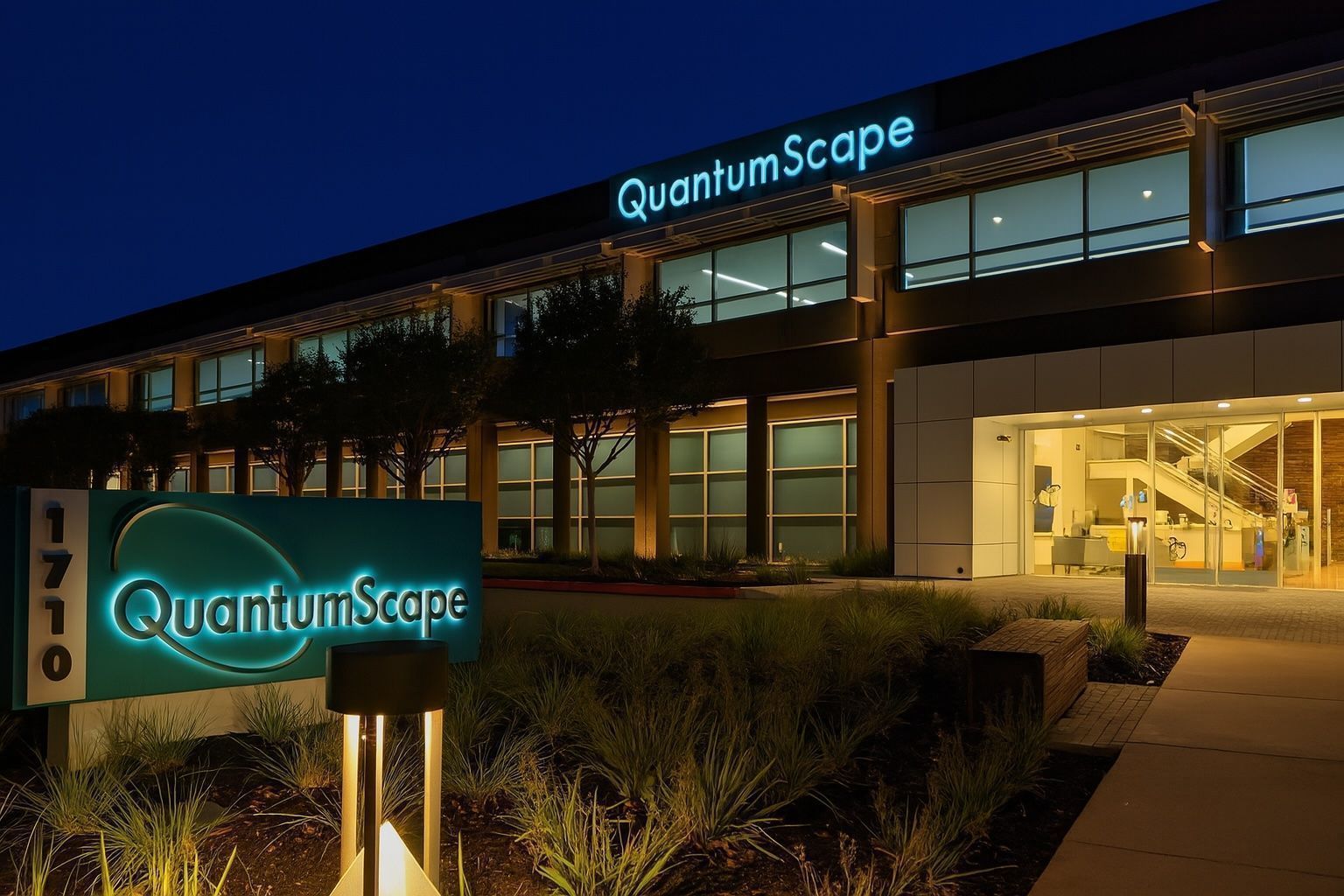
QuantumScape shares swung sharply Thursday. The solid-state battery maker announced it fired up its Eagle Line pilot production line, kicked off initial QSE-5 cell production, and pulled another top-10 automaker into joint development. The stock started at $9.65, climbed as high as $10.03, then tumbled to $7.17 by 10:47 a.m. Pacific—falling below the previous close.
The swing underscored the stakes for this update. Investors want proof that QuantumScape can finally convert its years of R&D into pilot production and real-world customer trials—something battery makers and automakers now need, as slowing EV demand pushes them toward energy storage and AI data-center markets for new growth.
QuantumScape, in its quarterly letter, said it wrapped up Eagle Line installation during the first quarter and got operations underway, putting out the first batches of QSE-5 cells. The company is looking to increase output in the second quarter. Solid-state batteries, which use solids instead of the usual liquid electrolyte found in standard cells, are being developed to improve safety, boost charging speed, and pack more energy into the same footprint.
Automotive remains at the heart of the story. QuantumScape reported progress with Volkswagen’s PowerCo, pointing to movement toward field testing. The company shipped cells to an automotive joint-development partner during the quarter. Another top-10 carmaker wrapped up hands-on evaluation and has shifted to joint development. Last year, QuantumScape and Volkswagen scrapped their joint venture, switching to a licensing arrangement that authorizes PowerCo to produce as much as 40 gigawatt-hours of cells annually with QuantumScape technology—potentially doubling to 80 GWh if they hit certain technical milestones.
Chief Executive Siva Sivaram described AI data centers as a “natural fit,” pointing to a shift toward 800-volt direct-current systems. He also flagged “strong customer interest” in the technology from military, aerospace, and government sectors. William Blair’s Jed Dorsheimer said the expansion into “hot sectors” like on-rack AI data centers, as well as space and drones, had widened the company’s reach, writing that “drones present the best opportunity.” The Motley Fool
QuantumScape posted a net loss of $100.8 million for the first quarter, narrowing from $114.4 million in the same period last year. Adjusted EBITDA, which the company uses to track operating results, landed at a $63.2 million loss. Capital spending totaled $10 million. The company kept its outlook steady, sticking with a full-year adjusted EBITDA loss forecast of $250 million to $275 million and projected capital expenditures between $40 million and $60 million.
Customer billings — QuantumScape’s preferred metric, tallying invoices issued to clients and partners instead of GAAP revenue — landed at $11 million for the quarter. The company closed March with $904.7 million in liquidity.
QuantumScape isn’t alone in the race for next-gen batteries. Solid Power is pushing ahead with its own solid-state technology aimed at electric vehicles. Over at SES AI, efforts are focused on lithium-metal and lithium-ion batteries, targeting everything from EVs to drones, robotics, and battery storage.
The tough stuff’s yet to come. QuantumScape said it’s collaborating with Murata Manufacturing and Corning on ramping up output for its ceramic separator, and according to Sivaram, every automaker is going to require a different cell format. Reuters previously reported that despite years of capital flowing into solid-state batteries, large-scale manufacturing still hasn’t materialized.
Chris McNally at Evercore ISI called out “glimmers of progress” this quarter, following what he described as a “dearth of new headlines” to start the year. He flagged that around 18.9% of QuantumScape’s tradable shares are sold short—something that could leave the stock swinging, even with ongoing technical wins. MarketWatch