
Summary: On November 11, 2025, the rare‑earths narrative shifted again. Beijing is reportedly exploring a licensing “workaround” to ease the flow of rare‑earth materials to the U.S. while excluding companies with ties to the American military—a move that could keep consumer supply chains humming even as defense contractors face bottlenecks. In Washington, fresh policy and financing signals continue to support domestic mining, processing, and magnet manufacturing. Here’s what’s new today—and how it frames the near‑term outlook for USA Rare Earth NASDAQ:USAR and MP Materials NYSE:MP. Reuters+2Yahoo Finance+2
What’s new today (Nov. 11, 2025)
China’s targeted easing on rare earths
China is planning a regime to fast‑track export approvals for some rare‑earth shipments but to exclude firms with U.S. military ties, according to reporting first surfaced by The Wall Street Journal and summarized by Reuters. If implemented, consumer electronics and autos could see improved access to materials like neodymium‑praseodymium, while defense supply chains remain constrained. It’s a calibrated pivot that could temper price spikes without surrendering strategic leverage.
Live coverage underscores the split‑screen risk
Market live updates today echoed the same theme: Beijing may lubricate civilian supply chains while ring‑fencing military‑linked demand. For U.S. policy makers and contractors, that split keeps the national‑security case for reshoring very much alive.
Policy tailwinds keep blowing in Washington
A legal and policy update out this morning highlights how the federal government is expanding financing tools and bilateral partnerships to accelerate critical‑minerals capacity under the current administration. For developers and processors across the domestic chain—from mine to magnet—that’s a material, near‑term tailwind.
A broader “critical” umbrella
Also today, copper re‑entered the policy conversation with fresh analysis of its addition to the U.S. critical‑minerals list—another sign that Washington is widening the aperture on supply‑chain security. While not a rare earth, it’s part of the same strategic raw‑materials puzzle that touches EVs, grid build‑out, and defense. Reuters
The USAR and MP backdrop: what investors need to know
USA Rare Earth’s execution clock is ticking
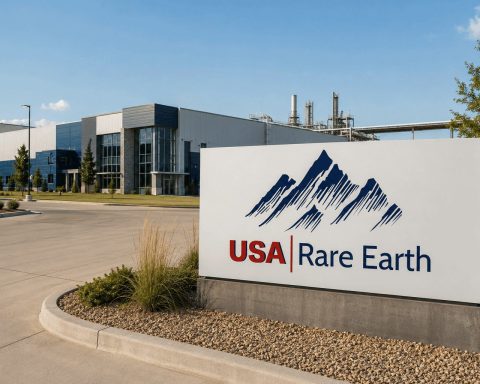
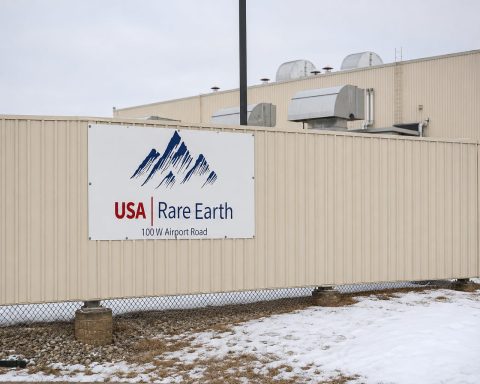
USAR’s Stillwater, Oklahoma magnet plant remains the core of its story. The facility is slated to begin commercial‑scale production in early Q1 2026, a timeline the company reaffirmed around last week’s Q3 update. That keeps 2025 focused on finishing capex, validating supply, and customer qualification. The nearer that commissioning date gets, the more investors will focus on ramp risks, supply contracts, and working‑capital needs.
The “biggest worry” on USAR, in one line
Coverage in the past 24 hours distilled investor anxiety: even with strong policy winds, USAR’s challenge is execution to profitable magnet output on schedule. Timelines slip easily in green‑industrial build‑outs; the market will want to see on‑time commissioning, yields, and offtakes before re‑rating the stock. Yahoo Finance
Fresh research chatter
Sell‑side notes yesterday flagged rising estimate revisions and constructive ratings, but price targets still embed a show‑me discount until that Stillwater ramp is de‑risked.
MP Materials: refocusing on a U.S.‑only chain
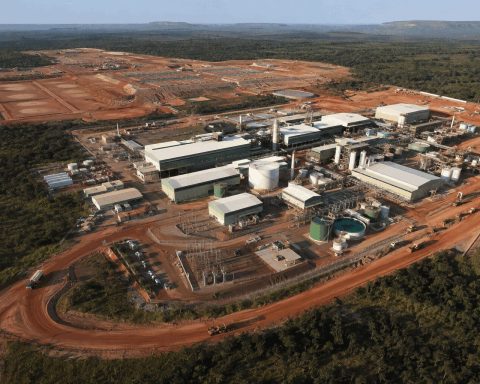
MP’s Q3 print late last week underscored the cost of decoupling: the company’s loss widened after it halted sales to Chinese customers, but management framed it as a necessary pivot while its Texas magnet facility and heavy‑rare‑earth processing plans come online through 2026. The Pentagon’s support and price guarantees for key oxides remain central to MP’s bridge from mine to magnet.
How today’s China move reshapes the near‑term risk map
For civilian value chains (EVs, electronics): A licensing‑easing that speeds approvals for non‑defense buyers could cool spot volatility and calm some OEM fears—especially after weeks of headlines about tighter export controls. That’s constructive for near‑term pricing and availability.
For defense suppliers: If companies with U.S. military ties are still filtered out, the DoD’s magnet‑supply push and domestic floor‑price mechanisms look even more consequential. Defense procurement could remain insulated via government‑backstopped domestic output—but only as quickly as new U.S. capacity arrives.
For USAR and MP:
- USAR benefits from any policy clarity that supports financing and offtake visibility, but it still must hit its Q1‑2026 commissioning and prove yields, reliability, and unit economics. A “civilian‑only easing” in China does not remove the strategic case for domestic magnets—if anything, it hardens it for defense. Nasdaq+1
- MP remains the bellwether for a fully domestic mine‑to‑magnet chain. Its short‑term P&L pressure is the price of pursuing strategic independence; the payoff depends on smooth start‑up of Texas magnets and heavy REE processing through 2026 under government‑supported pricing.
Context from the past two weeks (why the tape has been choppy)
- Trump–Xi détente on rare‑earths (one‑year pause): Late October brought a provisional thaw after China agreed to pause expanding export controls for a year, prompting relief rallies—and then reversals as investors debated durability.
- Presidential comments and sell‑off: A week ago, rare‑earth names sold off after remarks downplaying the China threat, reminding traders how headline‑sensitive this theme remains.
- Federal money flowing: In parallel, Washington has been writing bigger checks—equity stakes, loans, and floor‑price mechanisms—to accelerate magnet capacity, highlighting that policy makers aren’t betting on foreign supply.
Market sizing and demand signals
Industry research out today projects the global rare‑earth magnet market growing from roughly $22 billion in 2024 to ~$53 billion by 2034 (CAGR ~9%). Even if methodology and assumptions vary, the direction of travel—more magnets for EVs, industrial motors, and data‑center cooling—supports the thesis for U.S. magnet manufacturing—provided execution keeps pace.
What to watch next
- USAR commissioning milestones in Stillwater, Oklahoma (target: Q1 2026), including customer qualification and first‑article shipments.
- MP corporate appearances (including today’s Baird Global Industrial Conference slot) for color on Texas magnet ramp and heavy‑REE timelines.
- Final contours of China’s licensing policy—which sectors are “in” vs. “out,” how approvals flow in practice, and whether defense carve‑outs tighten. Reuters
- Additional U.S. financing tools or bilateral deals that could lower capital costs for domestic projects through 2026.
Bottom line for Nov. 11, 2025
Today’s reporting suggests Beijing is searching for a middle path—easing for civilian buyers, pressure for defense. In the U.S., the money spigot for critical minerals is opening wider, not narrower. That combination keeps the strategic case for domestic magnet capacity intact—and squarely in focus for USAR and MP investors. The trade over the next 3–6 months still boils down to execution (build‑out and yields), policy follow‑through (funding and procurement), and geopolitical stability (how long the “pause” lasts). Reuters+2Reuters+2
Editor’s note on sources used today (Nov. 11, 2025)
This article draws on: Reuters’ summary of WSJ reporting on China’s licensing plan (today); Yahoo Finance live coverage (today); a Washington legal/policy update on critical‑minerals financing (today); Reuters coverage on the expanding U.S. critical‑minerals list (today); USAR’s Q3 update (last week); MP’s Q3 results (last week); and recent market coverage from Barron’s and others for context across the past two weeks.
Background reading aligned with the user‑provided links (context)
- USA Rare Earth “biggest worry”: latest investor commentary emphasizes execution risk ahead of Stillwater’s 2026 start. Yahoo Finance
- USA Rare Earth “Back to Earth”: recent analysis frames USAR as a leveraged way to domestic magnet growth but cautions on ramp and capital intensity. Seeking Alpha
- Barron’s on MP & China headlines: rare‑earths sold off after comments suggesting the China threat had passed—volatility that underscores headline sensitivity.
Disclosure: This is news analysis, not investment advice. Always do your own research.
Related articles: NASDAQ:USAR