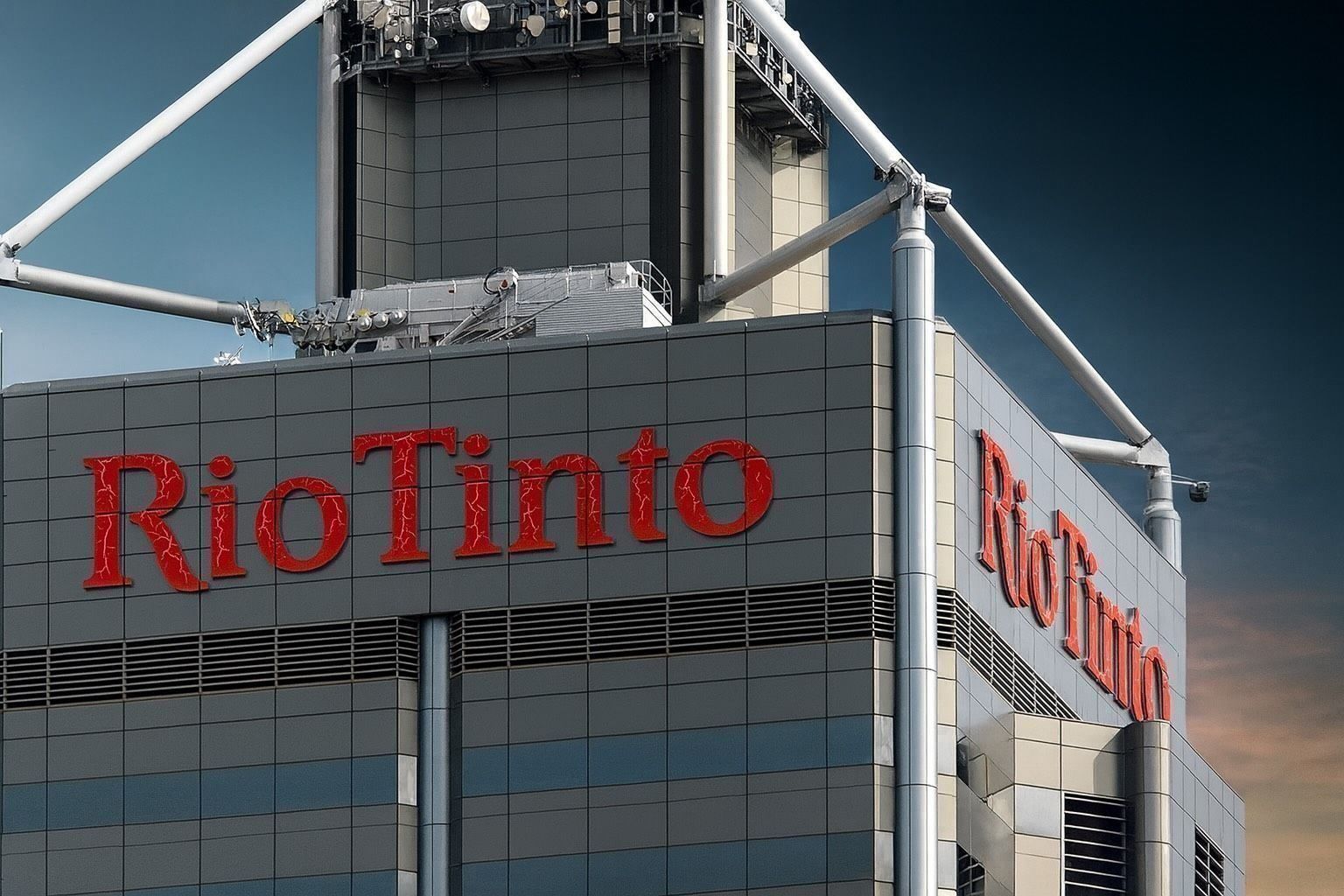
LONDON/SYDNEY – 5 December 2025 – Rio Tinto Group (LON:RIO, ASX:RIO, NYSE:RIO) is ending the week in the spotlight after a powerful share‑price rally and a sweeping strategic reset under new chief executive Simon Trott. The miner is promising to become “stronger, sharper and simpler” while lifting copper growth, trimming costs and potentially selling up to $10 billion of non‑core assets. 1
Rio Tinto share price today: trading near the top of the range
Rio Tinto’s stock is hovering around one‑year highs across its three primary listings:
- NYSE:RIO (ADR) – The U.S.‑traded shares hit a new 52‑week high on Wednesday, touching $74.22 intraday and last trading around $74.34, versus a prior close of $72.34. 2
- LON:RIO (London) – In London, Rio Tinto closed 5,494p on 4 December after opening at 5,642p, leaving the stock up roughly 16% year‑to‑date. 3
- ASX:RIO (Sydney) – On the ASX, Rio finished Thursday at A$140.58, up 1.9% on the day and almost 18% over the past year. 4
Momentum has accelerated into December. MarketBeat notes that the NYSE ADRs are now not only near their 52‑week highs but also trading above both their 50‑day and 200‑day moving averages, signalling a firmly positive medium‑term trend. 2
New CEO Simon Trott and the “stronger, sharper, simpler” Rio Tinto
Leadership change
In July, Rio Tinto’s board named Simon Trott as chief executive, succeeding Jakob Stausholm, with effect from 25 August 2025. Trott is a 25‑year Rio veteran who previously ran the iron ore division, giving him deep exposure to the group’s most important cash generator. 5
Three core businesses, one overarching mission
At the 2025 Capital Markets Day in London on 4 December, Trott laid out a strategy branded as making Rio Tinto “stronger, sharper and simpler.” The company will be streamlined into three world‑class businesses:
- Iron Ore
- Copper
- Aluminium & Lithium
These units sit under three pillars: operational excellence, project execution and capital discipline, with the explicit aim of delivering “industry‑leading returns.” 1
Key quantitative targets from Rio’s own presentation and accompanying commentary from Reuters and the Financial Times include: 1
- Production growth: about 7% growth in 2025 and 3% compound annual production growth to 2030, underpinned by copper (Oyu Tolgoi), iron ore (Simandou) and lithium (Rincon and other projects).
- Productivity gains: $650 million of annualised productivity benefits already identified in the first three months of the restructuring, with more to come.
- Cost reductions: targeted 4% reduction in unit costs between 2024 and 2030.
- Earnings growth: potential to increase EBITDA by 40–50% by 2030 on long‑run consensus commodity prices, helped by ~20% copper‑equivalent production growth.
- Decarbonisation capex: a sharply reduced capital requirement of $1–2 billion to 2030, versus a previous estimate of $5–6 billion, thanks to greater reliance on third‑party renewable developers.
Trott emphasised that Rio will maintain its longstanding policy of returning 40–60% of underlying earnings to shareholders over the cycle, even as it invests in growth. 1
$5–10 billion in potential asset sales and a tighter portfolio
A central feature of the new plan is pruning the portfolio to focus capital on the highest‑return opportunities.
Divestments and “assets we don’t need to own”
Rio Tinto has identified assets across titanium dioxide, borates, land, infrastructure and processing facilities that it believes it does not need to own outright. 6
- The miner expects to generate $5–10 billion from a combination of asset sales, partnerships and other capital‑release measures. 6
- Strategic reviews of the Iron & Titanium and Borates businesses are underway, with the next phase focused on “testing the market” for these assets. 1
This streamlining mirrors broader moves among major miners to exit lower‑return or higher‑complexity assets in favour of core commodities such as iron ore and copper. 6
Copper steps into the spotlight
Rio has long been synonymous with iron ore, but the 2025 strategy day underscored how aggressively the group is pivoting toward copper.
Guidance upgrade and Oyu Tolgoi ramp‑up
In conjunction with the capital markets event, Rio raised its 2025 copper production guidance to 860,000–875,000 tonnes on a consolidated basis, up from a previous 780,000–850,000‑tonne range. It expects 800,000–870,000 tonnes in 2026 and is targeting 1 million tonnes per year by 2030. 3
A key driver is the Oyu Tolgoi underground mine in Mongolia, where output is expected to grow by more than 50% in 2025 and a further ~15% in 2026 as the mine ramps up. 6
Q3 2025: solid base for growth
Third‑quarter production figures released in October showed: 7
- Iron ore: 84.1 Mt of total production, flat year‑on‑year, with shipments up 6% sequentially – the second‑highest Q3 shipment level since 2019.
- Bauxite: 16.4 Mt, up about 8.5% year‑on‑year, marking a second consecutive record quarter driven by strong output from the Amrun mine in Australia.
- Aluminium: production up around 6% year‑on‑year to 857,000 tonnes.
- Mined copper: 204,000 tonnes, up about 10% on the prior year.
This mix – steady iron ore plus faster growth in copper and bauxite – underpins the long‑term narrative that Rio will be less dependent on a single commodity, even though iron ore still provides the bulk of earnings today. 8
Chinalco, buybacks and capital structure
One of the more technical – but important – storylines is Rio’s relationship with its largest shareholder, Aluminium Corporation of China (Chinalco).
Chinalco owns about 11% of Rio Tinto but is constrained by a 14.99% cap on its holding in the London‑listed shares under Australian foreign investment rules dating back to 2008. This cap has complicated Rio’s ability to conduct large‑scale share buybacks without further narrowing the free float. 9
Trott told reporters and investors that Rio is “actively working” with Chinalco on ways to loosen those constraints, potentially including some form of asset‑for‑equity swap that would reduce Chinalco’s stake and restore flexibility for buybacks. No agreement has been reached, but the discussion is now explicitly on the table – something investors have been watching for years. 9
Analyst ratings and Rio Tinto stock forecasts
Consensus view: “Moderate Buy” with modest near‑term upside
Across major data providers, the consensus on Rio Tinto is constructive but not euphoric:
- MarketBeat reports that the NYSE‑listed ADRs carry a “Moderate Buy” rating from 12 analysts, with a breakdown of 2 Strong Buys, 3 Buys and 7 Holds, and an average 12‑month price target of $73. At current prices near $74, that implies limited upside on the U.S. line after the recent rally. 10
- TipRanks, looking at London‑listed RIO, also records a “Moderate Buy” from 12 analysts, with an average target of 5,627.92p – roughly 2.3% above the last close around 5,504p. 11
JPMorgan turns more bullish
A notable outlier is JPMorgan Chase & Co., which this week lifted its price target on LON:RIO from 6,100p to 6,950p and reiterated an “overweight” rating, citing improved growth and capital allocation prospects after the strategy reset. 12
That target implies substantial double‑digit upside from current London levels if Rio delivers on its 2030 production and cost targets.
Dividend yield and payout
Dividend‑focused investors continue to see Rio primarily as a high‑yield cyclical income stock:
- The ADRs currently offer an annual dividend of about $3.71 per share, implying a yield around 5% at recent prices. 13
- MarketScreener and other forecasters project a 2025 dividend per share of just over $3.65–4.00 (equivalent) on the PLC line, with a payout ratio near 60% of earnings – broadly consistent with Rio’s 40–60% policy and semi‑annual distribution pattern. 14
An in‑depth analysis from ts2.tech, drawing on UBS estimates, suggests that dividends could rise into 2026, with forecast payouts equivalent to about US$3.97 per share for FY25 and US$5.15 for FY26, which on the Australian line would equate to an estimated grossed‑up yield of roughly 8.5% for local investors at current prices – assuming iron ore prices stay above US$100/t in the near term and then drift toward US$90/t. 15
These are projections, not guarantees; they depend heavily on commodity prices, project execution and management’s capital allocation choices.
How the market is reading the December 2025 reset
Strategists’ and journalists’ take
Coverage from Reuters, the Financial Times, Bloomberg and the Wall Street Journal all converge on a similar narrative: Trott’s Rio is about discipline, not empire‑building. 6
Common themes across this coverage include:
- Cost discipline first – Rio is targeting steady cost reductions and productivity gains, and has already realised hundreds of millions of dollars of savings, including through headcount reductions. 6
- Portfolio pruning over big M&A – Trott has played down the idea of transformative mergers unless synergies are compelling, contrasting with some rivals’ more aggressive deal‑making. 16
- Cautious approach to lithium – Rio is slowing or sequencing lithium investments, especially beyond the core Rincon project, to avoid over‑committing into a still‑volatile market. 17
- Sharper capital allocation – Projects across iron ore, copper, aluminium and lithium must now compete for capital under stricter hurdle rates, while divestments free up cash for higher‑return opportunities and shareholder returns. 1
In short, Trott is pitching Rio as a leaner, more focused miner built for a world where investors demand both strong returns and credible decarbonisation plans.
ESG, decarbonisation and ongoing controversies
Rio Tinto continues to operate under the shadow of past controversies, notably the 2020 destruction of the Juukan Gorge rock shelters in Australia, which triggered a major governance and cultural reset. Rio’s own reporting highlights efforts to rebuild relations with Indigenous communities, including new agreements and strengthened cultural heritage processes. 18
Elsewhere, the group faces:
- Simandou, Guinea – Construction accidents and community concerns at the giant Simandou iron ore project, where more than a dozen worker deaths were reported earlier in 2025, have brought intense scrutiny to safety standards and local impacts. 19
- Oyu Tolgoi, Mongolia – Long‑running tensions around tax, ownership and environmental impacts at the copper mine, though a revised agreement in recent years has stabilised the partnership. 20
On the climate side, Rio’s new plan cuts decarbonisation capex to $1–2 billion to 2030 but maintains a target of 50% emissions reduction by 2030 and net zero by 2050, relying more on third‑party renewables and technology maturation. 1
Recent initiatives include a pilot programme with BHP and Caterpillar to test battery‑electric haul trucks in the Pilbara – an example of how Rio aims to decarbonise hard‑to‑abate mine operations while also reducing diesel costs over time. 21
For ESG‑minded investors, the message is mixed: a clearer climate pathway and strong governance rhetoric, but ongoing execution risk on the ground.
Technical picture: a strong uptrend, but less obvious value
On the technical side, Rio Tinto’s ASX listing has appeared on multiple “uptrend” scans, with the stock rising around 10% in the past month and nearly 18% over the year as of 4 December. 4
On the NYSE, the ADRs have broken to new 52‑week highs, with the share price now well above the 50‑ and 200‑day moving averages, and the dividend yield near a three‑year low thanks to the price rally – a sign that income investors are paying up for the growth story. 2
GuruFocus and other valuation screens flag that Rio’s P/E, P/S and price‑to‑book ratios are closer to their 1–3‑year highs, suggesting the stock has moved out of “deep value” territory into a more fully‑valued range relative to history and peers. 15
Key risks investors are watching
Even with the upbeat strategy day, several risk factors remain front of mind in current research notes and media coverage: 15
- Commodity price sensitivity
- Iron ore still drives the bulk of profits; a sharp slide in prices back toward the low‑US$80s/t or below would compress earnings and dividends quickly.
- Copper prices are currently strong, but a downturn in global growth or a slower energy‑transition build‑out would hurt Rio’s growth thesis.
- Project execution
- Large, complex projects such as Simandou and the Oyu Tolgoi underground expansion carry construction, logistics and political risks. Delays or cost overruns could undermine the 2030 EBITDA uplift Rio is promising.
- ESG and regulatory risk
- Any repeat of cultural heritage failures or environmental incidents could trigger significant reputational and financial damage, particularly given heightened scrutiny after Juukan Gorge and Simandou.
- Valuation and expectations
- With the shares near 52‑week highs and yields closer to recent lows, more of the good news is now priced in. Analysts warn that any disappointment on copper growth, cost savings or dividend trajectory could prompt a pullback. 2
RIO stock outlook: what to watch into 2026
Putting everything together, the Rio Tinto story as of 5 December 2025 looks something like this: 1
- Strategic reset – A clearer, simpler structure around three businesses, with explicit targets for cost cuts, copper growth and capital discipline.
- Near‑term fundamentals – Solid Q3 production, upgraded copper guidance for 2025, record bauxite output and strong pricing for key commodities, underpinning a healthy balance sheet and robust free cash flow.
- Shareholder returns – A 40–60% payout policy, a current dividend yield around 5% and credible cases for higher dividends by 2026 if commodity markets remain supportive.
- Valuation – Consensus sees only modest 12‑month upside from current levels, with more bullish cases (such as JPMorgan’s 6,950p target) hinging on successful execution and sustained copper strength.
From a neutral, information‑only standpoint, Rio Tinto now looks less like a contrarian bargain and more like a quality cyclical: a leading global miner priced closer to fair value, whose returns over the next few years will be driven by how well Simon Trott turns his “stronger, sharper, simpler” slide deck into reality in the pits, smelters and ports.